

Senegal : Validation of the Labour Market Diagnosis and Launch of the New National Employment Policy
On 2–3 February 2026 in Saly, Senegal validated its labour market diagnosis and launched the strategic framework for its new National Employment Policy with the support of the ILO and AICS.
9 February 2026
Dakar, Senegal (ILO News) – The Government of Senegal, with the technical support of the International Labour Organization (ILO) and financial backing from the Italian Agency for Development Cooperation (AICS), has reached a key milestone in the process of developing the new National Employment Policy (NEP). Meeting in Saly, key institutional stakeholders and social partners validated the national labour market diagnosis and initiated a structured strategic and institutional framework process, thereby laying the conceptual and operational foundations of the future policy.
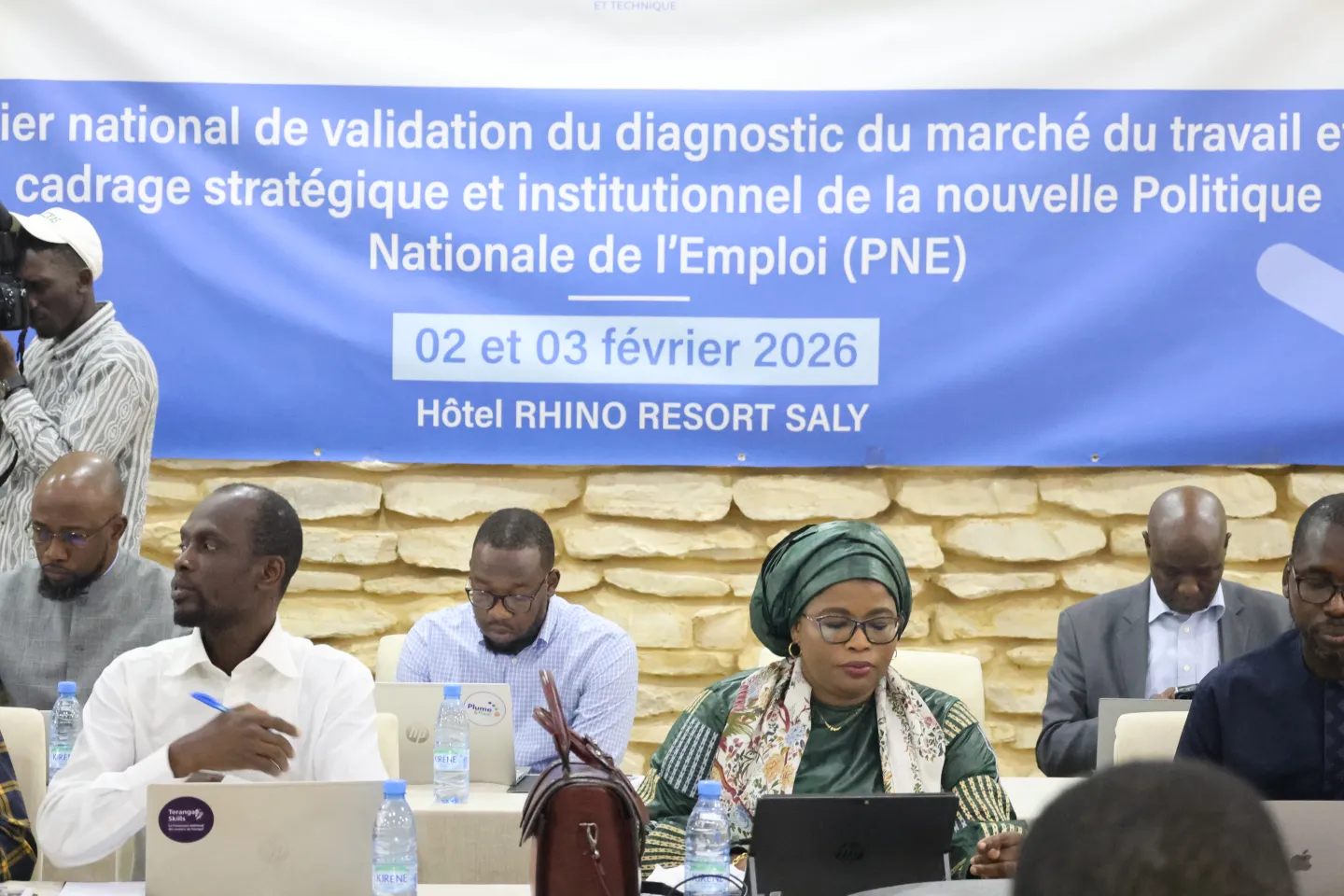
Organized within the framework of the ADIJEFE project – Support to improving youth employability systems and business formalization – the national workshop marked the transition from the labour market situational analysis phase to the strategic and institutional development phase of the NEP. It aligns with the priorities of Vision Senegal 2050 and the National Development Strategy (NDS 2025–2029), which position productive employment as a central driver of the country’s structural economic transformation.
A Shared Diagnosis of Labour Market Challenges
In recent years, Senegal has experienced sustained economic growth. However, this growth has not been sufficiently employment-intensive, particularly in generating decent and productive jobs for young people and women, who represent the majority of new entrants to the labour market.
The diagnosis presented by the National Agency for Statistics and Demography (ANSD) highlights persistent structural challenges, including the predominance of informal employment, underutilization of labour, mismatches between available skills and labour market needs, and fragmented public interventions in employment policy.
The consensual validation of this diagnosis represents a decisive milestone in the process. It establishes a shared and unifying reference framework for all stakeholders and strengthens national ownership of the forthcoming policy directions.
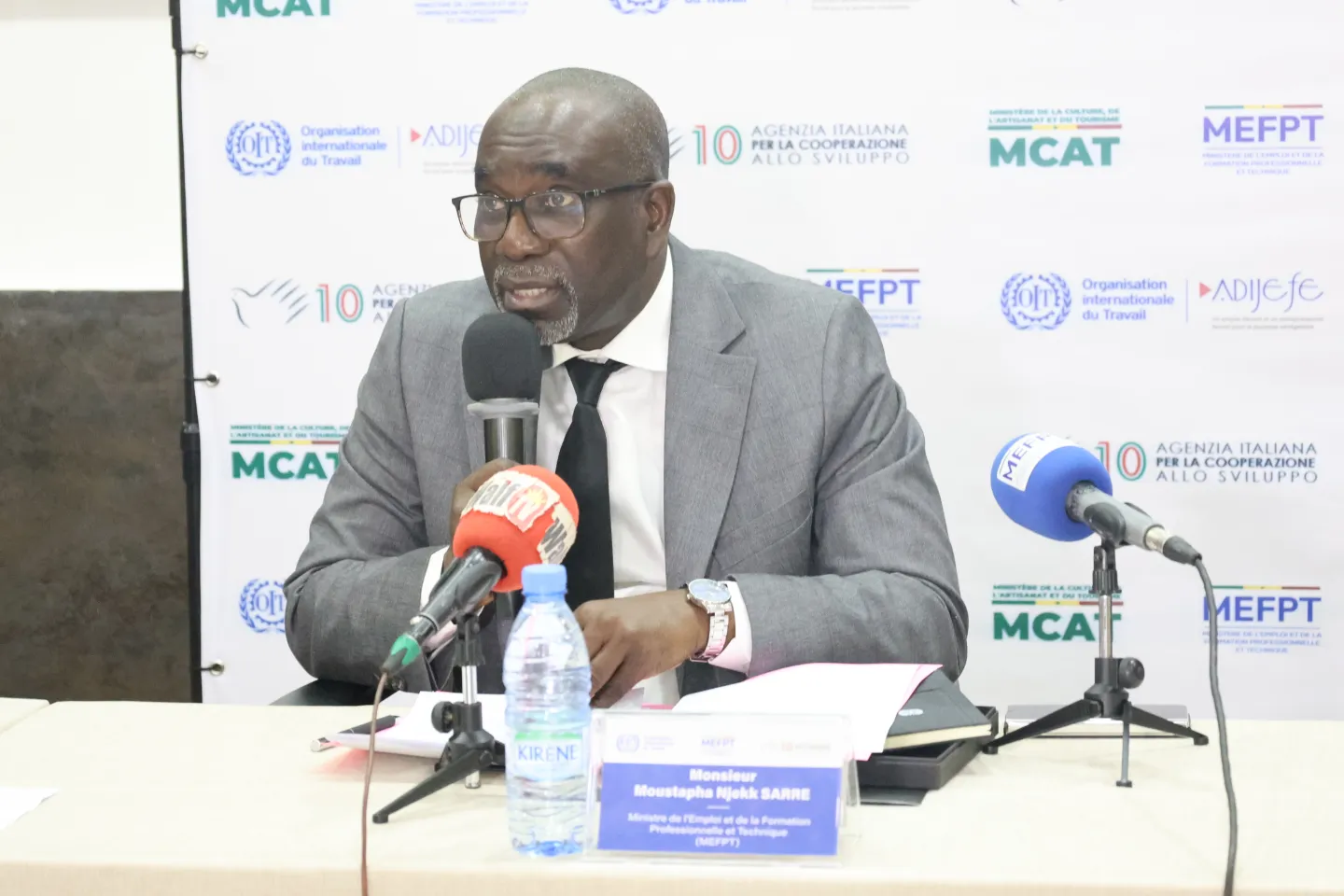
At the opening of the workshop, the Minister of Employment and Technical and Vocational Training, Mr. Moustapha Ndieck Sarré, emphasized the importance of this stage:
“The presentation of the employment and labour market diagnosis by ANSD, conducted with the support of the ILO and AICS, highlighted major challenges, particularly the mismatch between employment opportunities and training provision. The discussions held during this workshop nevertheless pave the way for concrete solutions.
The development of the National Employment Policy, as called for by the President of the Republic, is essential to address the imbalance between labour supply and demand. This workshop therefore represents a key step toward sustainably assessing and improving the employment situation in Senegal.”

Towards an Integrated and Results-Oriented Policy
Building on the findings and recommendations of the validated diagnosis, as well as key strategic frameworks including the Transformation Agenda 2050 and the NDS, the workshop moved beyond technical validation to engage in substantive strategic dialogue on the conceptual and institutional foundations of the future NEP. Participants stressed the need to position the policy as a cross-cutting instrument for coordinating public policies, moving beyond a strictly sectoral approach toward a systemic vision of the labour market.
Group work enabled participants to articulate a long-term vision structured around relevant objectives, guiding principles, and priority strategic pillars. These include promoting productive job creation, improving workforce employability, fostering the inclusion of vulnerable groups, and strengthening labour market governance. The shared vision aims to promote decent, productive and sustainable employment that contributes to the country’s economic and social transformation.
Discussions also clarified institutional governance arrangements at both central and territorial levels. They underscored the importance of a strengthened strategic coordination mechanism supported by high-level steering structures and an effective labour market information system to ensure rigorous monitoring of results.
A Participatory and Partnership-Based Process
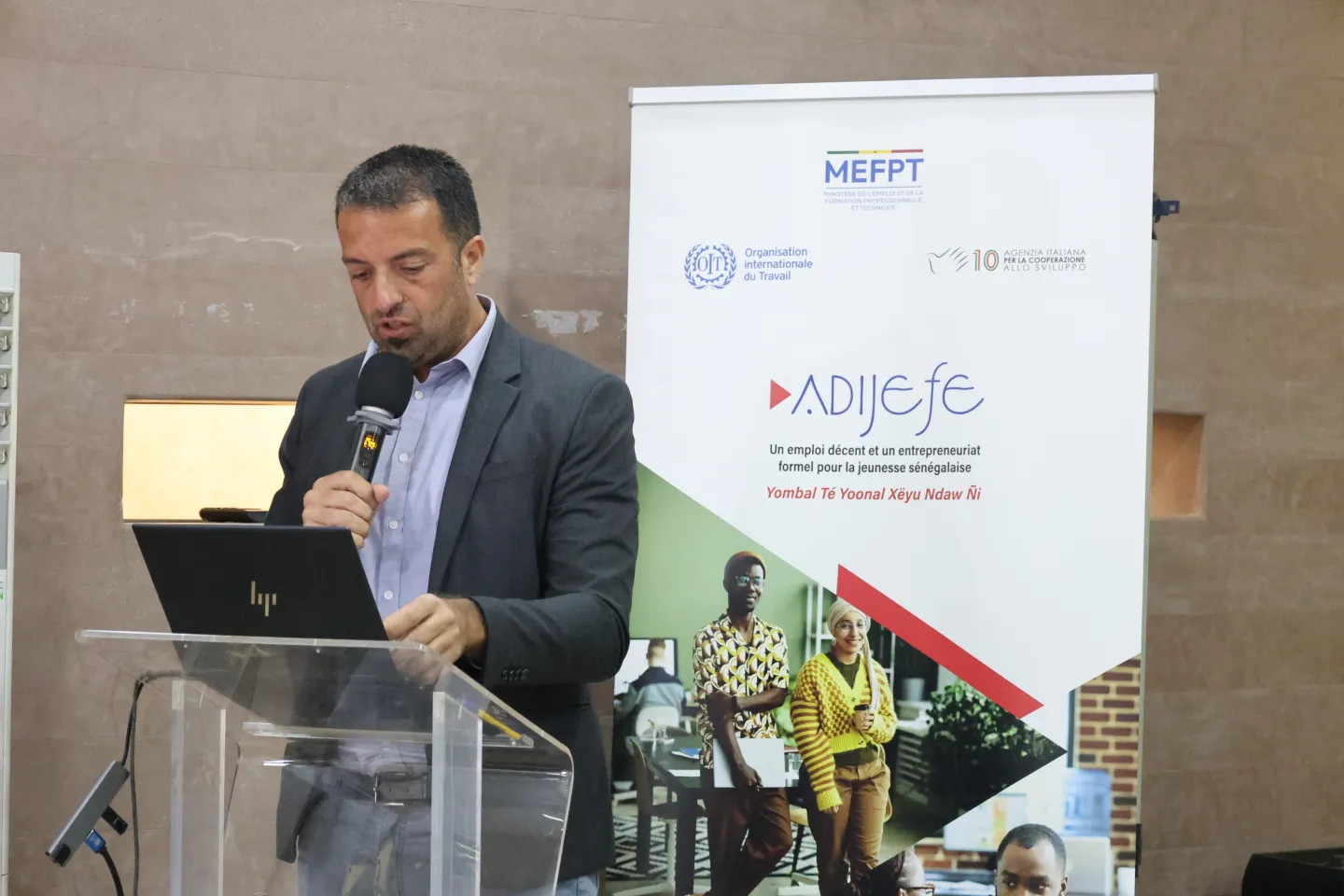
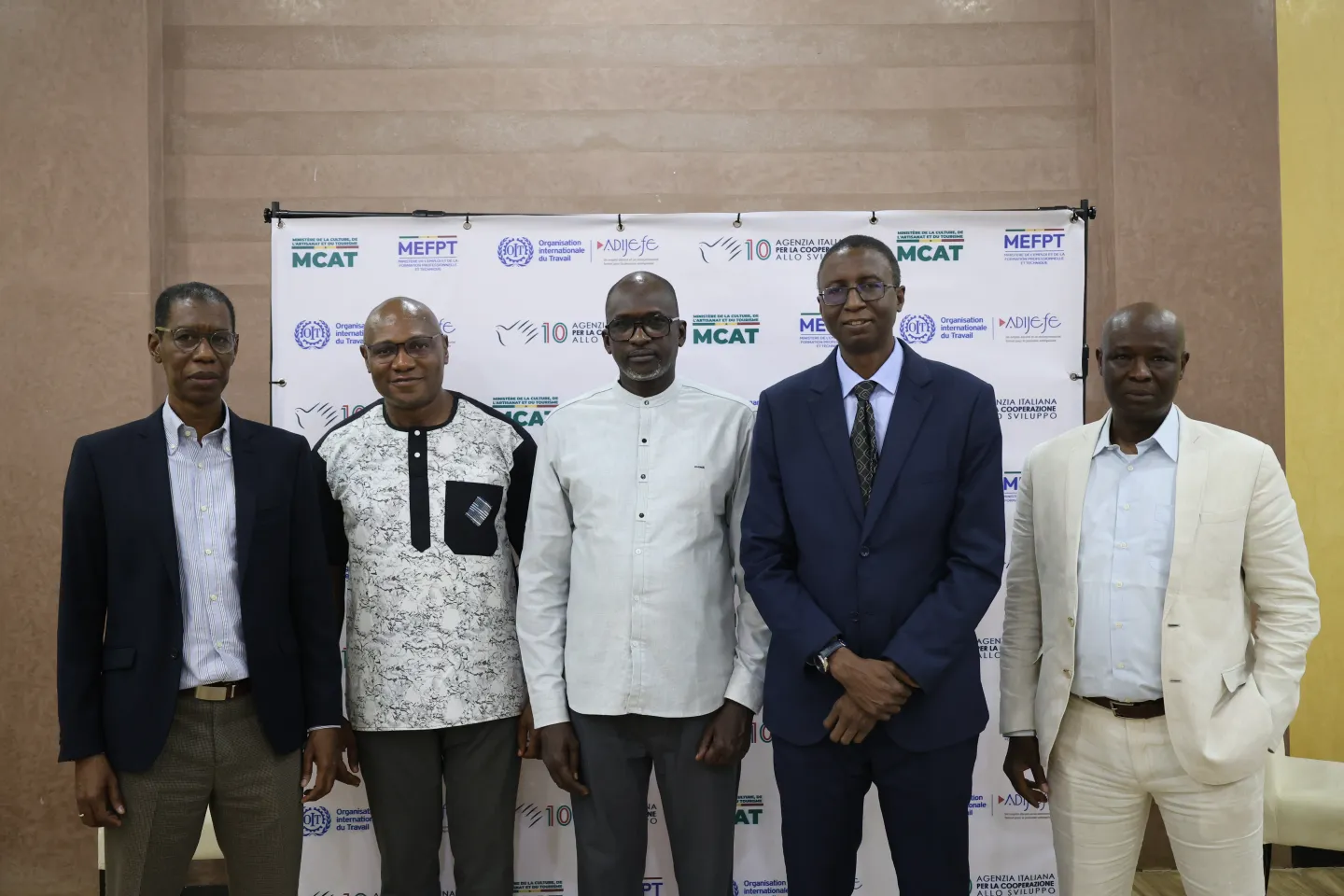
The workshop brought together a broad range of stakeholders, including members of the Steering Committee, government technical departments, ANSD, social partners, development partners, and national and international experts. This diversity enabled cross-sectoral and territorial perspectives to be considered, reinforcing the legitimacy of the strategic orientations adopted.
In line with the principle of national ownership, the establishment of a technical Task Force to support the drafting of the policy document stands out as one of the workshop’s key operational achievements. It ensures continuity of the process and the translation of strategic orientations into concrete, coherent and inclusive policy proposals.
ILO Support to Employment Policy Governance
Through the ADIJEFE project and drawing on its specialized technical expertise, the ILO supports national authorities in structuring the methodological and institutional framework for developing the NEP. Beyond logistical assistance, the project contributes to strengthening national capacities and promoting standards aligned with international best practices in the formulation of employment policies.
“The diagnostic forms the foundation of any credible, coherent and effective public policy. It underpins the credibility and coherence of the National Employment Policy; however, it only takes on its full meaning when embedded in a clear and shared normative framework aimed at full, productive and freely chosen employment, with decent work at the heart of public action. Investing in decent employment means investing in human capital, social cohesion and sustainable, inclusive growth.” Samira Daoud, Director of the ILO Office in Dakar
Next Steps
Participants emphasized the importance of inclusion and territorialization, the need to maintain strong political momentum, and the importance of aligning the NEP with sectoral policies while integrating digital and green transitions as opportunities for job creation.
In the short term, priority will be given to advancing decisively with the drafting of the policy document, ensuring continuous quality control throughout the process. This entails a structured mechanism for technical review, progressive validation, and stakeholder consultation to guarantee the coherence, analytical rigor and strategic alignment of the final document.
With this milestone, Senegal is consolidating the foundations of a coherent and ambitious public policy aimed at promoting decent and sustainable employment in support of inclusive economic transformation.