

Rural road rehabilitation boosts connectivity and decent work in Papua New Guinea
Through employment‑intensive approaches under the EU‑funded STREIT PNG Programme, the ILO links improved infrastructure with jobs, skills and sustainable livelihoods.
21 April 2026
Wewak, Papua New Guinea (ILO News) – On 25 March 2026, under the EU‑funded STREIT PNG Programme, the International Labour Organization (ILO) officially inaugurated the rehabilitated 16.7‑kilometre Rawo–Leitre Road in Leitre Village, Bewani‑Wutung‑Onei Local Level Government area, Vanimo Green District, West Sepik Province.
The inauguration was led by the European Union Ambassador to Papua New Guinea, H.E. Erika Hasznos, and brought together key stakeholders, including the Deputy Secretary of the Papua New Guinea Department of National Planning and Monitoring, Mr Michael Kumung, and the West Sepik Provincial Administrator, Mr Jacob Areman, as well as development partners and community representatives from Rawo, Leitre and Onip villages.
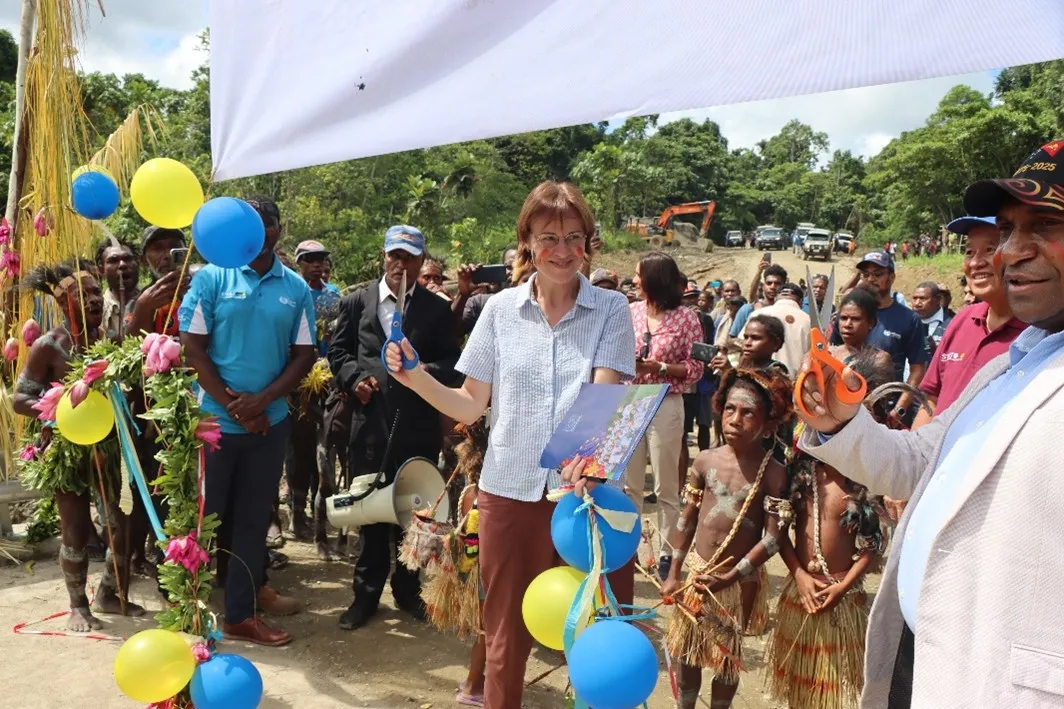
This strategic infrastructure project significantly improves connectivity for local communities, enhancing access to markets for cocoa, vanilla and fish, as well as to education, health care and other essential services. It is expected to strengthen agricultural value chains, reduce transport costs and improve access to essential services, representing an important step towards strengthening livelihoods, supporting small‑scale farmers and promoting inclusive economic growth in the region.
Mr Jack Kesi, a local community leader from Leitre village and representative of the beneficiary communities, addressed the delegation, noting that the road had been unusable since 2005 due to its poor condition and a damaged bridge.
Since 2005, we have relied on sea transport at very high cost. The rehabilitation of the Rawo–Leitre road has changed our lives for the better. Transport costs have reduced, we are now travelling to Vanimo more frequently with ease on PMVs (Public Motor Vehicles) to market our produce, purchase goods and services, and receive other basic government services.
Jack Kesi, Community leader, Leitre village
In line with commitments to inclusive and equitable development, the project has actively promoted women’s participation in rural infrastructure works. Women account for 44.4 per cent of workers engaged in road rehabilitation and maintenance activities, reflecting a strong emphasis on gender‑responsive programming and on expanding women’s access decent work and meaningful participation in community development.
Beyond immediate employment creation, the establishment of community‑based routine maintenance teams helps ensure the long‑term sustainability of the road infrastructure while strengthening local ownership and institutional capacity. This approach contributes to more resilient and reliable rural transport systems.
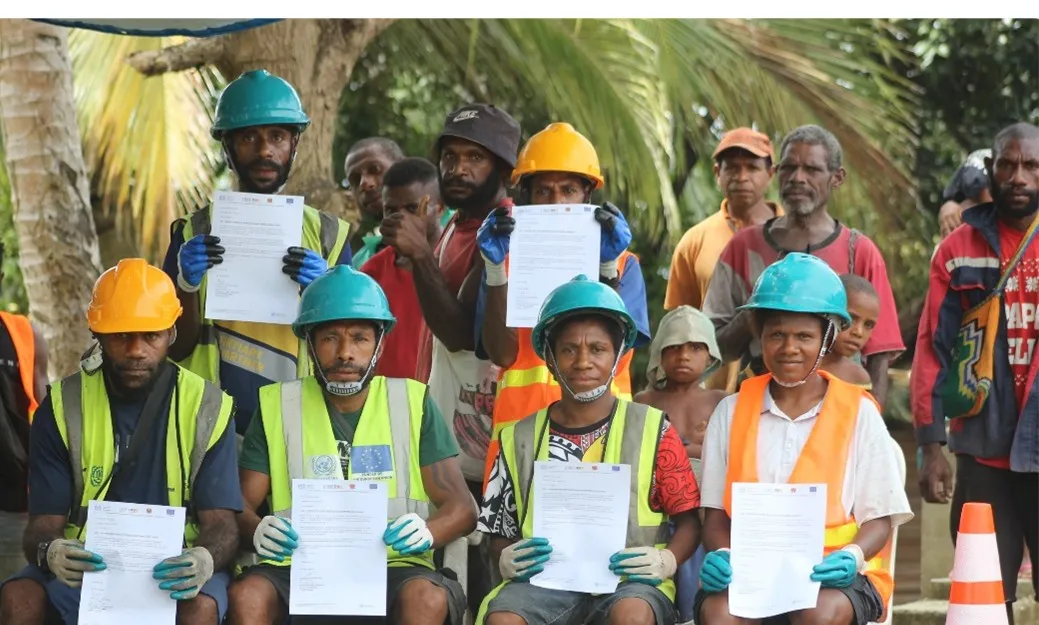
The Rawo–Leitre Road serves as a practical example of how employment‑intensive investments can deliver quality infrastructure while promoting social inclusion and sustainable livelihoods in rural Papua New Guinea.
The initiative forms part of the broader EU‑funded STREIT PNG Programme, which aims to promote sustainable and inclusive economic development in the Sepik region by strengthening cocoa, vanilla and fisheries value chains. Through integrated support to infrastructure development, agribusiness and capacity building, the programme contributes to improved livelihoods, increased income opportunities and enhanced resilience for rural communities.
About the ILO’s work under STREIT PNG
The International Labour Organization (ILO) promotes decent work, social justice, and inclusive employment in Papua New Guinea through rural transport infrastructure interventions in the Sepik region. These efforts are implemented under the EU-funded STREIT PNG Programme the largest European Union development initiative in the Pacific jointly delivered by five United Nations agencies (FAO as lead agency, alongside ILO, UNDP, ITU, and UNCDF).
Through the programme, the ILO applies employment-intensive approaches to road rehabilitation using local resource-based methods, and supports routine road maintenance through community-based Road Maintenance Groups (RMG). These interventions generate employment, build local skills and improve essential infrastructure, including roads, rural airstrips, and waterways. Community members are actively involved in infrastructure works such as culvert construction and gabion installation to protect road slopes and prevent landslides, ensuring that infrastructure investments translate into income opportunities, skills development and strengthened community ownership.
At the same time, the project promotes decent employment through contractors (for road rehabilitation activities) and RMGs (for road routine maintenance), ensuring that infrastructure delivery contributes to sustainable livelihoods while enhancing resilience and long‑term development outcomes.
Related content

EU-STREIT Project in Papua New Guinea
Rural Entrepreneurship, Investment and Trade (STREIT) Programme
Topic portal
Employment-intensive investment
Relevant projects
EU-STREIT Project in Papua New Guinea
Rural Entrepreneurship, Investment and Trade (STREIT) Programme