

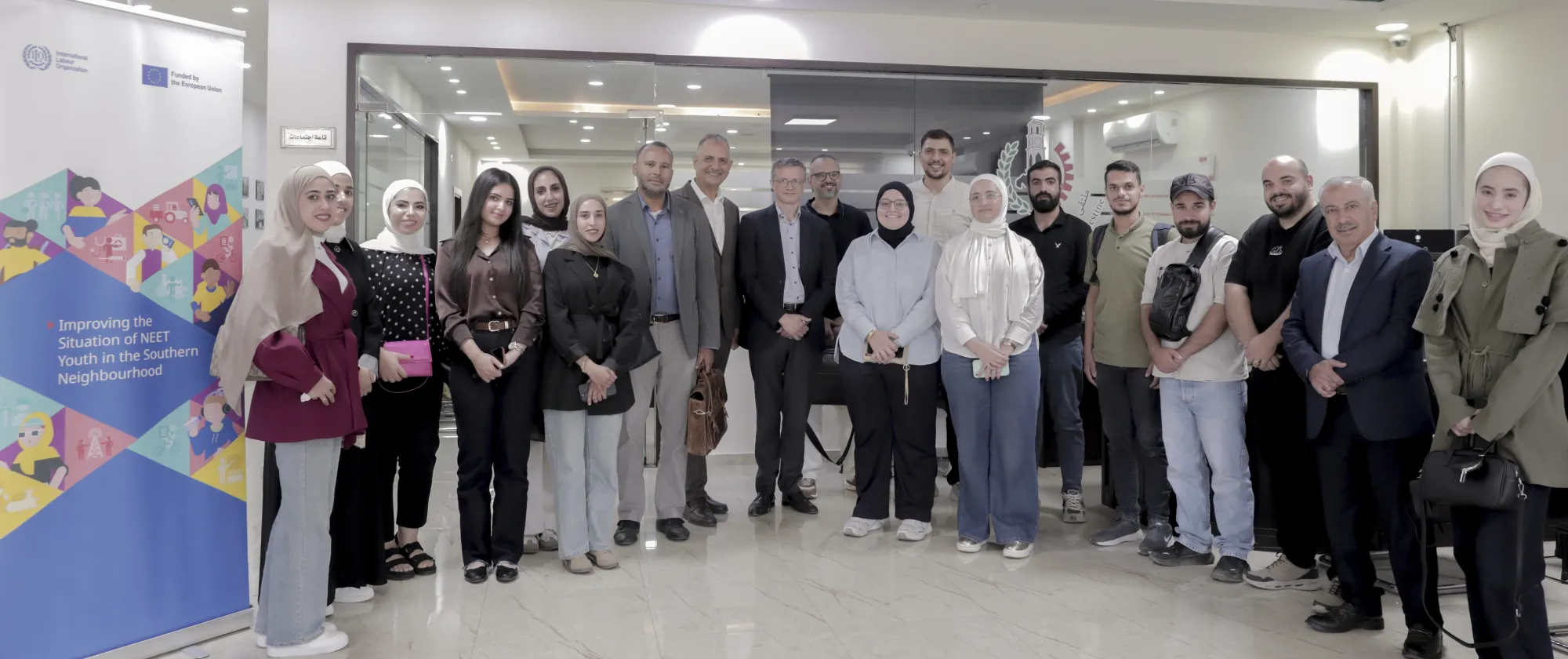
Y-NEET project
New pilot aims to strengthen pathways to employment, education and training for young Palestinians
Young Palestinians and national partners are shaping a new activation model designed to make employment, education and training services more accessible, responsive and better connected for young people not in employment, education or training (NEET), with support from the European Union and the ILO
24 September 2026
RAMALLAH (ILO News) – A new pilot activation model is being developed to strengthen the way young Palestinians not in employment, education or training are identified, reached and connected with opportunities and support. The pilot aims to create a more coordinated pathway from outreach and individual assessment to personalized guidance, referral and follow-up, helping make existing employment, education and training services more accessible and responsive to young people’s needs.
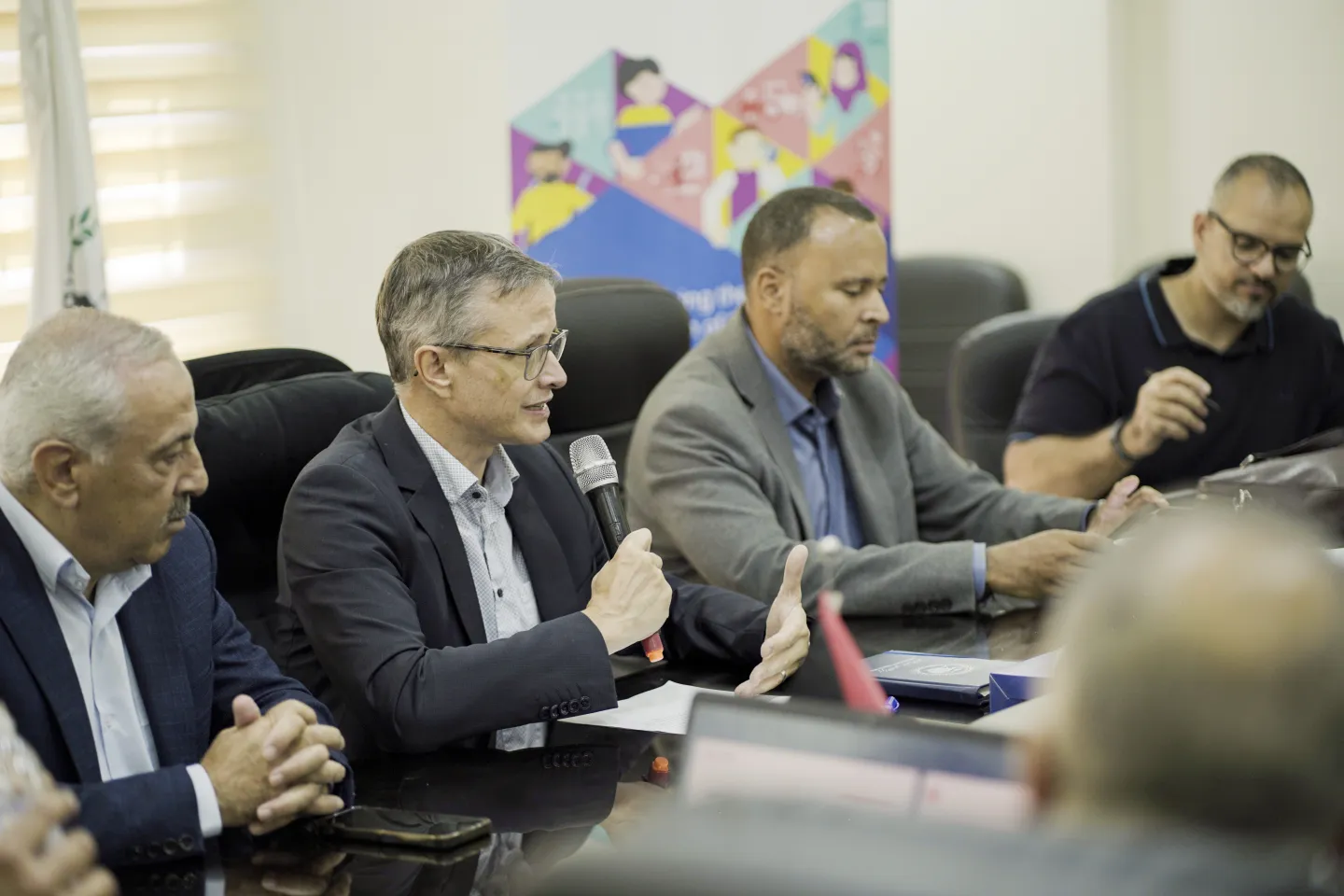
Young Palestinians and national stakeholders are shaping the model together, combining young people’s lived experiences with the expertise of institutions and social partners responsible for employment, training and related services. This collaborative approach will help ensure that the pilot responds to the barriers young people face while reflecting institutional realities and opportunities for stronger coordination.
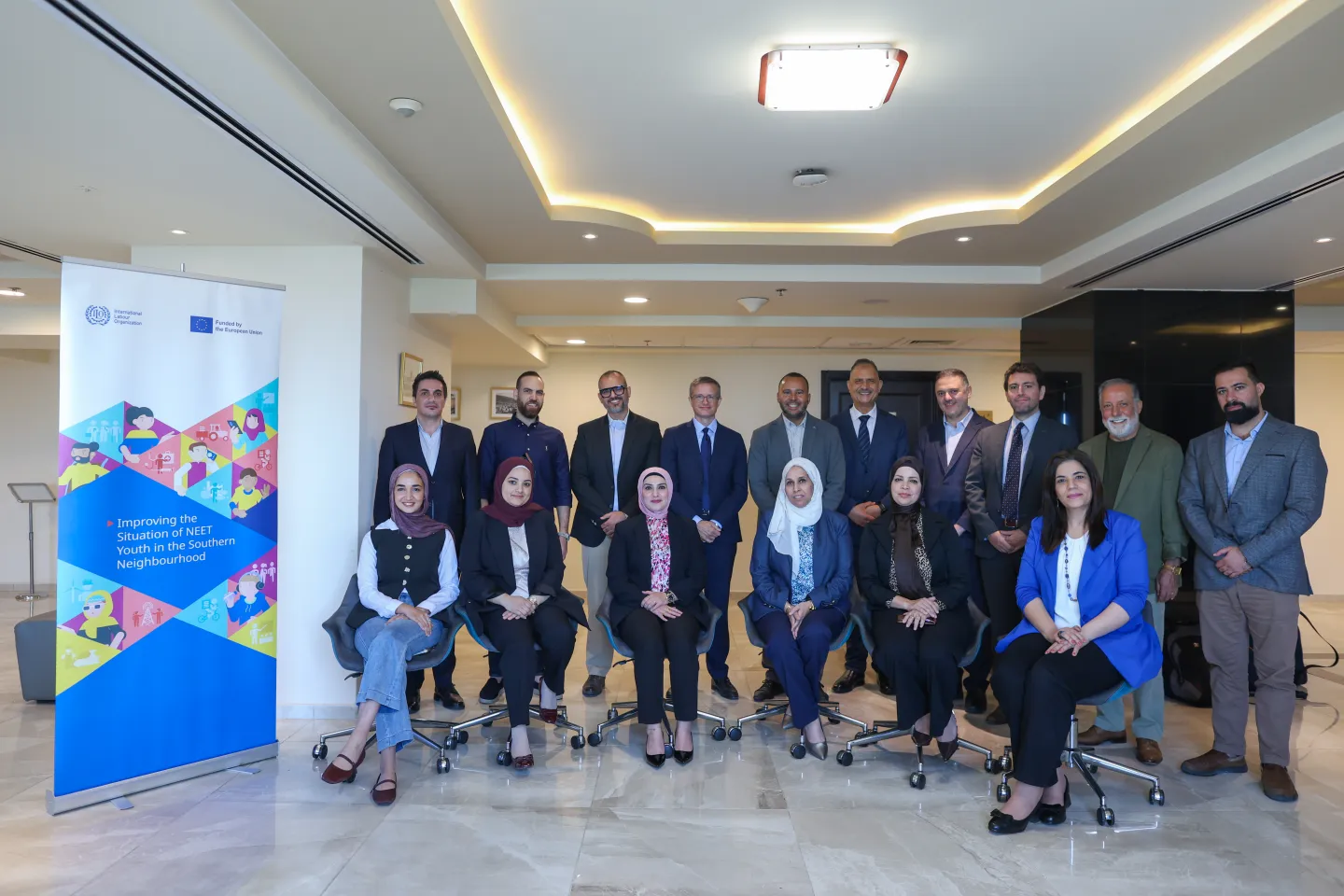
A youth consultation held in Nablus and a technical workshop in Ramallah provided important input into the model’s design. The International Labour Organization (ILO) and the European Union (EU) organized the activities in partnership with the Palestinian Ministry of Labour and other national stakeholders under the regional EU-ILO “Youth NEETs” project.
Listening to youth in Nablus
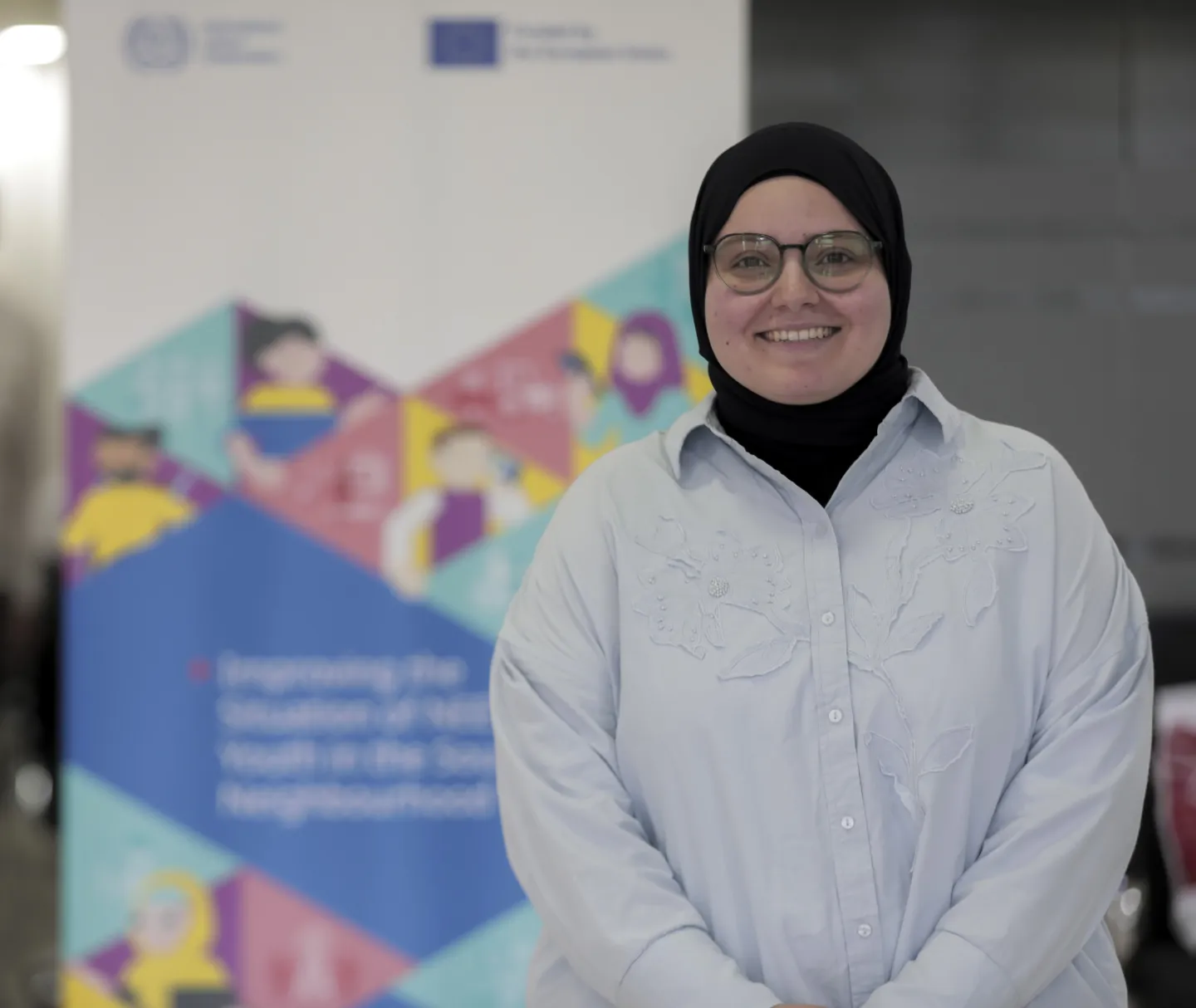
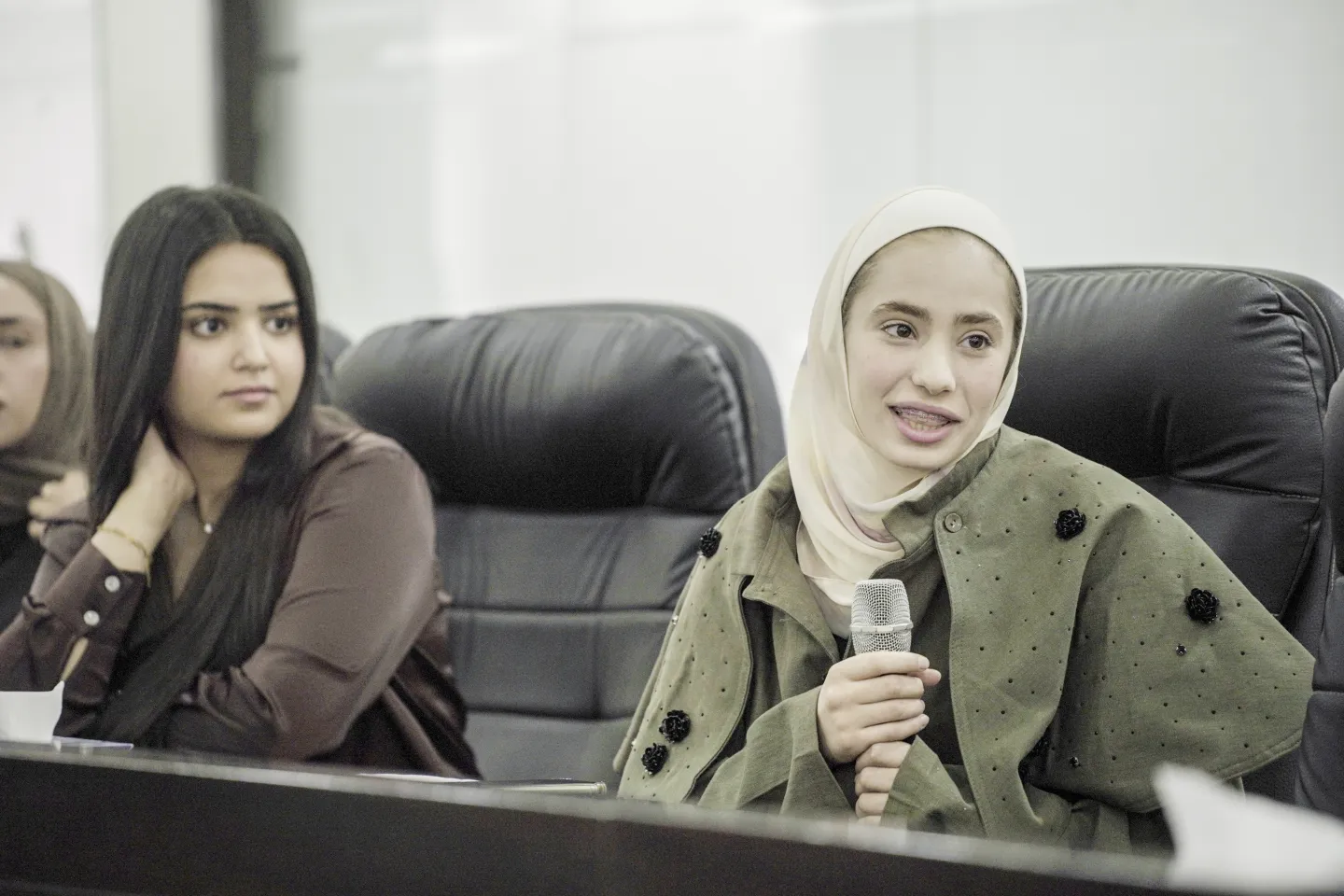
Participants at the youth consultation in Nablus gave firsthand accounts of young Palestinians’ experiences, needs and priorities – vital insights that will inform the design and implementation of the pilot activation model. Alongside young people, attendees included representatives of the Ministry of Labour, the Palestinian General Federation of Trade Unions (PGFTU), the Federation of Palestinian Chambers of Commerce, Industry and Agriculture (FPCCIA), the ILO, and SPARK.
The consultation created a youth-friendly space for young women and men aged 15–29 who are not in employment, education, or training, including inactive or discouraged youth, young people with varying levels of education, and those with prior work experience. To make the discussions practical, the session examined the journey of a young person not in employment, education or training, who is looking for support. Participants considered each stage of this journey, from finding information and approaching an employment service to discussing the young person’s needs, agreeing on a plan, receiving a referral to employment, training or other support, and obtaining follow-up services. At each stage, young people identified the barriers and challenges they may face, what could discourage them from continuing, and what would make services more accessible, relevant and responsive to their needs.
Technical review and validation in Ramallah
Incorporating the insights collected from youth representatives, institutional stakeholders gathered to discuss the next steps and approach of the project. In particular, concrete youth activation models were reflected, which will focus notably on improving outreach to most vulnerable youth, as well as referrals, access to training, engagement of private sector and institutional coordination.
Participants included representatives of the Ministry of Labour, the Palestinian Central Bureau of Statistics (PCBS), the National Technical and Vocational Education and Training (TVET) Commission, PGFTU, FPCCIA, the ILO, the European Union and SPARK.
Following discussion of an initial proposal for Nablus, the majority of participants voted in favour of Tulkarm Governorate as the proposed pilot location, given its economic and social conditions and the limited opportunities available to young people. The recommendation remains subject to final confirmation by the partners and the Ministry of Labour.
Turning evidence into an actionable pilot
The pilot builds on evidence from the regional Youth NEET project, including the Statistical Profile of Youth Not in Employment, Education or Training in the Occupied Palestinian Territory, policy and service reviews, and an assessment of public employment services. These highlight the need to improve outreach, personalize guidance, and forge stronger links between employment, training and education opportunities for young Palestinians, considering current institutional and labour market constraints.
The activation model will outline a practical sequence for identifying young people, providing them with an assessment and personalized plan, and referring them to suitable services, with continuous follow-up. The pilot will test this pathway within existing institutions and partnerships, documenting lessons for future scaling.
The activities were facilitated by SPARK for Consulting and Training, which supports the pilot’s design, implementation and documentation.
Additional details
References
- DOI: N/A
Relevant projects

Y-NEET project
Empowering Youth NEETs in the Southern Mediterranean Region