

Just transition
Leading the change: Caribbean employers, workers, and governments driving just transition through social dialogue
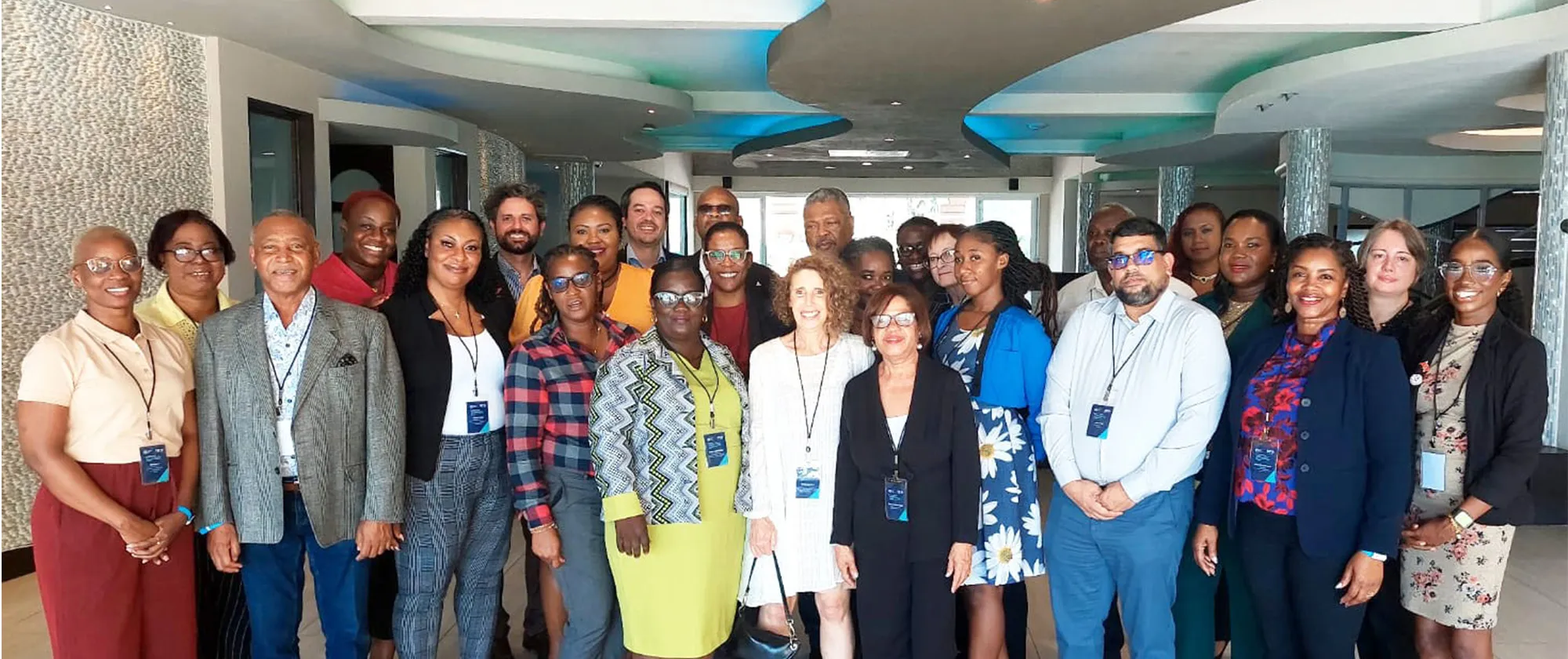
The ILO successfully concluded a regional capacity-building programme funded by the German Government, which involved government, employer, and worker representatives from thirteen Caribbean countries. It aimed to strengthen the ability of social partners to meaningfully contribute to national climate action strategies and Nationally Determined Contributions (NDCs).
25 October 2025
BRIDGETOWN, Barbados (ILO News) - As the world shifts toward low-carbon, environmentally sustainable economies, the Caribbean faces significant challenges and opportunities. Climate change poses a profound threat to key industries such as tourism, agriculture, and fisheries, which are the sectors that sustain millions of livelihoods across the region. To ensure that the transition to greener economies is just, inclusive, and anchored in decent work, it is vital that employers' and workers' organizations play an active role in shaping policy responses; this requires strengthening their capacity so they can proactively shape, and not just react to, green and blue economy policy changes.
To this end, over the period 7-23 October 2025, the International Labour Organization (ILO) Office for the Caribbean and the International Training Centre of the ILO (ITCILO) organized and executed a crucial capacity-building intervention for governments and social partners titled, “Leading the change: Employers, workers and governments driving just transition through social dialogue”. This initiative, funded by the German Government (BMZ), was designed to equip representatives from 13 Caribbean Member Countries with information and tools for effective participation in the development and implementation of Nationally Determined Contributions (NDCs) and Just Transition policies.
Strengthening capacity for policy coherence
The ILO’s approach is guided by its Guidelines for a just transition, which calls for urgent action to promote social justice and decent work through inclusive transitions. Without informed and capable social partners, transition strategies risk being top-down, fragmented, or ineffective in addressing the real challenges faced by enterprises and workers. The framework of a Just Transition ensures that climate action is linked with decent work, business sustainability, and social justice. Vera Guseva, Workers’ Activities Specialist in the ILO Caribbean Office underscored the urgency of the situation saying, “the question is not if the transition will happen, but how we ensure it benefits all. Just Transition is about making sure climate action works for everyone, creating good jobs, supporting sustainable businesses, and building fairer, more resilient societies.”
ILO Specialist on Social Dialogue and Labour Administration, Nancy Varela, emphasized the necessity of tripartite collaboration, “Social dialogue is at the heart of a fair and sustainable transition. Governments, employers and workers must move together to ensure that climate action does not leave anyone behind ”.
A multi-disciplinary, blended approach
The BMZ-funded Programme adopted a multi-disciplinary, blended learning approach, combining virtual training with an intensive in-person workshop.
1. Virtual Tripartite Workshops (7 & 9 October 2025): These sessions provided participants with an introduction to key Just Transition concepts, touching on international labour standards, exemplary policies, and green jobs. They also examined the main arguments and evidence in the ACTEMP report - The business case for Just Transition, and clarified the respective roles of government, employers, and workers in social dialogue for implementation of NDCs.
2. Virtual Bipartite Workshops (October 14 & 16, 2025): Dedicated sessions targeted to employers and workers, focused on the challenges and opportunities for business adaptation to sustainability goals. They were exposed to effective strategies from case studies in Belize and
Saint Lucia.
3. Face-to-Face Training in Barbados (October 21–23, 2025): The culminating workshop brought together employers’ and workers’ representatives for interactive analytical sessions and sectoral group meetings aimed at position definition and consensus-building. The content included deeper dives into regional case studies (Barbados, Belize, and Saint Lucia) and lessons from successive NDC iterations. The aim was to support participants in developing actionable roadmaps to influence national policy processes on Just Transition.
President of the Grenada Public Workers’ Union (GPWU), Daisy Hazzard, said of her experience in the programme:
I'm thrilled to have attended the ILO training/workshop on Just Transitions. Overall, it was a great and rewarding experience of bipartite synergies where the goals, ideals and expectations of all parties were matched. Having a deeper understanding and working knowledge of Just Transitions as a working and viable construct will impact the way I lead my trade union in formulating Collective Agreements and engaging in social dialogue for worker advancement and sustainable national development.
Sustaining the momentum and action plans
As a concrete outcome of the workshop, participants adopted a joint plan of action to lead the change towards Just Transition through social dialogue. This serves as a tangible expression of agreement to work together at the national level to integrate Just Transition into their national action plans and place the issue on the agenda of national tripartite bodies, especially as it relates to the implementation plans for the NDCs 3.0.
The BMZ-funded Project will continue into 2026 with ongoing ILO and ITCILO technical support to social partners and the development of tailored communication and advocacy tools. Ms. Victoria Giulietti, ILO ACT/EMP Specialist, emphasized that, “This is not a one-off exercise. The momentum generated by this programme must continue. Our goal is to ensure that Caribbean employers and workers have and use the knowledge to influence and shape greener, fairer, and more resilient economies. We want to make Just Transition part of the DNA of social dialogue in the Caribbean.”
This capacity-building effort marks an important step toward realizing resilient, equitable, and sustainable economies in the Caribbean, ensuring no worker or enterprise is left behind in the transformation toward a greener future.