

Labour migration
Language training for better access and inclusion for migrant workers in Thailand
Tailored Thai language training underscore the importance of supporting migrant workers in overcoming language barriers—a critical factor in ensuring fair and dignified working conditions for all.
7 November 2024
SONGKHLA, Thailand (ILO News) - For many migrant workers in Thailand, language remains a significant barrier to accessing essential services, understanding their rights, and integrating into the communities where they live and work.
Myanmar migrant workers make up a large proportion of the workforce in Thailand’s seafood processing industry. However, their limited understanding of Thai often restricts their ability to communicate effectively, leaving them vulnerable to isolation and exploitation. This language barrier also impedes their full potential and access to public services including healthcare, education, grievance and remediation mechanisms. Additionally, limited Thai language skills can limit migrant workers from advancing their careers within the industry, as they may miss out on training opportunities, promotions, or roles with greater responsibility that require basic language proficiency.
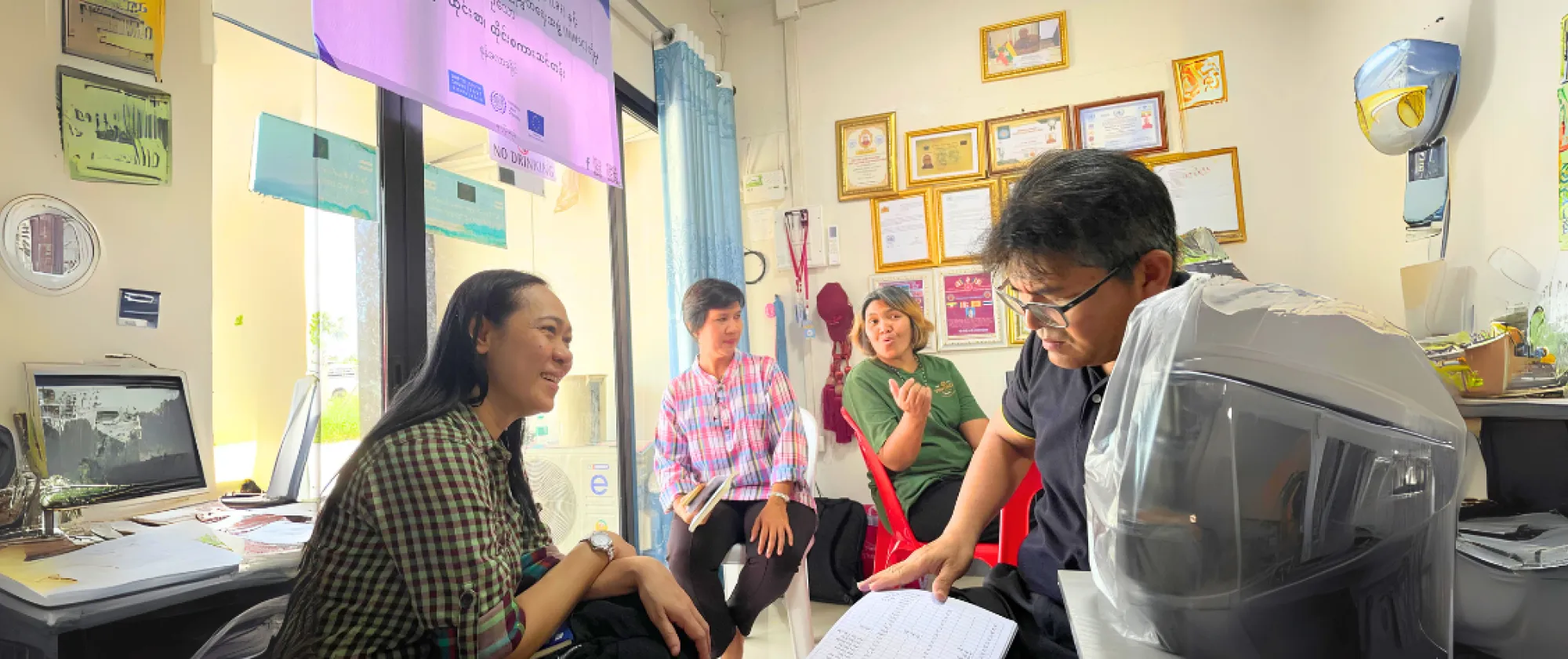
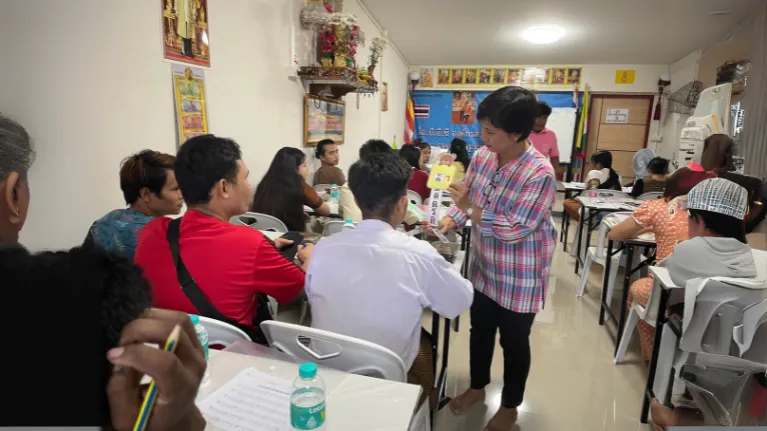
Recognizing this need, the ILO Ship to Shore Rights South East Asia (S2SR SEA) programme, with support from the European Union (EU), partnered with the Labour Rights Foundation to offer foundational Thai language courses to migrant workers in the fishing and seafood processing sectors. Implemented in Songkhla and Samut Sakhon, this initiative aims to equip Myanmar migrant workers with basic Thai language skills essential for daily interactions, helping them navigate life in Thailand with greater confidence and independence. It also empowers them by enhancing their ability to communicate in the local language and understand their labour rights.
“This language training not only helps migrant workers communicate with employers and access public services but also empowers them to participate more actively in social dialogue, which is essential for ensuring their rights and protections,” said Mi Zhou, Chief Technical Adviser of the S2SR SEA programme.
One of the programme participants, Nwe Nwe Moe, shared her experience: “I get to learn about labour rights and about organizations I was not aware of before. In addition, if we become fluent in Thai, we can protect ourselves from being exploited in the workplace. I have become more courageous and can now speak up with clarity. I am very thankful for this opportunity to learn and for all the teachers and trainers who share their knowledge with us.”
Launched in September 2023, the Thai language training covers essential vocabulary and phrases tailored to the needs of migrant workers in fishing and seafood processing industries, with lessons focused on practical scenarios, such as understanding workplace instructions, seeking medical help, and reporting issues. By improving their language skills, migrant workers are also able to integrate better with the local communities, fostering mutual understanding and respect.
“We get to learn free of charge... and I am very happy to be part of the class. It feels like I have gained an opportunity for personal development in my life,” said Thi Thi Tun, participant.
Since the launch of the language training, more than 330 Myanmar migrant workers have improved their Thai language skills. This training is a crucial step in fostering an inclusive work environment where migrant workers feel valued and supported. Empowered with language skills, they are better equipped to advocate for themselves, seek assistance when needed, and fully engage in the social and economic life of Thailand.
“Learning like this is a great opportunity for long-term personal development. Additionally, I can teach fellow migrants who are not fluent in Thai,” added Aung Ko Min, participant.
Thailand has long been a top destination for migrant workers from Southeast Asia, particularly for those from neighboring Myanmar, Cambodia, and the Lao People's Democratic Republic. In 2023, there were approximately 2,342,478 migrant workers in Thailand, according to Thailand's Ministry of Labour, with around 600,000 of them employed in the fishing and seafood processing sectors.
You may also be interested in

Labour migration
Ship to Shore Rights South-East Asia: Safe migration for decent work in the blue economy
Relevant projects
Ship to Shore Rights South East Asia - Indonesia

Migrant workers
Ship to Shore Rights South East Asia (SEA)