

Labour rights protection essential to advancing human rights – ILO and UN bodies affirm
The first of its kind meeting between the ILO Committee of Experts on the Application of Conventions and Recommendations and UN human rights mechanisms, emphasized that protecting labour rights is essential for realizing all human rights and reminded governments of their duty to uphold these rights.
10 December 2025
Geneva (ILO News) - The ILO Committee of Experts on the Application of Conventions and Recommendations, independent body of international experts that supervises the application of international labour standards, the Chairs of UN Bodies entrusted with the monitoring of human rights treaties (Treaty Bodies) and the Chair of the UN Working Group on the issue of Human Rights and Transnational Corporations and other business enterprises (UN Working Group on Business and Human Rights) affirmed the centrality of labour rights to universal human rights during the first of its kind meeting among the UN and ILO bodies.
The participants, who exchanged experiences on the complementarity of their respective mandates to advance human rights and labour rights, called on governments to uphold these rights and reminded businesses of their responsibility to respect them, while emphasizing the need for effective remedy and access to justice.
“It is the first time that a meeting brings together the Committee of Experts, Treaty Body Chairs and the Working Group on Business and Human Rights. I welcome this opportunity to share good practices and reflect collectively on how to further enhance our cooperation and regular exchange of information”, said the Chairperson of the ILO Committee of Experts on the Application of Conventions and Recommendations, Mr Alain Lacabarats.
“Alignment matters, because labour rights are human rights. While our mandates differ, our objective is shared: ensuring dignity, equality, and security for workers and communities” said the Chair of the Human Rights Committee and acting Chair of the Annual Meeting of the Chairs of the Treaty Bodies, Mr Changrok Soh. He added that “as monitoring bodies, our task is to ensure that the core pillars of the business and human rights agenda, i.e., the state duty to protect, corporate responsibility to respect, and access to remedy, translate into meaningful practice”.
“We have many complementarities to highlight, and by working together, we have an opportunity to make our recommendations a powerful driver of change – helping not only to address business-related human rights abuses, but to actively prevent them by strengthening the corporate responsibility to respect human rights.” said Ms Pichamon Yeophantong, Chair of the UN Working Group on Business and Human Rights, who thanked the Committee of Experts and Treaty Body Chairs for their support and engagement with the Working Group's mandate.
All Experts, including the Chairs and representatives from the Committee on Economic, Social and Cultural Rights, Committee on the Elimination of Discrimination Against Women, Committee on Enforced Disappearances, Committee on the Rights of the Child, Committee on the Rights of Persons with Disabilities, and Subcommittee on the Prevention of Torture, emphasized the synergies and complementarities on the business and human rights agenda among their respective mandates.
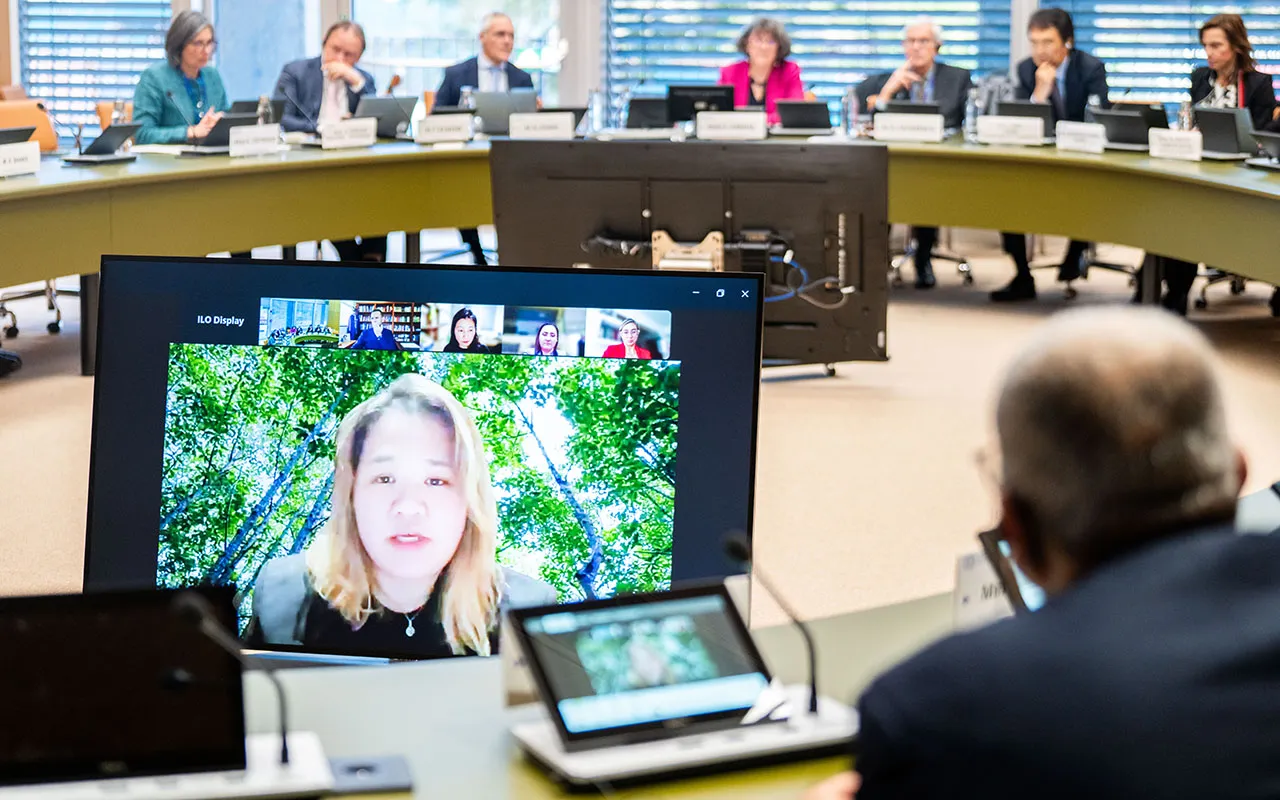
The participants underlined the importance of strengthened cooperation to ensure that international labour standards and human rights obligations move from principle to practice – protecting human dignity at work– , and showcased specific initiatives, in particular:
- Stocktake of National Action Plans in Southeast Asia by the Working Group on Business and Human Rights with a view to their strengthening;
- Joint statement on Artificial Intelligence and the Rights of Children and its follow up under the leadership of the Committee on the Rights of the Child;
- Joint technical guidance on disability inclusion in Human Rights Due Diligence and National Action Plans on Business and Human Rights, proposed under the leadership of Committee on the Rights of Persons with Disabilities;
- Joint task force led by the Committee on the Elimination of Discrimination Against Women with a three-year work program to address gender-related impacts of digitalisation and business operations.
- Collaboration proposed by the Committee on Enforced Disappearances to clarify due diligence obligations for private companies operating detention and similar facilities, also supported by the Subcommittee on the Prevention of Torture.
“The work of the Treaty Bodies can complement and reinforce the efforts of the ILO, as well as the Working Group on Business and Human Rights, and collectively strengthen the imperative of integrating human rights into all business activities” said Ms Joo-Young Lee, member and focal point for the ILO in the Committee on the Economic, Social and Cultural Rights.

The ILO and the OHCHR have a longstanding collaboration on the business and human rights agenda, based on the alignment of the “Guiding Principles on Business and Human Rights, implementing the UN “Protect, Respect and Remedy Framework” and the ILO Tripartite Declaration of Principles concerning Multinational Enterprises and Social Policy, which includes a call to all parties to contribute to the realization of the ILO Declaration on Fundamental Principles and Rights at Work (1998), as amended in 2022.
For more information, see:
Related content

International Labour Standards

ILO Supervisory system
Committee of Experts on the Application of Conventions and Recommendations (CEACR)