

News
Japanese trade unions strengthen responsible business conduct to promote labour rights
ILO contributes to executive training for trade union leaders, highlighting global trends in business and human rights, corporate responsibility, and their roles in guiding enterprises.
22 April 2026
TOKYO (ILO News) – Trade unions in Japan are strengthening their capacity to advance responsible business conduct (RBC) and promote labour rights, with support from the International Labour Organization.
Through a capacity development programme for trade union leaders, implemented with the Japanese Federation of Textile, Chemical, Food, Commercial, Service and General Workers' Unions (UA ZENSEN) and other national trade union federations, participants were equipped with knowledge and practical approaches to promote RBC.
The training, which ran in four sessions from November 2025 to April 2026, focused on human rights due diligence, addressing labour rights issues in supply chains, and engaging in constructive dialogue with employers. It brought together the Japanese Trade Union Confederation (RENGO), the Japanese Federation of Food Industry Workers’ Unions (FOOD-RENGO), and the Japanese Council of Metalworkers’ Unions (JCM), as well as enterprise-level trade unions affiliated with UA ZENSEN and FOOD-RENGO.
As a result, participating trade unions are better equipped to address labour rights issues in practice and communicate workplace and supply chain concerns to employers.
The initiative has also led to concrete action plans by participating unions, setting out how they will apply RBC in their work. It has helped build a shared understanding among participants of their roles in advancing responsible business conduct and promoting labour rights.
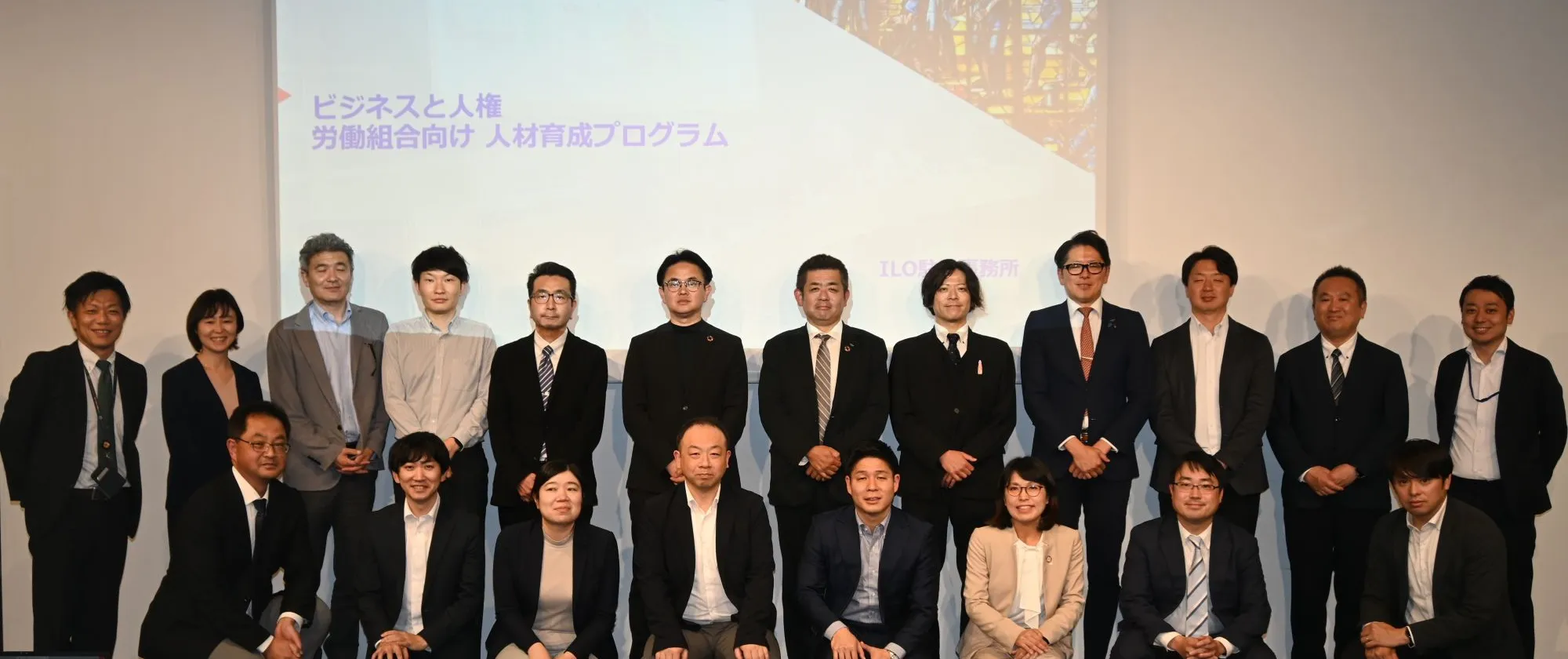
At the final session on 1 April, around twenty participants reflected on the knowledge and insights gained and presented their future action plans, including the goals of their respective trade unions, current initiatives and challenges within their companies, and approaches to engage with employers.
Related content

Project
Fostering an Enabling Environment for MSMEs to Promote Responsible Value Chains (FEE-RVC)
Relevant projects
Project
Fostering an Enabling Environment for MSMEs to Promote Responsible Value Chains (FEE-RVC)