

Iraq finalizes design of the 2026 National Labour Force Survey
Survey will provide reliable and internationally comparable national data to support development of labour market policies.
13 August 2026
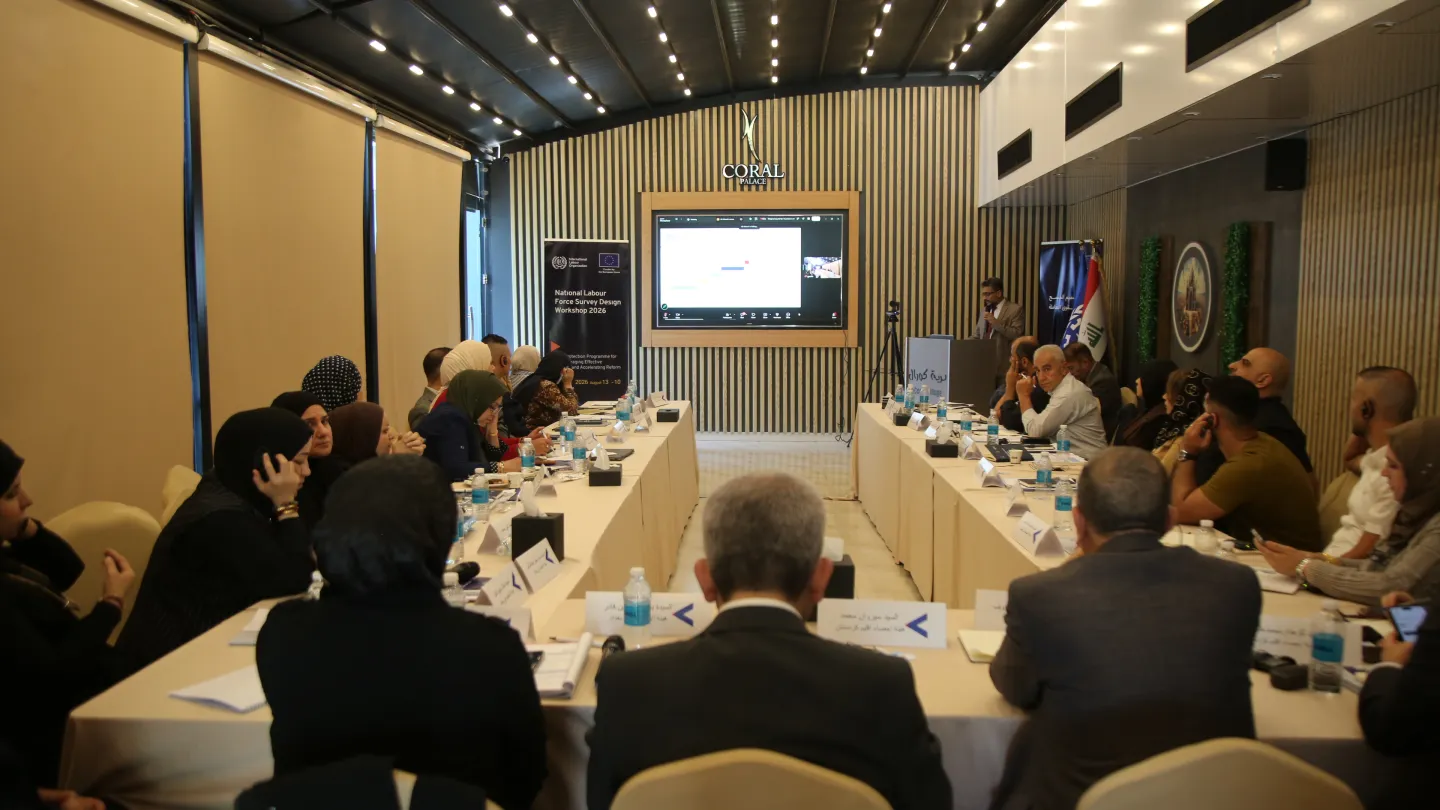
BAGHDAD (ILO News) – Iraq has concluded design of its 2026 National Labour Force Survey (LFS) ahead of piloting and implementation. Technical teams from the Authority of Statistics and Geographic Information Systems, the Kurdistan Region Statistics Office, and the International Labour Organization (ILO) held a workshop in Baghdad to finalize and endorse the survey’s key technical and methodological components and agree on the next steps towards the pilot survey and field implementation.
The workshop focused on finalizing, reviewing and endorsing the survey questionnaire, including the child labour module; the interviewer instruction manual; and the methodology for electronic programming of the questionnaire. It also covered the sample design, data quality monitoring and validation methodologies, and plans for the pilot survey, training and fieldwork. The workshop received technical support from the ILO under the EU-UN Joint Programme on Social Protection in Iraq.
The 2026 LFS will be Iraq’s second nationally representative labour force survey, following the 2021 survey. It is planned to cover all governorates across Federal Iraq and the Kurdistan Region, providing an up-to-date, reliable and internationally comparable picture of Iraq’s labour market, including indicators on labour force participation, employment, unemployment and labour underutilization, as well as a broader range of characteristics of work and the labour market.
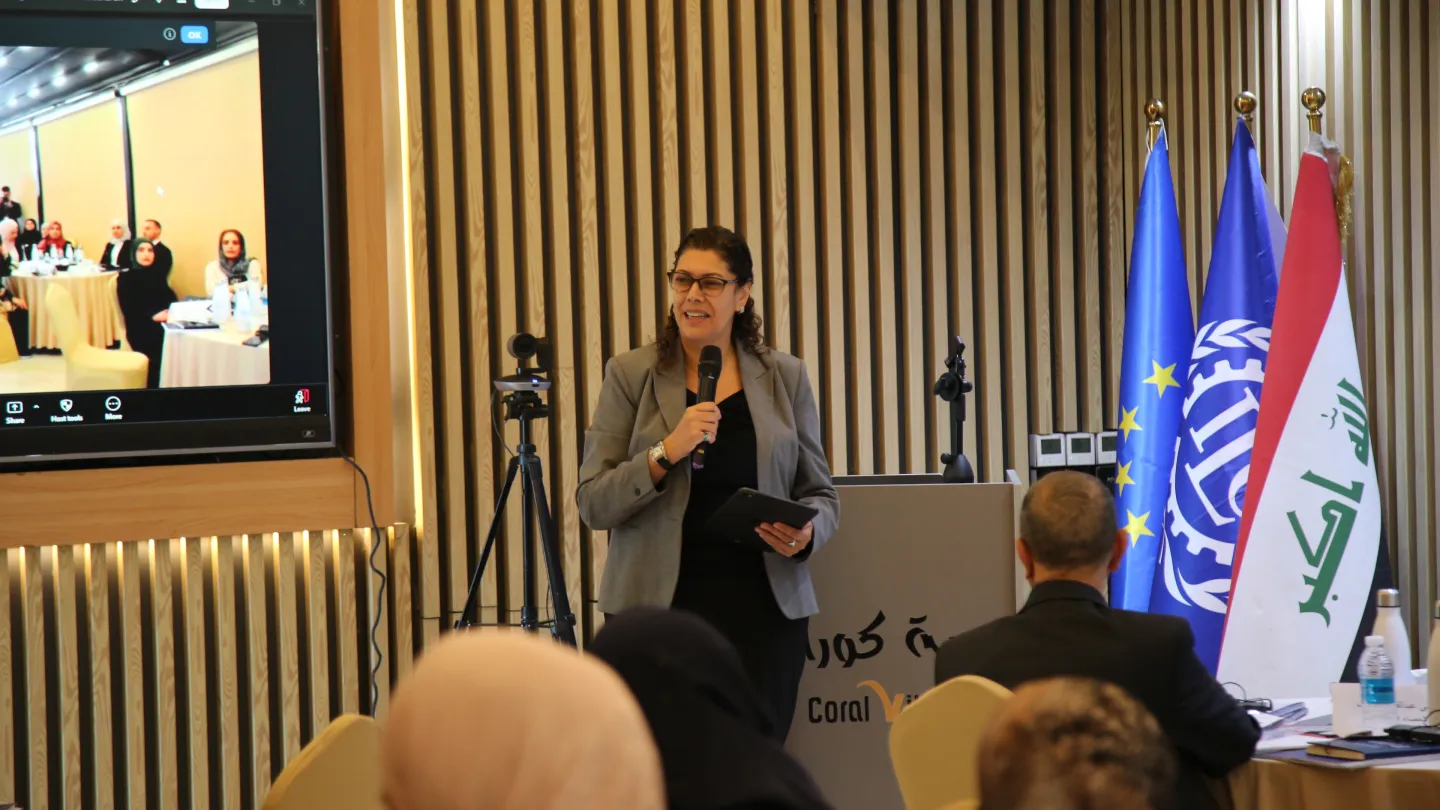
“The 2026 National Labour Force Survey represents a critical step towards updating Iraq’s labour market evidence base,” ILO Country Coordinator in Iraq Ruby Alsalem said. “Its results will provide reliable and internationally comparable national data to support policies in the areas of employment, skills, social protection, the informal economy, child labour, gender equality and working conditions.”
During the workshop, the technical teams reached agreement on the core version of the questionnaire, paving the way for the programming and electronic testing phase. Findings from the pilot survey will subsequently be used to identify any necessary adjustments before the survey instruments for the main survey are finalized. The scope of the child labour module was also discussed to ensure its alignment with relevant international statistical standards and Iraq’s needs, with agreement to complete its programming as an additional instrument within the data collection process.
Participants also reviewed the interviewer instruction manual, including statistical concepts, questionnaire completion, use of tablets and fieldwork procedures. The manual will form the basis for training supervisors and interviewers participating in the pilot survey, with discussions emphasizing the importance of integrating training and electronic testing into preparations for fieldwork.
In preparation for the next stages, the technical teams in Baghdad and Erbil agreed to proceed in parallel with the electronic programming and adaptation of the questionnaire, including the Arabic and Kurdish versions. They also discussed mechanisms for monitoring and validating data quality during fieldwork to enable the early detection and correction of errors. The teams further reviewed the sample design, scope of the pilot survey and arrangements for training, supervisors and interviewers, and established a timeline linking the completion of programming and testing with training, implementation of the pilot survey and analysis of it results in preparation for the main survey.
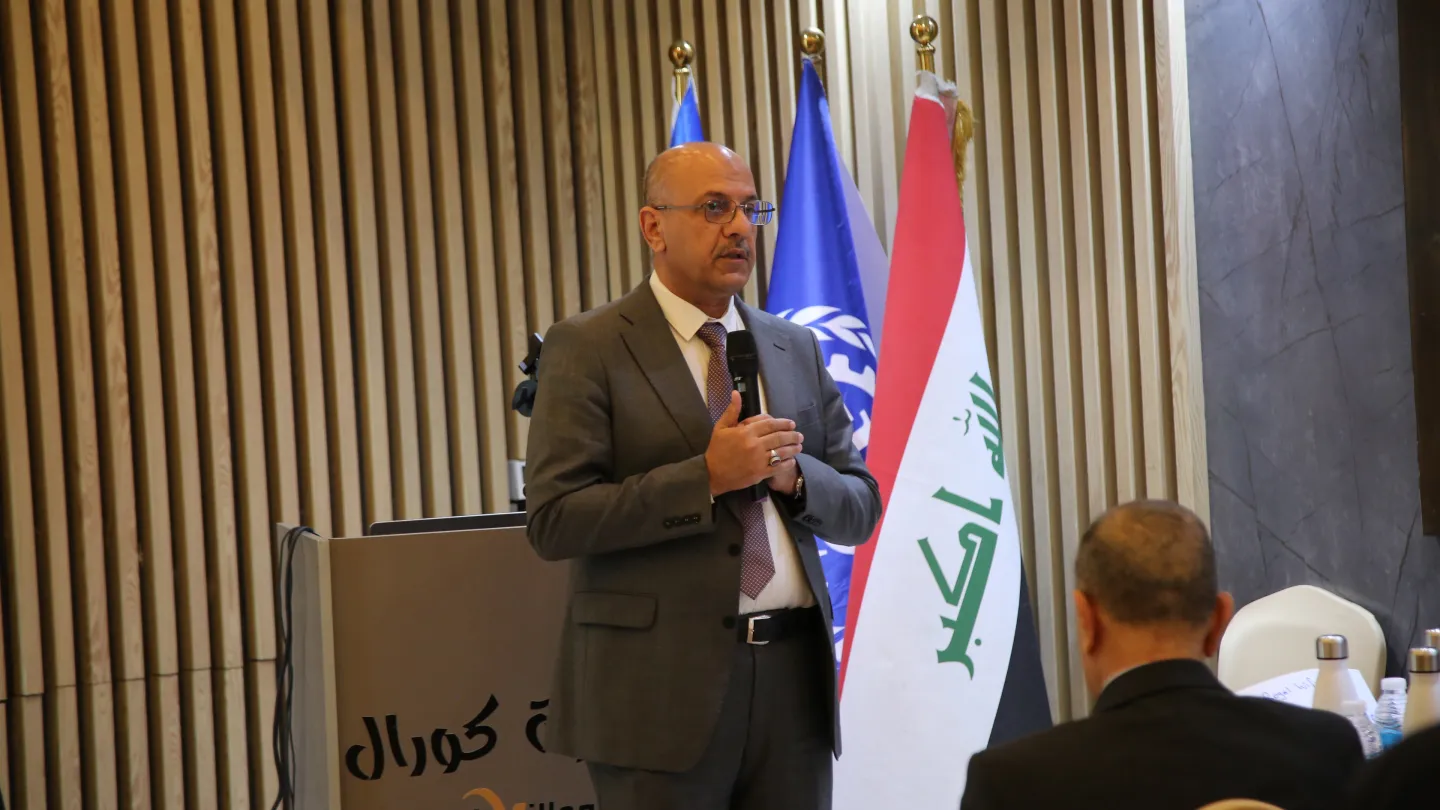
President of the Authority of Statistics and Geographic Information Systems in Federal Iraq Diaa Awad highlighted the importance of the survey in supporting national policies and strategies. “The Labour Force Survey is of great importance, as its results inform policies and strategies concerning employment, jobseekers and graduates across different sectors, and provide a true picture of society and employment opportunities,” he said. Awad noted that reaching this stage followed a long series of technical meetings and joint work with the ILO on the questionnaire, programming and other technical aspects of the survey. He also stressed the importance of accuracy, training and follow-up from the outset of fieldwork to ensure data quality and the reliability of the survey results.

In the Kurdistan Region, the Kurdistan Region Statistics Office contributed to the technical discussions and coordination of methodologies to support the production of consistent and reliable national data. “Harmonizing methodologies and strengthening coordination between statistical institutions are essential to producing reliable national labour market data,” said Head of Labor Force Survey at the Kurdistan Region Statistics Authority, Gohdar Mohammed. “The 2026 Labour Force Survey will support evidence-based planning and policymaking across Iraq.”
The workshop benefited from technical contributions from across the ILO. Statistical specialists from ILO headquarters in Geneva participated remotely in several technical sessions on programming and sampling, alongside contributions from the ILO Regional Office for Arab States in Beirut. An ILO consultant also provided direct technical support throughout the workshop on methodology, sample design, the questionnaire, and planning for the pilot survey and fieldwork. This collaboration helped connect the work of the national statistical teams with relevant international statistical expertise and standards.
This work forms part of the ILO’s ongoing technical support to the two statistical institutions in Iraq. Alongside supporting the implementation of the 2026 survey, this cooperation aims to strengthen national technical capacities to design, manage and implement future labour force surveys in line with international statistical standards.
Once completed, the 2026 National Labour Force Survey is expected to provide an up-to-date national evidence base for understanding Iraq’s labour market and the changes that have taken place since the 2021 survey, while strengthening evidence-based policymaking and planning across the country.
This work contributes to the United Nations Sustainable Development Cooperation Framework for Iraq 2025–2029, including its priority on sustainable economic development, livelihoods and employment, by strengthening the national evidence base needed to inform inclusive and evidence-based labour market policies and planning.
Relevant projects
Social Protection Programme for Iraq: Leveraging Effective Response and Accelerating Reform