

International Women’s Day 2018: Mainstreaming gender equality at work through collective bargaining agreement
Collective bargaining is a key means that provides the basis for sound and harmonious labour relations. Through effective and equal collective bargaining, both employers and workers can arrive at a collective agreement addressing rights and responsibilities of both parties to ensure industrial peace and productive industries and workplaces.
7 March 2018
Research has shown that collective bargaining is not only good for workers in general but it has also an important advantages for women workers and women in the labour in general. Collective bargaining is also a mean to implement gender mainstreaming. Topics that are traditionally seen as women’s issues such as menstruation, maternity, childcare, lower pay and flexible working arrangements have been included as part of the collective negotiations and agreements.
Therefore, in conjunction with the commemoration of the International Women’s Day, the International Labour Organization (ILO) is conducting an interactive event linking the importance of collective agreements with the needs of women workers titled “It is the Time for Gender Equality through Collective Bargaining and Agreements” which will be conducted on Thursday, 8 March 2018, at Pullman Hotel, Jakarta. The event will officially opened by Haiyani Rumondang, Director General for Industrial Relations, Ministry of Manpower and Michiko Miyamoto, Country Director of the ILO in Indonesia.Gender equality is at the heart of decent work. Achieving gender equality in the workplace remains one of the biggest challenges. Both workers and employers should be encouraged to collectively bargain towards equality and non-discrimination as the main principle. Non-discriminatory work practices will not only benefit women workers, but will benefit workers and employers in general."
Michiko Miyamoto, Country Director of the ILO in Indonesia
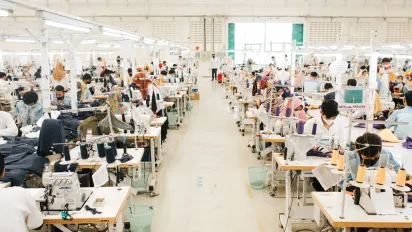
The event is conducted by the ILO through its Better Work Indonesia (BWI) Programme and Labour Standard in Global Supply Chains Project. Through these two initiatives, the ILO has continued promoting collective bargaining and non-discrimination in export-oriented garment factories, including issues related to sexual harassment, improvement of women’s voice and representation, maternity protection and women workers’ health and their families.
“Gender equality is at the heart of decent work. Achieving gender equality in the workplace remains one of the biggest challenges. Both workers and employers should be encouraged to collectively bargain towards equality and non-discrimination as the main principle. Non-discriminatory work practices will not only benefit women workers, but will benefit workers and employers in general,” said Michiko Miyamoto, Country Director of the ILO in Indonesia.
The event is also marked the launch of the second phase of the ILO’s pilot enterprises in promoting collective bargaining and agreements at the workplaces. The launch will be marked with the signing of the Effective Collective Bargaining Programme by 10 enterprises, aimed to ensure fair working conditions as well as to mainstream gender equality.
The launch is part of the key programme of the ILO’s Labour Standards programme which has provided trainings and coaching for the representatives of workers and employers on the negotiation and formulation of collective bargaining agreements.
To showcase the benefits of effective collective agreements, results from the first phase of the pilot enterprise will be presented. Some of the results from their renegotiation and reformulation processes in the collective bargaining include the inclusion of issues related to women workers such as childcare, prevention of sexual harassment and so forth.
The event will conclude with an interactive discussion, exchanging information and experiences with key labour actors about effective ways to engage both workers and employers in application of effective collective bargaining agreement and gender equality. The interactive discussion presents Ade Sudrajat, Chair of Indonesia Textiles Association (API), Elly R. Silaban, Programming Staff of Garment Unions (Garteks), Haiyani Rumondang, Director General of Industrial Relations and Social Security and Aline Adita, a public figure.
During the interactive discussion, the ILO will share benefits gained through improved working conditions while enhancing productivity and profitability of the enterprises under its BWI programme. Launched in 2006, the BWI programme is a unique partnership between the ILO and the International Finance Cooperation (IFC) aimed to improve labour standards and competitiveness in global supply chain.
For further information please contact:
Christianus PanjaitanILO’s Labour Standard Programme Manager
Tel.: +6221 3913112 ext. 112
Email: [email protected]
Albert Y. Bonasahat
ILO’s Programme Officer of Better Work Indonesia (BWI)
Tel.: +6221 3913112 ext. 198
Email: [email protected]
Gita Lingga
ILO’s Communications Officer
Tel.: +6221 3913112 ext. 115
Email: [email protected]
Related content
Better Work Programme in Indonesia - Phase V

Indonesia - LSGSC project
Labour Standards in Global Supply Chains: A Programme of Action for Asia and the Garment Sector in Indonesia

Mainstreaming Gender Equality in the Collective Bargaining and the Commemoration of the International Women's Day 2018
Time for women to be equal at work through collective agreements
Relevant projects
Better Work Programme in Indonesia - Phase V