

Press release
Indonesia updates Care Economy Roadmap to support women’s participation and decent work
With ILO support, Indonesia updates its Care Economy Roadmap to strengthen care services, promote decent work and advance women’s participation in the labour market.
22 September 2026
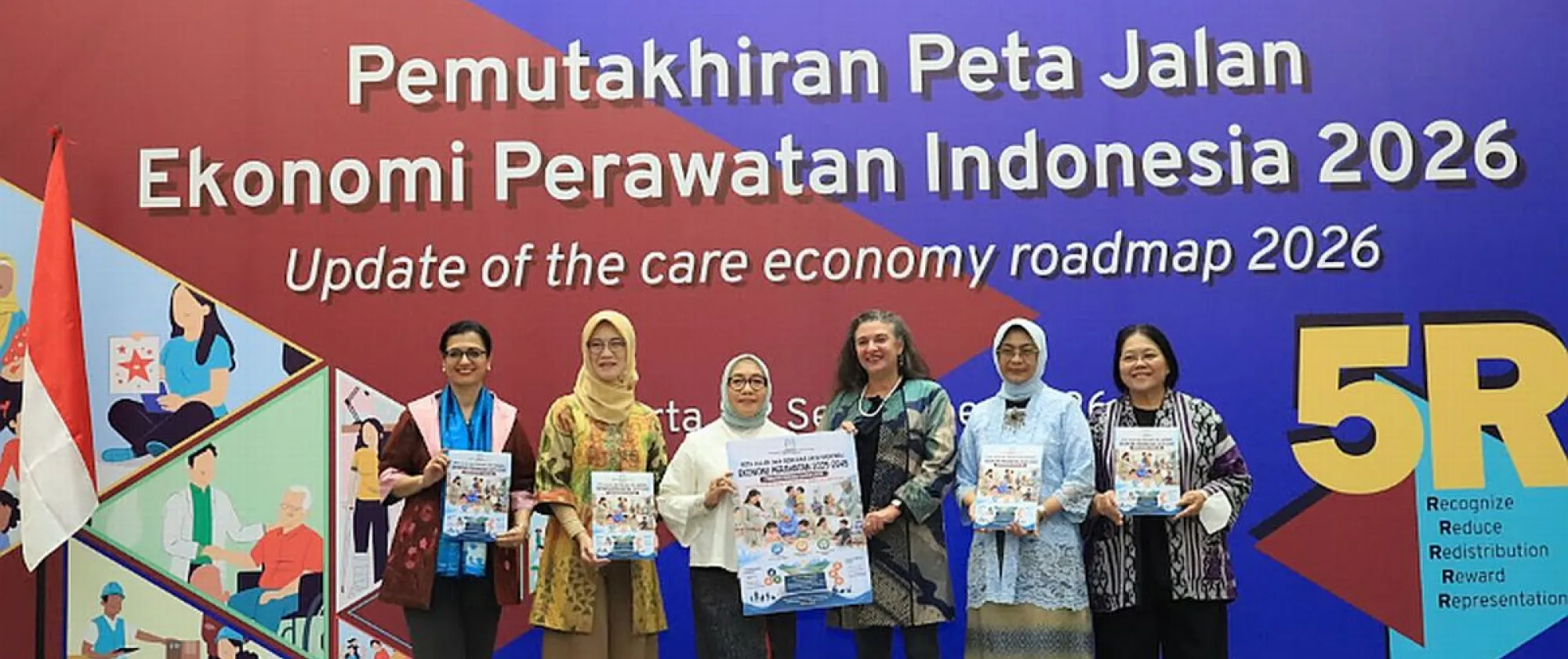
JAKARTA, Indonesia (Joint Press Release) – The Ministry of Women’s Empowerment and Child Protection, with support from the International Labour Organization (ILO), launched the updated 2026 Care Economy Roadmap in Jakarta on 22 September. The update aims to further integrate the care economy into Indonesia’s broader social and economic transformation agenda, while strengthening human development, family resilience and women’s participation in the labour market.
The roadmap was first launched in March 2024 as part of Indonesia’s efforts to accelerate the transformation of the care economy and promote a more gender-equal world of work. The 2026 update aligns the roadmap with the 2025-2029 National Medium-Term Development Plan (RPJMN) and incorporates recent policy and legislative developments, including Law No. 4 of 2024 on Maternal and Child Welfare during the First 1,000 Days of Life and Law No. 2 of 2026 on the Protection of Domestic Workers.
The updating process brings together government ministries and agencies, the ILO, employers, workers and civil society organizations to ensure that the roadmap reflects evolving national priorities and provides a stronger framework for translating care economy policies into concrete programmes and services.
Increasing women’s participation in development needs to be supported by adequate care and support services. These include accessible and adequate childcare, long-term care systems... and strengthened maternity protection.
Arifah Fauzi, Minister of Women’s Empowerment and Child Protection
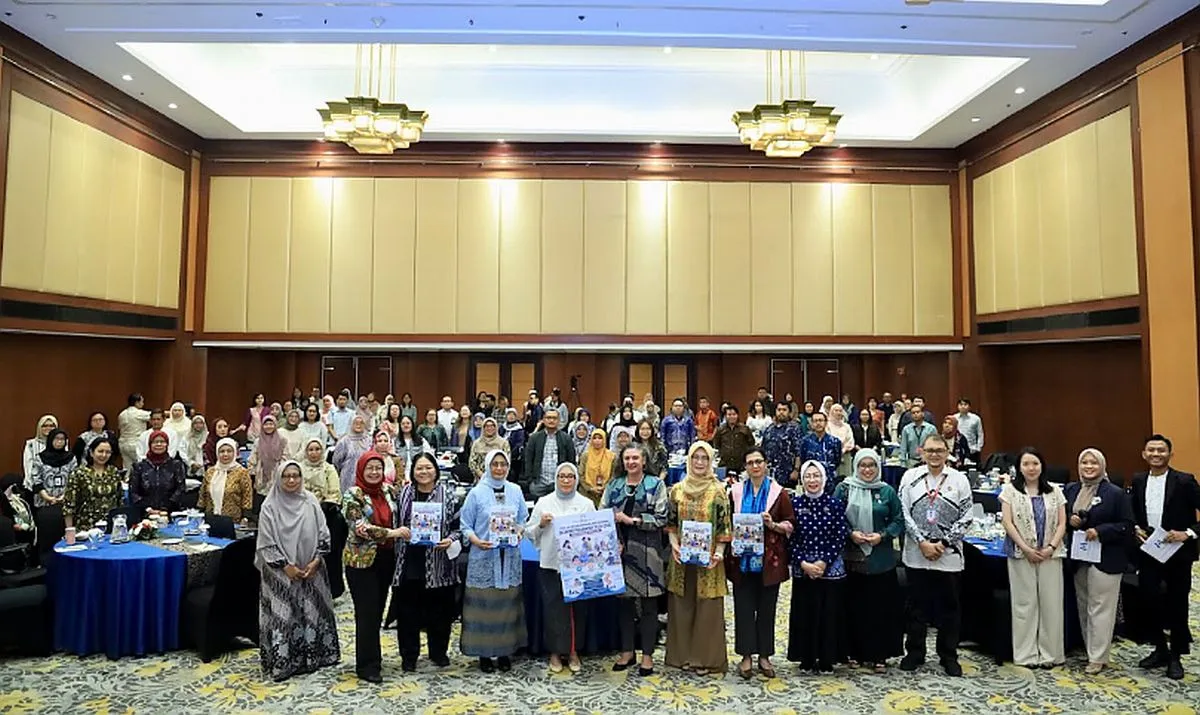
Opening the event, Minister of Women’s Empowerment and Child Protection Arifah Fauzi emphasized that the care economy is an integral part of human development, family resilience and economic development. She also called for a shift in how care work is perceived, stressing that it should not be regarded solely as a family responsibility or a burden borne primarily by women.
The care economy is also an important area of action for achieving the targets of Indonesia’s 2025–2045 National Long-Term Development Plan (RPJPN), including increasing women’s participation in the labour market. Care economy priorities have been incorporated into Indonesia’s medium- and long-term national development planning, reflecting growing recognition of the contribution of care work to economic growth and social well-being.
“Increasing women’s participation in development needs to be supported by adequate care and support services. These include accessible and adequate childcare, long-term care systems that respond to the needs of older persons and persons with disabilities and strengthened maternity protection,” Minister Arifah said. “Greater involvement of men and fathers in caregiving is also needed, while the recognition and protection of care workers and the provision of decent working conditions are equally important to supporting women’s participation in development.”
The updated roadmap incorporates emerging and cross-cutting priorities, including strengthening the role of fathers in caregiving, promoting safe migration for care workers and applying the ILO’s 5R Framework for Decent Care Work: recognize, reduce and redistribute unpaid care work; reward paid care work by promoting more and decent work for care workers; and guarantee care workers’ representation, social dialogue and collective bargaining.
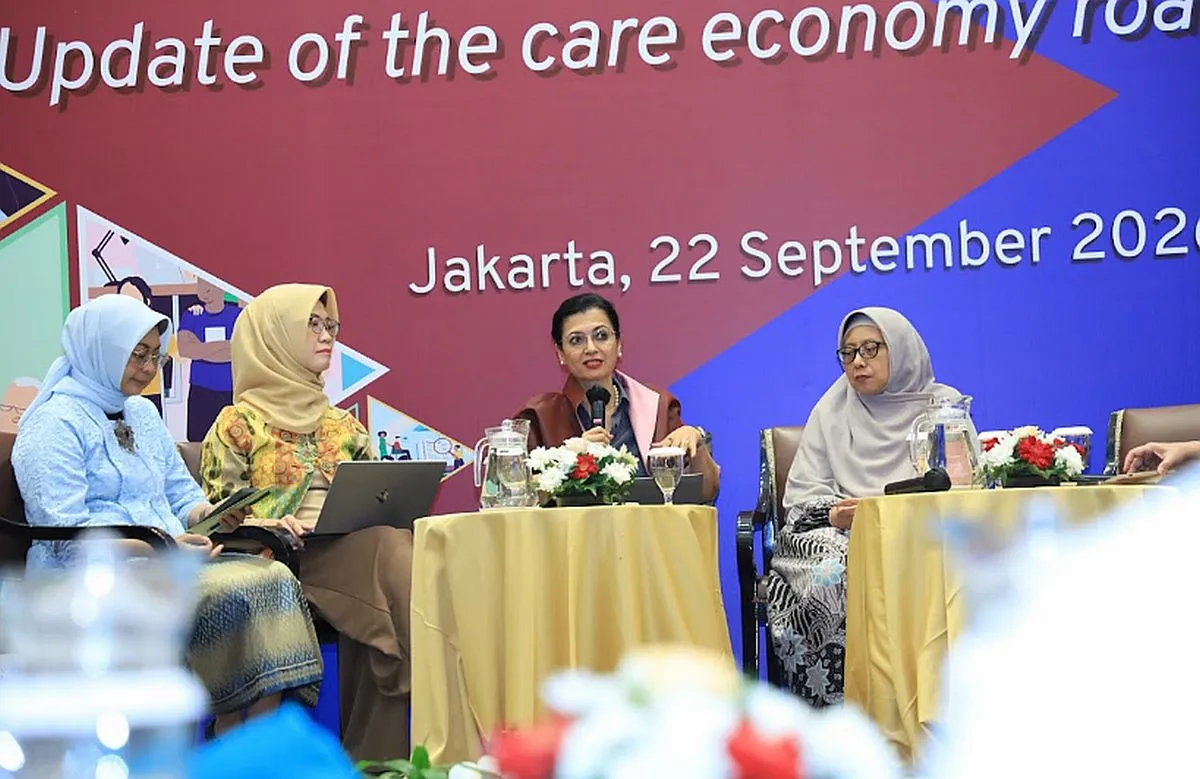
Following the launch, the roadmap updating process continued on 23-24 September through discussions among the four Care Economy Working Groups. The discussions focused on mapping programmes and initiatives, identifying implementation gaps and developing concrete follow-up actions to help translate the roadmap into programmes and services.
The working groups provide a collaborative platform bringing together government institutions, academia, civil society, the business sector and development partners to advance policies and strategic measures for Indonesia’s care economy.
Government policy direction and leadership are critical to advancing the care economy agenda... The ILO remains strongly committed to this issue and stands ready to work alongside the Government of Indonesia as a partner.
Simrin Singh, ILO Country Director for Indonesia and Timor-Leste
ILO Country Director for Indonesia and Timor-Leste Simrin Singh highlighted the progress Indonesia has made since the launch of the Care Economy Roadmap in 2024. She noted that care economy priorities are increasingly integrated across national development priorities, including women’s labour force participation, social protection, decent work, family resilience and inclusive economic growth.
“Government policy direction and leadership are critical to advancing the care economy agenda. However, this is not something that the government can address alone. We need to engage workers, employers, care workers themselves, communities, civil society, academia and development partners. The ILO remains strongly committed to this issue and stands ready to work alongside the Government of Indonesia as a partner,” Simrin stated.
Woro Srihastuti Sulistyaningrum, Deputy for the Coordination of Family Quality Improvement and Population at the Coordinating Ministry for Human Development and Cultural Affairs, emphasized the important role of the care economy in strengthening family resilience. She noted that care needs arise throughout the life cycle and that families may not always be able to meet these needs on their own.
Meanwhile, Decky Haedar Ulum, Director of Social Security and Workers’ Welfare Facilitation at the Ministry of Manpower, encouraged companies to provide facilities and workplace arrangements that support women workers and help reduce the double burden of paid work and care responsibilities. These include childcare facilities, lactation rooms and flexible parental leave arrangements.
Through continued collaboration among relevant stakeholders, the updated roadmap seeks to turn Indonesia’s care economy commitments into concrete actions that expand access to quality care services, promote decent work for care workers and enable women and men to participate more equally in both paid work and caregiving.
For further information, please contact:
Gita Lingga
ILO Senior Information and Communications Management Assistant
Email: [email protected]
Additional details
References
- DOI: N/A