

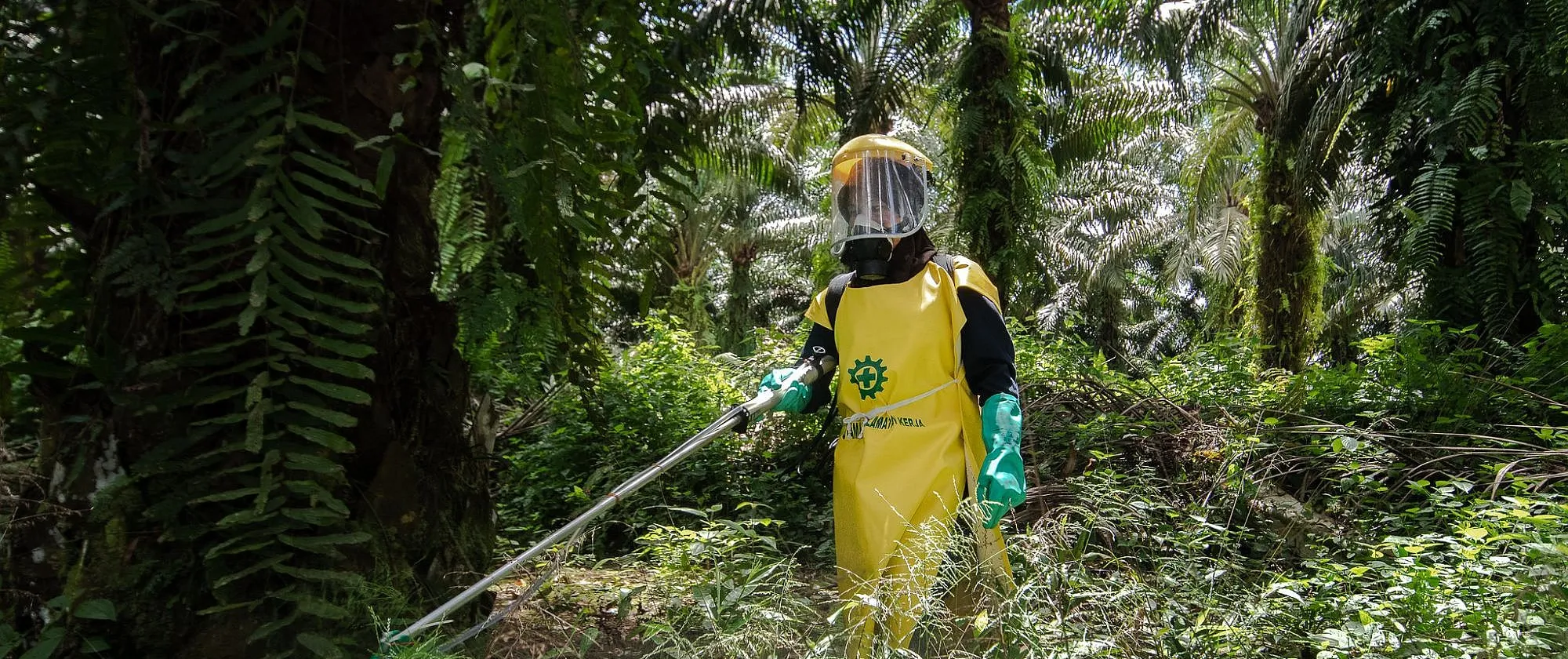
Indonesia’s Jagasawitan movement promotes safe and equal workplaces in the palm oil sector
With support from the ILO, Indonesia’s palm oil sector is advancing the development and implementation of a gender‑responsive OSH guideline.
9 December 2025
JAKARTA, Indonesia (ILO News) - The ILO’s Realizing Trade Gains Free from Gender Discrimination and Child Labour (RealGains) Project, supported by the Government of Canada, supported the annual meeting of the Employment Network for Sustainable Palm Oil (Jagasawitan). Jagasawitan is a voluntary bipartite cooperation body jointly established by the Indonesian Palm Oil Association (GAPKI) and the Indonesian Palm Oil Workers’ Union Network (JAPBUSI), a coalition of 11 federations representing more than 100,000 workers nationwide.
Jagasawitan represents the power of social dialogue and bipartite relations for the continuous improvement of the palm oil sector.
Abdul Hakim, Representing the ILO Country Director for Indonesia and Timor-Leste
Held in Jakarta on 3 December, the meeting focused on the development and implementation of a gender-responsive Occupational Safety and Health (OSH) Guideline for the palm oil plantation sector. This initiative aims to enhance workplace safety and dignity, particularly for women workers, by ensuring that OSH measures address gender-specific risks and needs.
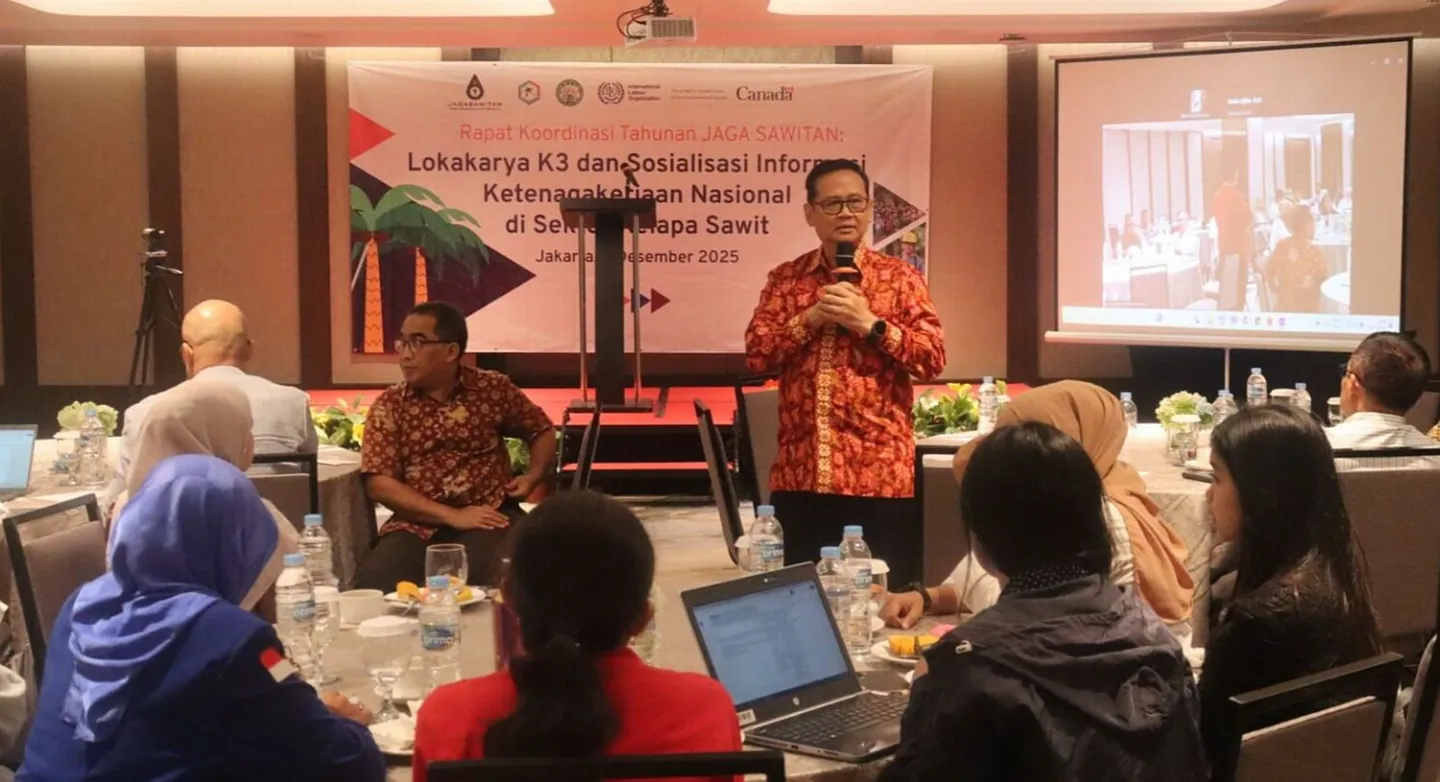
Representing the ILO Country Director for Indonesia and Timor-Leste, Abdul Hakim reaffirmed the ILO’s commitment to supporting the promotion and implementation of the Fundamental Principles and Rights at Work in Indonesia’s palm oil industry. “Jagasawitan represents the power of social dialogue and bipartite relations for the continuous improvement of the palm oil sector. As an example of labour‑management cooperation, this initiative can also be replicated in other sectors,” he said.
The recent launch of the grievance application under Jagasawitan represents an important step forward. It provides a practical mechanism for workers to voice concerns safely and transparently, strengthens social dialogue between employers and workers and ultimately contributes to more robust protection of labour rights within the palm oil sector.
Dede Sudono, ILO Coordinator for the RealGains Project in Indonesia
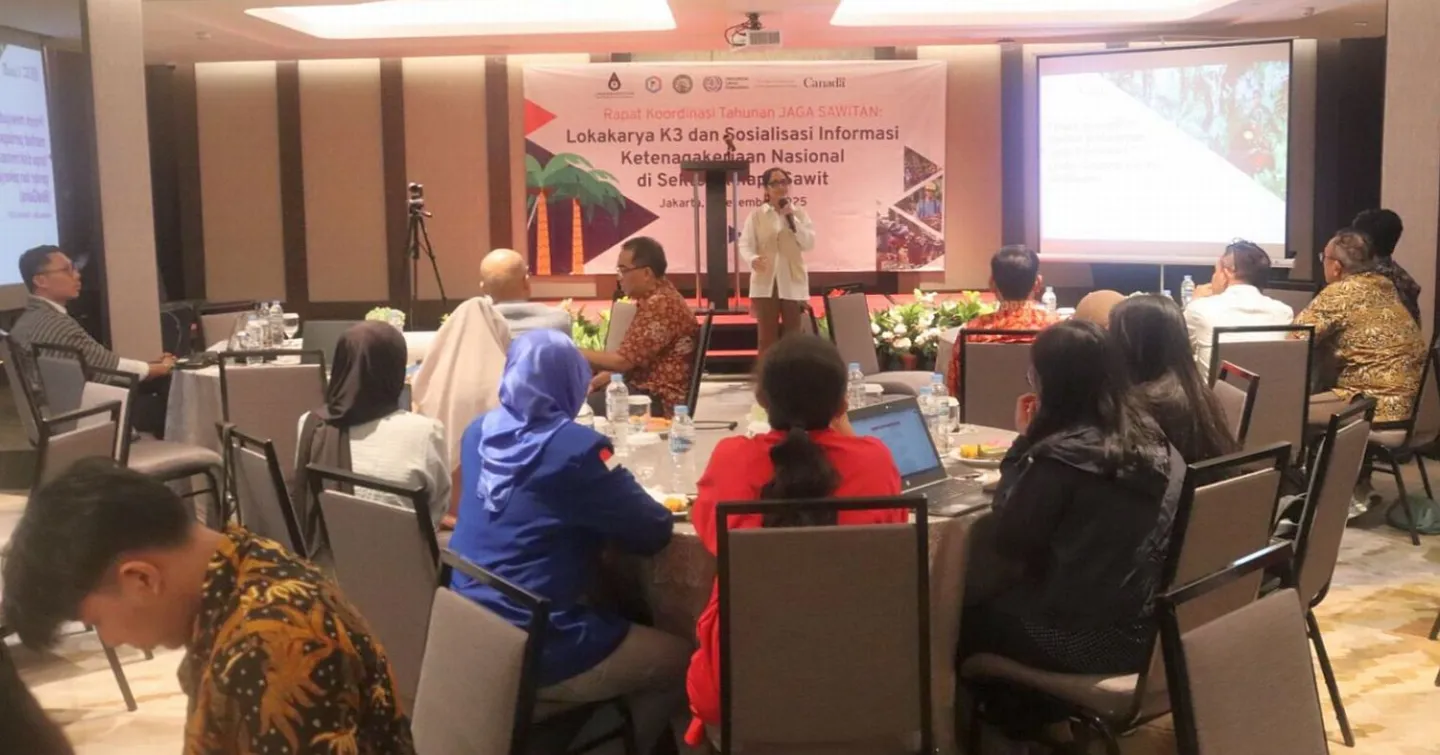
During the meeting, Dede Sudono, ILO Coordinator for the RealGains Project in Indonesia, highlighted that the ILO’s support through RealGains project was developed based on the needs of both employers and workers in the palm oil sector. She also noted that women workers are still often regarded as secondary or tertiary workers and remain vulnerable to harassment at work.
“Therefore, the recent launch of the grievance application under Jagasawitan represents an important step forward. It provides a practical mechanism for workers to voice concerns safely and transparently, strengthens social dialogue between employers and workers and ultimately contributes to more robust protection of labour rights within the palm oil sector,” she added.
Meanwhile, Yuka Ujita, ILO Senior OSH Specialist, presented several approaches to mainstreaming gender in OSH. She underscored the urgent need to integrate gender perspectives into OSH management systems, noting that men and women often face different types of risks in the workplace due to the nature of their tasks, biological differences and gendered patterns of employment.
“Recognizing these distinctions is essential for designing preventive measures, managing hazards more effectively and ensuring that OSH policies and practices provide equal protection for all workers,” Yuka said.
The meeting concluded with a knowledge‑sharing session highlighting good practices and lessons learned from GAPKI and JAPBUSI. Among the examples presented was the establishment of a Collective Bargaining Agreement at the enterprise level that includes specific provisions to protect women workers from sexual harassment at work, an important step toward creating safer and more equitable workplaces.
Recognizing these distinctions is essential for designing preventive measures, managing hazards more effectively and ensuring that OSH policies and practices provide equal protection for all workers.
Yuka Ujita, ILO Senior OSH Specialist
In addition, participants learned about the formation of 10 dedicated task forces focusing on key areas such as the promotion of gender equality and the strengthening of OSH. These initiatives demonstrate concrete efforts within the sector to institutionalize better labour practices and foster more inclusive and safe working environments.
In closing, Nursanna Marpaung, Executive Secretary of JAPBUSI and Sumarjono Saragih, GAPKI’s Head of Human Capital Development, expressed strong support for these initiatives. Nursanna affirmed JAPBUSI’s commitment to raising awareness and ensuring the implementation of gender‑responsive OSH among its members. Meanwhile Sumarjono underscored Jagasawitan’s role in ensuring that OSH, gender equality, and safe working environments remain priorities across Indonesia’s palm oil sector.
Related content

Project
Realizing trade gains free from gender discrimination and child labour (RealGains)
Annual meeting
JAGASAWITAN Annual coordination meeting: OSH workshop and dissemination of national employment information in the palm oil sector
Relevant projects
Project
Realizing trade gains free from gender discrimination and child labour (RealGains)