ILO thematic workshops aim to promote decent work conditions in Türkiye
In the workshop organized to promote decent work and improve working conditions in Türkiye, participants discussed issues and solutions related to compliance with national labour legislation and international standards.
6 June 2024

ILO News (Izmir) - The International Labour Organization (ILO) organized a workshop in Türkiye to promote decent work.
Funded by the European Union’s Instrument for Pre-Accession Assistance (IPA-III) and conducted in cooperation with the Ministry of Labour and Social Security, the Directorate of Guidance and Inspection, and the ILO, the first of "Promoting Decent Work Workshops" series took place in İzmir as part of the "Workplace Compliance through Labour Inspection Guidance and Social Dialogue Project."
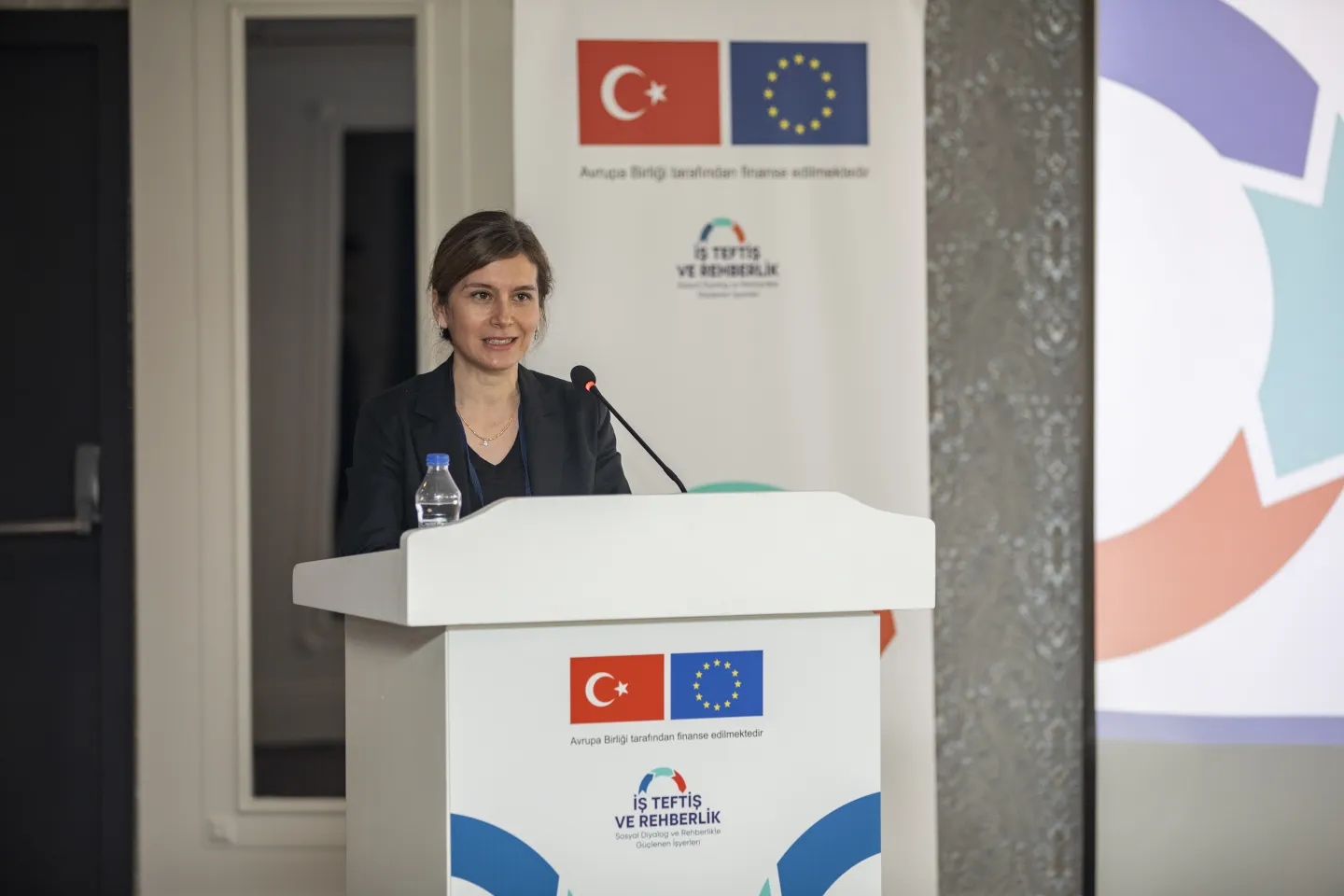
Held on June 3-4, 2024, the workshop was attended by 50 participants, including labour inspectors from the Directorate of Guidance and Inspection, relevant ministry units, social partners, private sector representatives, and expert academics. The workshop focused on issues and solutions related to ensuring decent working conditions within the framework of national labour legislation and international labour standards in Türkiye.
Importance of Labour Inspection in Developing Workplace Safety Culture

The workshop began with opening speeches by the Director of Guidance and Inspection, Bekir Aktürk, and the Director of the ILO Türkiye Office, Yasser Hassan. Prof. Dr. Gaye Burcu Yıldız and Assoc. Prof. Dr. Gürkan Emre Gürcanlı shared preliminary results of research on issues related to ensuring decent work conditions in Türkiye. Subsequently, Javier Barbero from the ILO Labour Administration, Labour Inspection, and Occupational Safety and Health Branch gave an online presentation on "The Importance of Labour Inspection in Developing Workplace Safety Culture" and answered participants' questions.
In the afternoon session, a panel titled "Developing Safety Culture in Workplaces: Issues and Solutions" was held, where various experts shared their knowledge and experiences on safety culture and preventive measures. Dr. Fatih Çelik, Head of Strategy and Data Management Department of the General Directorate of Occupational Health and Safety, presented the activities conducted by the General Directorate to support a preventive safety culture. Prof. Dr. Yakup Kara highlighted the differences between safety culture and climate, emphasizing the importance of focusing on employees' perceptions of safety in addition to systemic measures in workplaces. Alper Hancı, Chief Engineer of Process Safety at Star Refinery Inc. (SOCAR Türkiye), and Esra Uzel Baskan, Health, Safety, and Environment Manager at FTB Fastener Technology Inc., shared best practices on the role and importance of management in creating a safety culture in businesses. These discussions aimed to contribute to research results by increasing active participation of stakeholders in ensuring safe and healthy working environments and promoting a preventive health and safety culture in workplaces.
Developing Decent Work Conditions in New Work Models
The second day of the workshop focused on "Developing Decent Work Conditions in New Work Models." The accelerated adoption of remote, flexible, and platform work models due to the COVID-19 pandemic was discussed. Prof. Dr. Gaye Burcu Yıldız provided information on new work models and their legal framework in Türkiye. Assoc. Prof. Dr. Hande Bahar Aykaç presented a comparative analysis of platform work in different countries. Nuno Meira Simoes Cunha from the ILO Inclusive Labour Markets, Labour Relations, and Working Conditions Branch (INWORK) discussed the scope and developments of ILO standard-setting efforts specifically for platform work.

In the afternoon panel, the risks and necessary measures for remote and hybrid work models were discussed. Dr. Serkan Alkan, Director of Health, Environment, and Wellbeing at Turkcell, shared best practices to enhance employee well-being in remote work models. Ensar Özdemir, HR Manager at Aksa Acrylic Chemical Industry Inc., shared the results of transitioning to a short workweek model, the first of its kind in Türkiye. Kürşat Babayiğit from the Directorate General of Labour explained national policy development efforts regarding non-standard employment models. The perspectives of social partners were reflected in speeches by Cengiz Delibaş, Deputy Secretary General of the Union of Chambers and Commodity Exchanges of Türkiye (TOBB), and Av. Gülsüm Hilal Tiryakioğlu, Collective Bargaining Specialist at the Hak-İş Confederation of Trade Unions (HAK-İŞ).
A Step Towards Promoting Decent Work and Improving Working Conditions in Türkiye
The workshop, a step towards promoting decent work and improving working conditions in Türkiye, produced significant outcomes aimed at strengthening social dialogue on issues shaping working life in Türkiye and contributing to the "Compliance Analysis" research. The active participation and shared insights of the participants contributed to the development of policy recommendations to promote safe and healthy working environments.