

Child labour
ILO supports an improved normative framework and better capacities to combat child labour in Serbia
The ILO project “Measurement, awareness-raising and policy engagement to accelerate action against child labour and forced labour” (MAP16) funded by USDOL generated critical knowledge to inform policies and supported concrete measures to address child labour in Serbia, also paving the way for further action.
1 December 2023
The MAP16 project, implemented by the ILO with funding from the United States Department of Labor, focused on four priorities:
- Improving the institutional framework for monitoring the prevalence of child labour;
- Improving the normative framework for better compliance with international labour standards on the protection of children at work;
- Strengthening the role of the social protection system in preventing child labour and protecting children against child labour;
- Improving the enforcement of laws and implementation of policies relating to the protection of children against child labour, including its worst forms.
The project also tabled proposals to improve the normative framework and tools to protect children from child labour that were adopted by the Serbian authorities, including:
- The Checklist for Inspection Oversight and the revised Instruction and Special Protocol for Labour Inspection for protecting children from child labour, adopted in 2020 and 2021 respectively;
- The Instruction for Social Workers and other social protection institutions and organizations to protect children from child labour, adopted in 2021;
- The Proposal of the new Decree on Hazardous Child Labour, submitted to the Directorate for Occupational Safety and Health of the Ministry of Labour, Employment, Veteran and Social Affairs in January 2022;
- The Proposal of the Decree on Light Work, submitted in 2022, in order to align Serbia’s labour legislation with the ILO Minimum Age Convention, 1973 (No. 138) as well as the EU Council Directive 94/33/EC of 22 June 1994 on the protection of young people at work.
The MAP16 Project also supported evidence-based policymaking by providing data for planning further actions to protect children from child labour including its worst forms. With support from the project, the Statistical Office of the Republic of Serbia included a Module on Child Labour in the Labour Force Survey and conducted the National Child Labour Survey in 2021.
It showed the highest rates of child labour including its hazardous forms occur in the agriculture sector. As a result, the MAP16 project conducted awareness raising campaigns in Serbia’s rural areas, including the Sumadija region, Western Serbia and South Serbia.
Following the principle ‘Leave No One Behind’, the MAP16 Project conducted a pilot research on child labour in the streets. For the first time ever, a Rapid Assessment on Child Labour in the Streets in Serbia was conducted in 2022. This qualitative research brought to light a diversity of forms of child labour in the streets, documented pull and push factors, characteristics of children involved in child labour in the streets and their families and consequences of child labour in the streets. Based on the research findings, the MAP16 project developed a set of recommendations, which form a solid base for follow-up actions.
Relevant projects
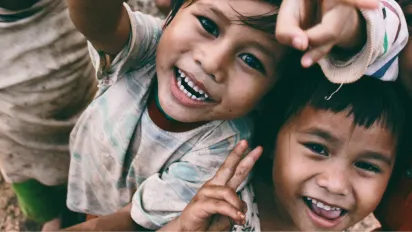
MAP16: Measurement, awareness-raising and policy engagement to accelerate action against child labour and forced labour

Measurement, Awareness Raising, and Policy Engagement (MAP16) Project

Towards the first generation free of child labour
Regional Initiative Latin America and the Caribbean Free of Child Labour
MAP16
MAP16 Project: Measurement, awareness-raising and policy engagement to accelerate action against child labour and forced labour