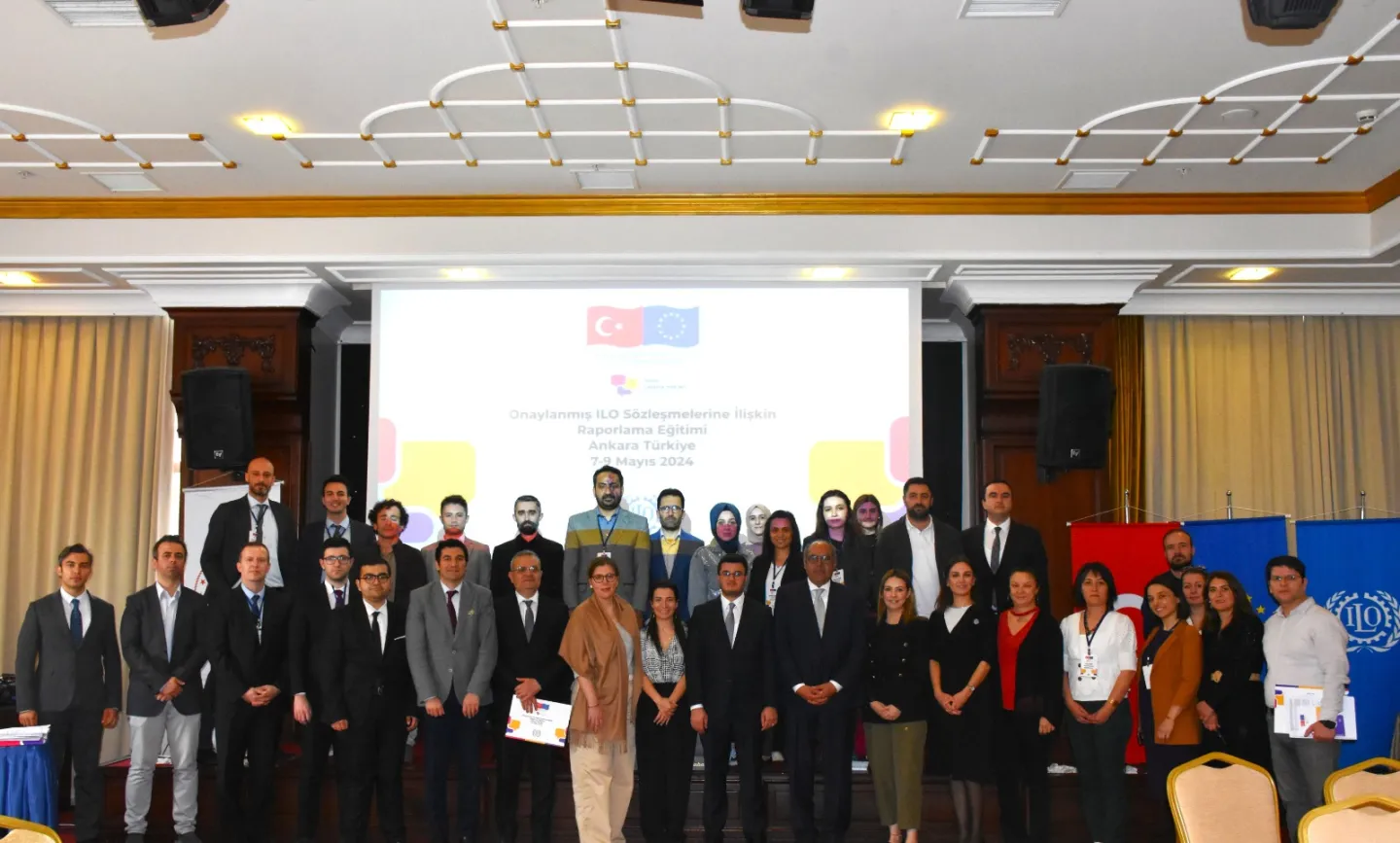
ILO Seminar sheds light on reporting duties for Türkiye's ratified labour Conventions
The International Labour Organization (ILO) Office for Türkiye conducted a pivotal training session on "Reporting Obligations on Ratified ILO Conventions," aiming to bolster compliance and accountability among public institutions and labour organizations.
10 May 2024
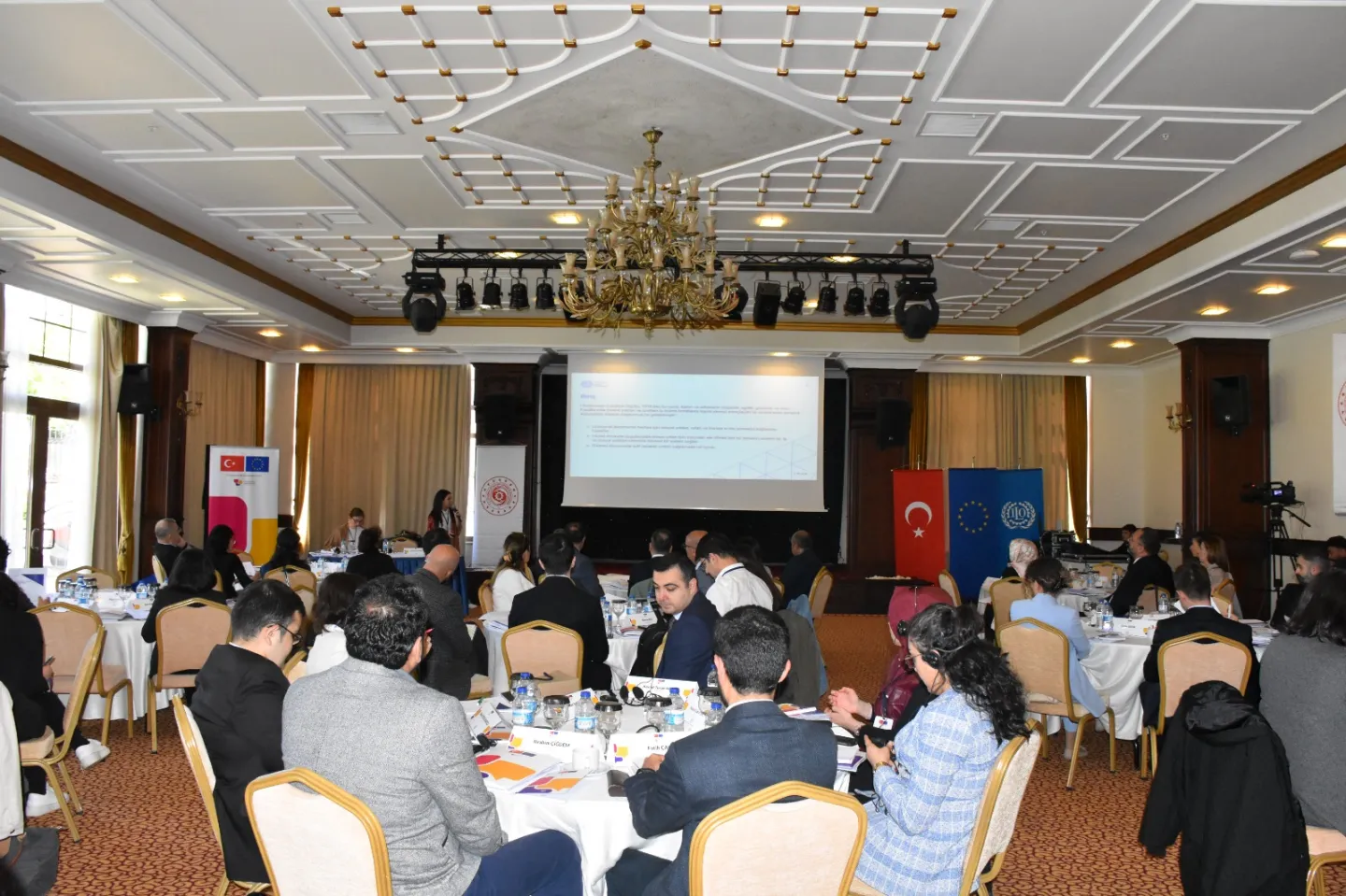
ANKARA - The International Labour Organization (ILO) Office for Türkiye organized a training on "Reporting Obligations on Ratified ILO Conventions."
With the training held in Ankara from May 7 to May 9, 2024, under the "Fundamental Principles and Rights at Work Project" of the ILO, public institutions along with worker and employer organizations were informed about the obligation to report to the ILO supervisory bodies of the member states. Representatives from relevant departments of the Ministry of Labour and Social Security, Ministry of Interior, Ministry of National Education, Ministry of Family and Social Services, Human Rights and Equality Institution of Türkiye, Ministry of Agriculture and Forestry, Ministry of Justice, Ministry of Health, TİSK, TÜRK-İŞ, HAK-İŞ, DİSK, MEMUR-SEN, KAMU-SEN, and KESK attended the training. Additionally, Program Managers Chiara Piazza and Mehmet Caner Demir from the European Union Delegation to Türkiye, which funds the project, also participated in the event.
The program, which began with opening speeches by Yasser Hassan, Director of the ILO Office for Türkiye, and Oğuz Tuncay, Director-General of the European Union and External Relations of the Ministry of Labour and Social Security, continued with presentations by Oksana Wolfson, Coordinator of the ILO Freedom of Association Unit, and Irini Proios Torras, Legal Specialist, providing information about the program. The first session provided information about International Labour Standards and Fundamental Labour Principles and Rights, while presentations on child labour, forced labour, and occupational health and safety were conducted by ILO Legal Specialists Rima Moussaoui and M. V. Cabrera Ormaza, and Legal and Labour Law Specialist Xaaofan Liu.
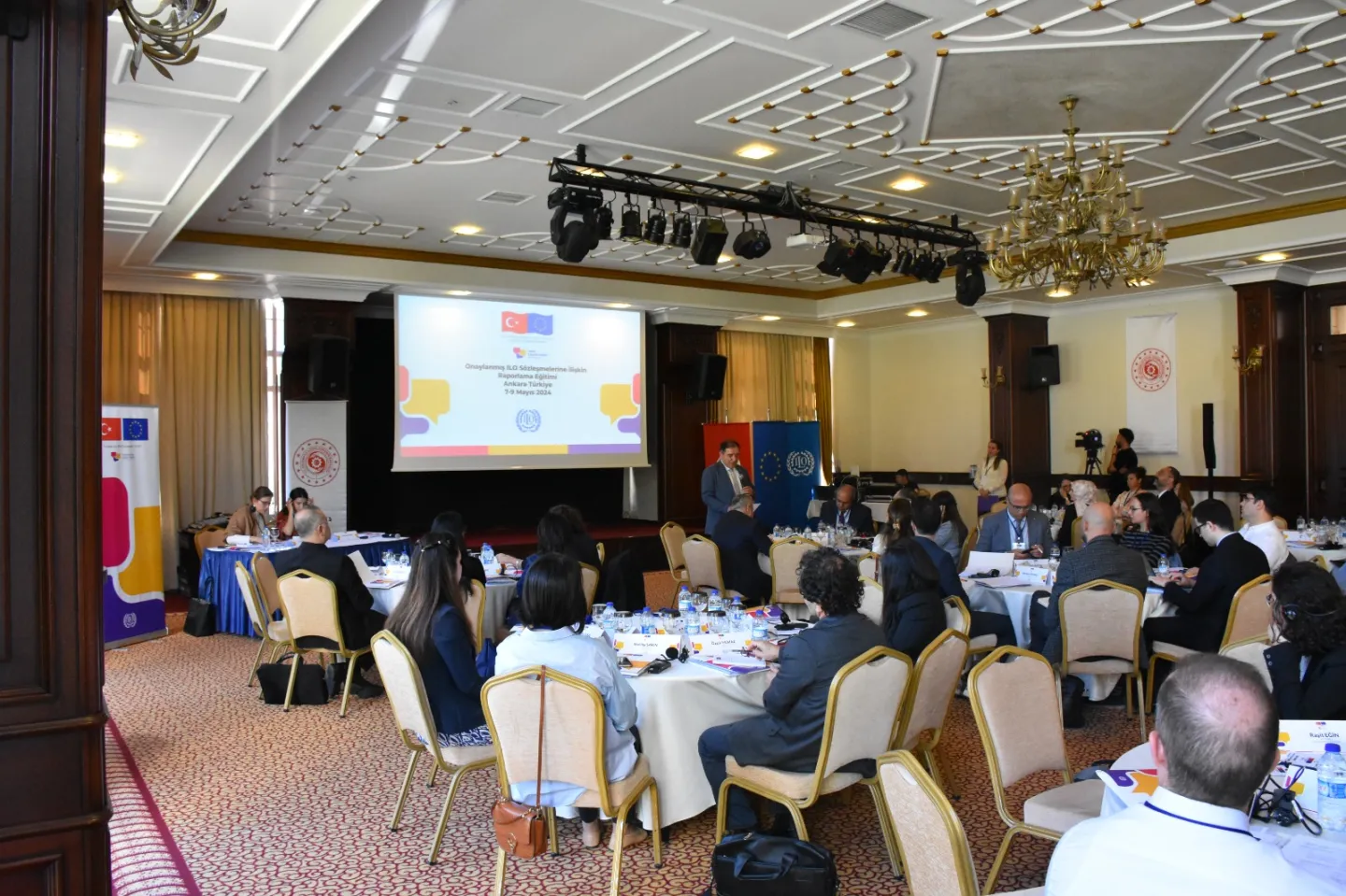
The training continued with an examination of fundamental conventions on the freedom of association and the right to collective bargaining, equal remuneration, and discrimination. The aim of the training was to strengthen the capacity of both public institutions and worker and employer organizations to prepare and submit reports to the Committee of Experts on the Application of Conventions and Recommendations (CEACR) regarding the implementation of ILO conventions ratified by Türkiye. Participants were extensively informed about the legal framework of member states' obligation to report to the ILO supervisory bodies and the functioning of the ILO supervisory mechanism and effective reporting practices.
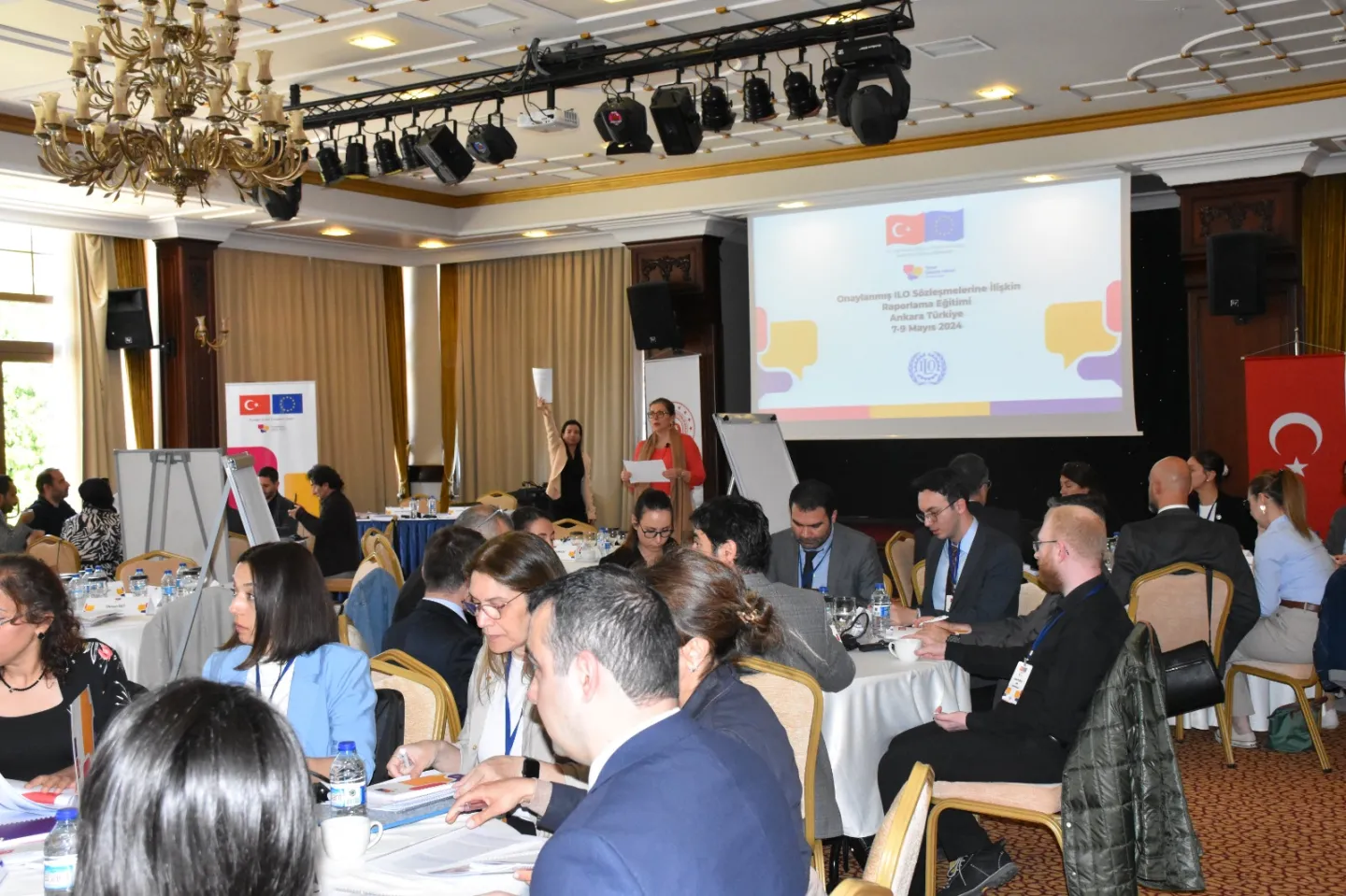
At the end of the training, participants conducted group work on reports expected from Türkiye to the CEACR regarding ILO Conventions No. 98 and No. 111.
Participants expressed that they gained significant insights from the interactive design of the training, highlighting the mutual benefits achieved through knowledge exchange and effective communication.
About the Project
Supported by the European Union Delegation to Türkiye and officially named the "Strengthening Social Partners and Civil Society Capacities on Fundamental Principles and Rights at Work" the project aims to contribute to strengthening the fundamental labour principles and rights specified in ILO's Fundamental Conventions in Türkiye and enhancing the capacities of the worker and employer organizations, and CSOs. In this context, the project outlines the recognition of freedom of association and the right to collective bargaining, the elimination of all forms of forced or compulsory labour, effective eradication of child labour, elimination of discrimination in employment and occupation, and the establishment of a safe and healthy working environment as the headings covered by ILO Fundamental Conventions.
Activities under the project include understanding the advocacy capacities of the target audience for fundamental labour rights through a needs analysis study, preparing thematic research reports, establishing an electronic library on fundamental labour rights, organizing training sessions and workshops for target groups, and providing micro-grants.