

The ILO Promotes the Practice of Lean Manufacturing at Garment Factories in Ghana
31 October 2024
With introduction of new methodologies and processes in the production of lean for garment factories, the ILO is committed to supporting garment factories in Ghane to eliminate waste thereby increasing productivity.
KOFORIDUA, GHANA – The ILO in collaboration with stakeholders has carried out training programme at three garment factories Maagrace Industries Limited in Koforidua, KAD, and Sixteen47 in Accra, Ghana. The training programme is an intervention of the ILO’s Productivity Ecosystems for Decent Work Project, aimed at building the capacities of the workforce in lean manufacturing practices by systematically identifying and eliminating waste throughout the production process. Key performance indicators that lean manufacturing training tracks at the factory are waste reduction, improvement in product quality, optimised production flow, cost reduction, customer satisfaction, flexibility and responsiveness and continuous improvement.
Lean manufacturing training hinges on major themes such as (a) Value Identification that seeks to understand what value means from the customer's perspective and focuses on processes that directly add to that value; (b) Value Stream Mapping that examines each step in the production process to identify all the actions that contribute to the final product and highlight those that don’t add value, which can then be targeted for reduction or elimination; (c) Flow that aims for a continuous, streamlined production flow without interruptions, bottlenecks, or delays; (d) Pull, thus operating on a "pull" basis rather than a "push" on; meaning, the company only produce items when there is demand, avoiding overproduction and excess inventory and (e) Continuous Improvement (Kaizen) that encourages ongoing, incremental improvement in processes and employee involvement at every level for more efficient production.
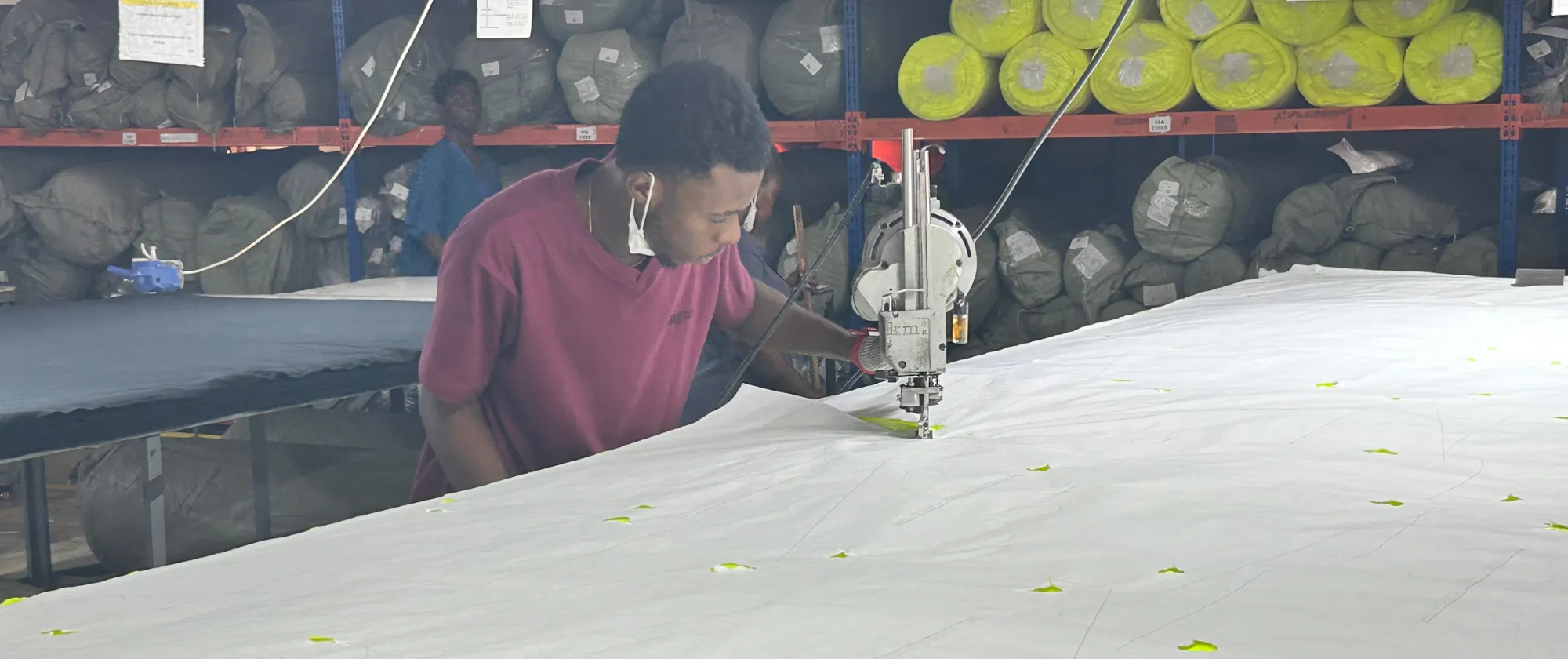
The project conducted the training over a period of five months with the international lean expert Mr. Charles Dagher, visiting the companies and providing a combination of services including in-class presentations, exercises, demonstration, advisory services, team assignments, in-factory coaching and reporting. One important feature of the training was the establishment of implementation committees with members drawn from various departments of the factory such as cutting, finishing, production, maintenance, and warehouse, to oversee the planning and implementation of activities emerging from the training programme.
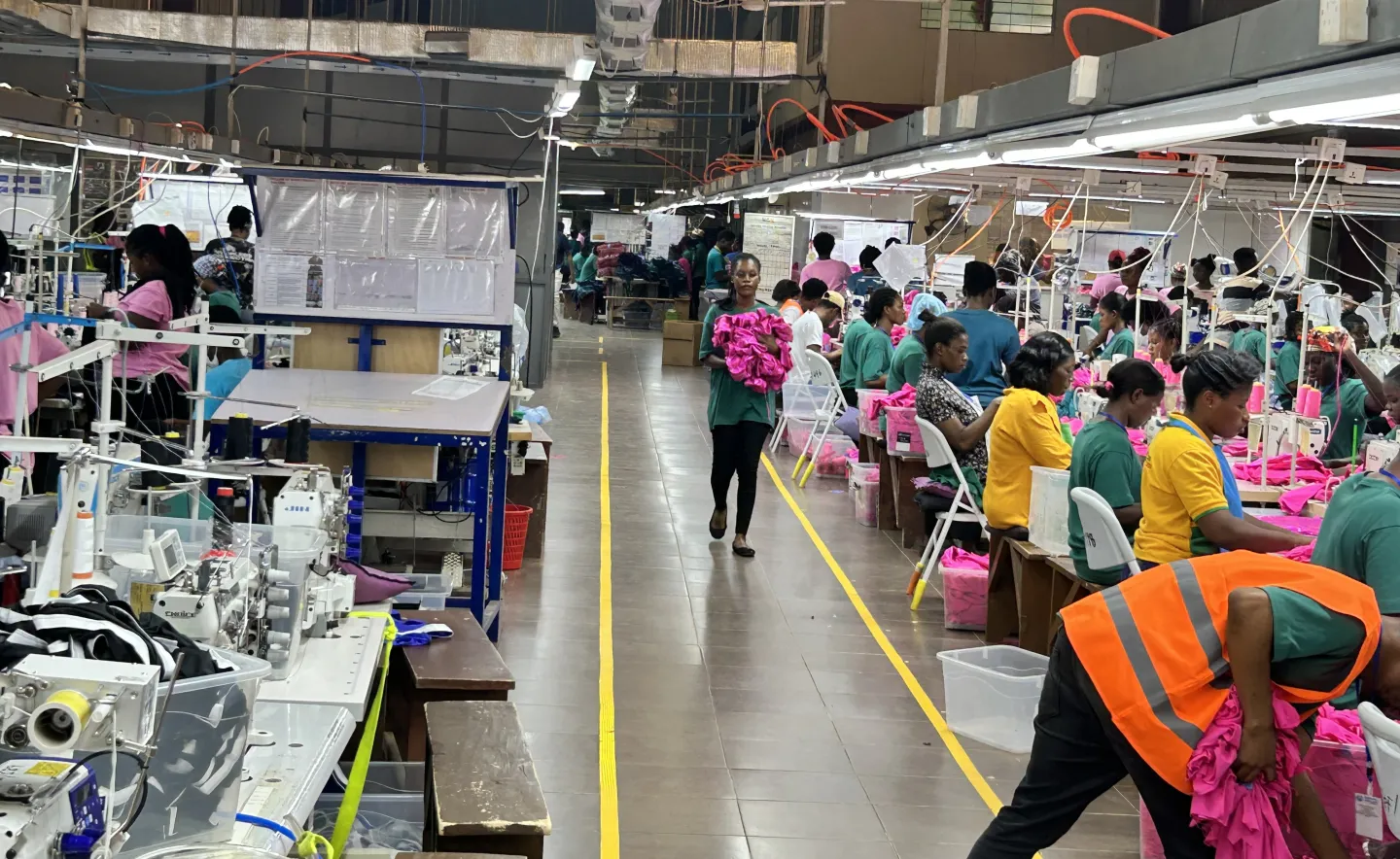
During a follow-up visit to Maagrace Industries Limited in Koforidua by the ILO National Project Officer of the Productivity Ecosystems for Decent Work Project, the management of Maagrace shared some positive results the training programme has achieved over the period. Ms Keren Pybus, the CEO & Co-founder of Ethical Apparel Africa and a partner of Maagrace, enumerated some of the outcomes of the training programme. According to Keren, some systems and tools that have been developed included displays for monitoring the flow and reorder, key procedures for ensuring system effectiveness, new roles for supervisors, practice of the kanban/ just-in-time system, and transitioning from push production to a pull production, and team-based approach to production. In addition, the sewing and packing area had the tools to create an agile and flexible production team structure, restructure sewing teams, assess workforce needs for flexibility, optimize work methods, establish a kanban zone, restructure packing teams, design a workload balance planning system for the packing area, and design a new layout.
These changes at the factory led to some positive outcomes. These included about 159 percent increase in cutting table capacity, 89 percent improvement in throughput time for cut jobs, 66 percent increase in labour utilization, 88 percent reduction in retention time for work in processing, 58 percent decrease in inventory levels, and 28 percent enhancement in space utilization.
Mr. Muzammal Mughal, General Manager – Production at Maagrace
The training has been very beneficial to our company. One of the most useful outcomes is a system we have set up to ensure just-in-time production at the factory. This system has reduced work-in-process inventory to zero. We are also able to meet our production targets on time.
Mr. Paul Allen, a Technical Director at Maagrace indicated that the training has put the company in the right frame to meet the requirements of two big buyers, Mas Holdings and Fruit of the Loom.
I am happy to say that Maagrace has been able to secure orders from these two buyers due to the lean manufacturing training that has helped us to undertake some best practices the buyers require.
Mr. Paul Allen
The Productivity Ecosystems for Decent Work project is being implemented with the support of the Swiss State Secretariat for Economic Affairs (SECO) and the Norwegian Agency for Development Cooperation (NORAD). The garment sector is one of the two sectors being supported under this project.
Relevant projects
Productivity ecosystems for decent work