

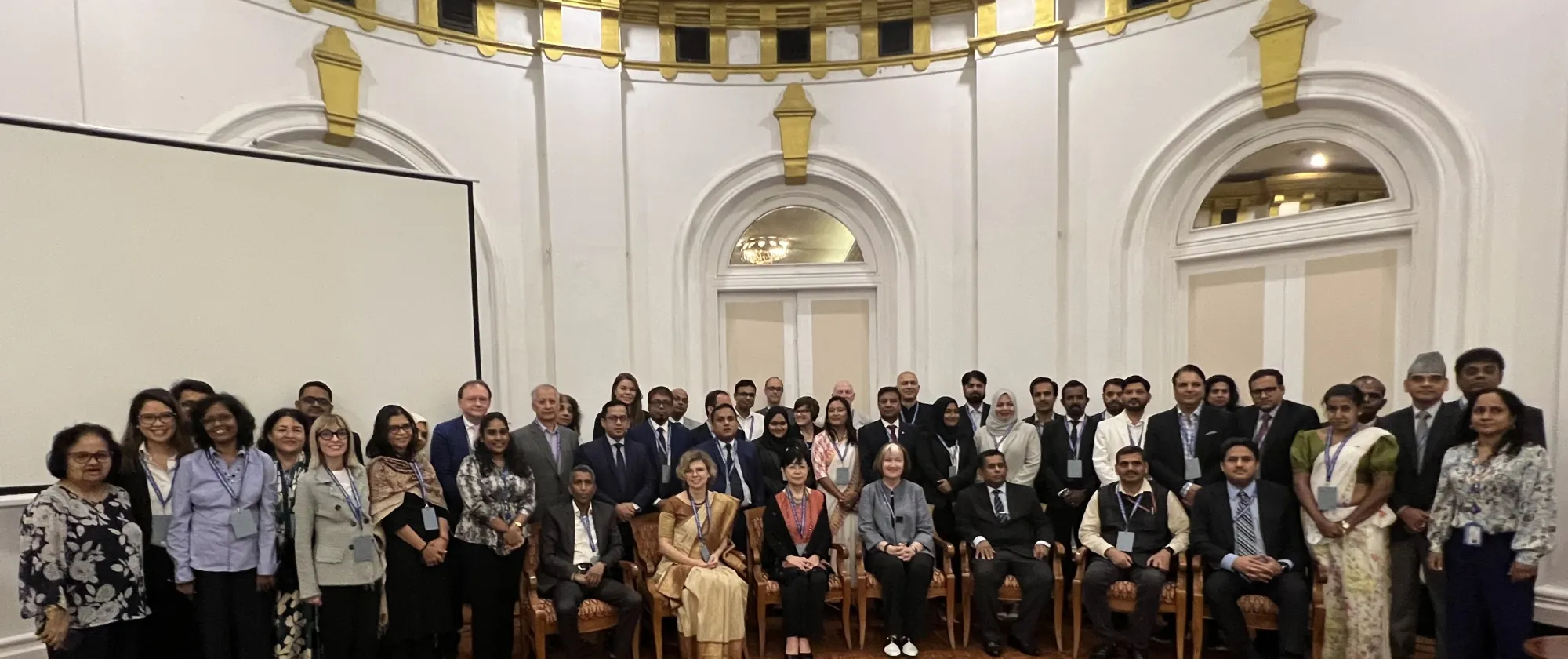
ILO hosts first South Asian knowledge sharing event on labour law reforms and compliance with ILS
Legal officers from government agencies and labour departments in Bangladesh, India, Maldives, Nepal, Pakistan and Sri Lanka and ILO officials met in Sri Lanka to exchange on progress made in developing national labour legislation to ensure compliance with International Labour Standards.
Delhi (ILO News) – In recent years, South Asian countries have started taking active steps towards reforming their labour and employment legislation to ensure the modernization and consolidation of existing laws. Having ratified ILO Conventions and Protocols, these countries have also received comments from the ILO Committee of Experts on the Application of Conventions and Recommendations (CEACR) that recommend improving the compliance of national legislation with ratified ILS, which need to be addressed through legislative amendments. Furthermore, several South Asian countries are currently exploring ratification of ILO instruments, which will also entail some labour law amendments.
The International Labour Organization and the International Training Centre of the ILO organized a three-day meeting in Sri Lanka to exchange on achievements and challenges in labour law reforms in South Asia and to discuss the way forward for developing consistent, sustainable, and advanced labour laws, and for facilitating reforms and regulation compliant with ILS and international best practices. The event brought together more than 40 people among government representatives at the technical level from Bangladesh, India, Maldives, Nepal, Pakistan, and Sri Lanka and ILO officials. It benefitted from contributions from professors Simon Deakin, Centre for Business Research (University of Cambridge) and Sean Cooney, Melbourne Law School (University of Melbourne).
In some South Asian countries, there are still labour laws in force that were developed decades ago but have not been modernized to meet the requirements of the changing world of work and economies. In several countries, labour laws are fragmented and based on outmoded concepts. The consistency and coherence across the different laws and coverage of the broad varieties of forms of work and workers’ engagements to ensure applicability of fundamental principles and rights to all workers are still absent. Common challenges exist in the legislative process, including a high level of informality, occupational safety and health deficits, weak labour inspection and enforcement, poor access to labour justice, the persistence of child and forced labour and discrimination, and widespread violence and harassment in the workplace.
The event shared information about the impact of labour laws on economic and social development, discussing the scope and coverage of labour laws and the role of ILS in shaping national labour laws for modern labour markets. It explored how fundamental principles and rights at work are protected in the labour legislation of the participating countries. It emphasized the importance of implementing and enforcing labour laws and shared experience of social dialogue and tripartite consultations in pursuing labour law reforms.
Incentives for the labour law reforms were also discussed during the meeting. “Compliance of national labour laws with international labour standards is vital for countries seeking to maintain or improve access to international trade and international financial assistance. Aligning with international labour standards strengthens a country's credibility, promotes fair trade, and attracts foreign investment. A commitment to labour compliance fosters sustainable economic development, strengthens worker protections, and ensures countries remain competitive in the global market. By addressing gaps in enforcement and enhancing labour practices, governments and businesses can unlock greater opportunities for trade, finance, and long-term prosperity,” highlighted Michiko Miyamoto, Director, ILO DWT/CO-New Delhi.
The event also marked a crucial first step in establishing a network for the future exchange of good practices and cooperation on labour law reforms in South Asia.