

ILO empowers cocoa farmers in Bibiani to tackle climate change and child labour through Biochar innovation
ILO’s CLIMATE Cocoa project trained 48 Ghanaian farmers in biochar production to boost climate resilience and reduce child labour.
24 July 2025
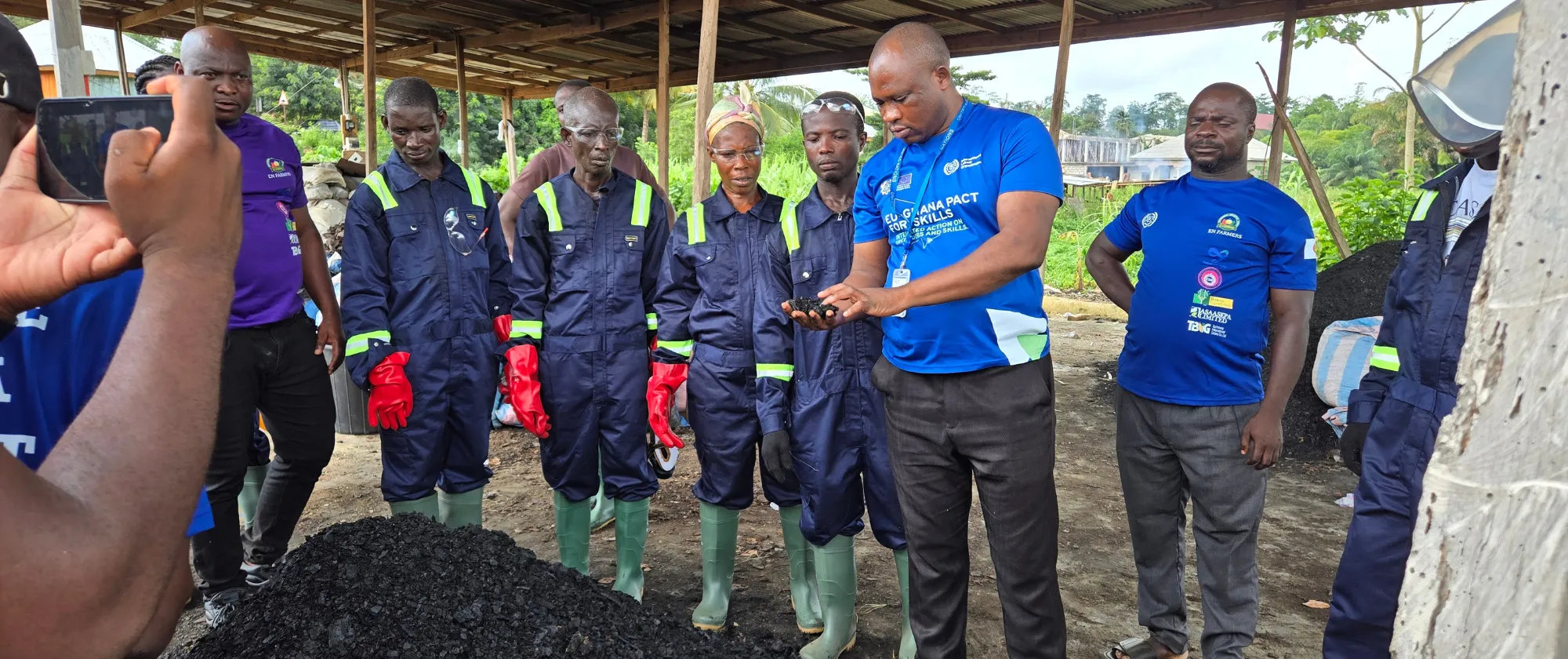
Diaso, Ghana (ILO News) – The International Labour Organization (ILO), under its CLIMATE Cocoa project, has equipped 48 cocoa farmers in Bibiani Ahwiaso Bekwai Municipality with practical skills in sustainable biochar production and application. This transformative training, held from 10–12 June at the Diaso Biochar Production Centre, strengthens climate resilience and accelerates efforts to eliminate child labour in cocoa-growing communities.
With support from the Government of Japan and in collaboration with EN Farmers & Consortium, the ILO mobilized farmers—22 women and 26 men—from five project communities to participate in the intensive training. The sessions brought together cooperative members, traditional leaders, and child protection committee representatives, fostering a united front against climate vulnerability and child labour.
Facilitators from EN Farmers and the ILO project team delivered a dynamic mix of theory and hands-on practice. Farmers explored the science of climate change, the environmental impact of carbon emissions, and the potential of biochar to restore soil health and boost yields. They also examined the root causes of child labour in agriculture and learned how improved productivity and income can reduce dependence on children for farm work.
“This training is timely—it gives us tools to adapt to the changing weather,” said Samuel Nti, a farmer and community leader from Nsuontam. “We’ve noticed that the rains come late now, which delays planting and reduces our cocoa yields.”
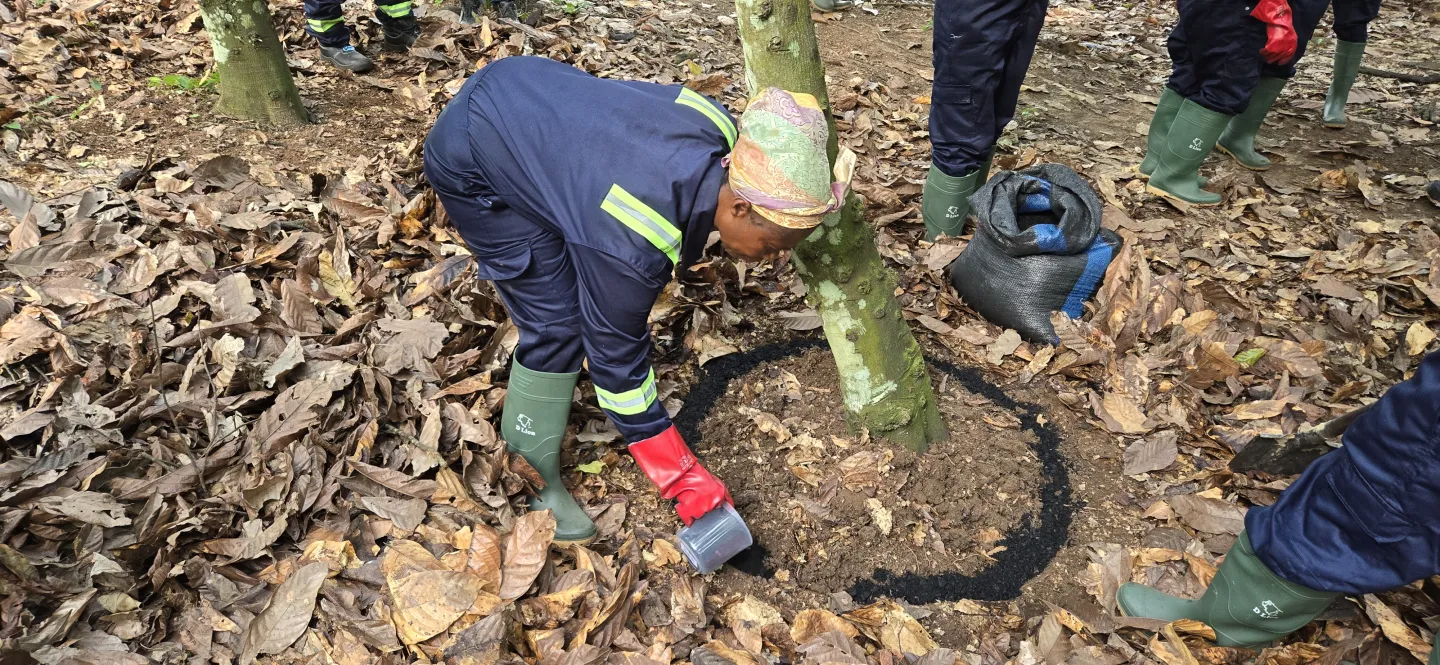
Participants mastered the use of biochar equipment, including kilns, moisture detectors, and the green box system. They learned to select biomass such as cocoa pods, prepare fires, and produce biochar. Trainers demonstrated how to apply biochar effectively on cocoa farms, including dosage per tree and blending techniques with compost or inorganic fertilizer.
Robert Pwazaga, National Project Officer, speaking on behalf of Vanessa Phala, ILO Country Director for Nigeria, Ghana, Liberia, and Sierra Leone, underscored the dual impact of the initiative.
“Biochar production and use will improve farm yields and boost farmers’ income,” he affirmed. “This empowers farmers to hire adult labour and reduces the need to rely on children for farm work.”
The training marks a significant step toward sustainable agriculture and child protection. By equipping farmers with climate-smart techniques and knowledge, the ILO supports Ghana’s national strategy to combat child labour and build resilient rural livelihoods.
Following the training, the ILO and its partners will establish and equip biochar production sites in all five participating communities, ensuring continued adoption and long-term impact.
Relevant projects

Strengthening resilience to climate change for the elimination of child labour in cocoa producing areas in Ghana