

Care economy
ILO Bangladesh organises National Care Academy
30 November 2024
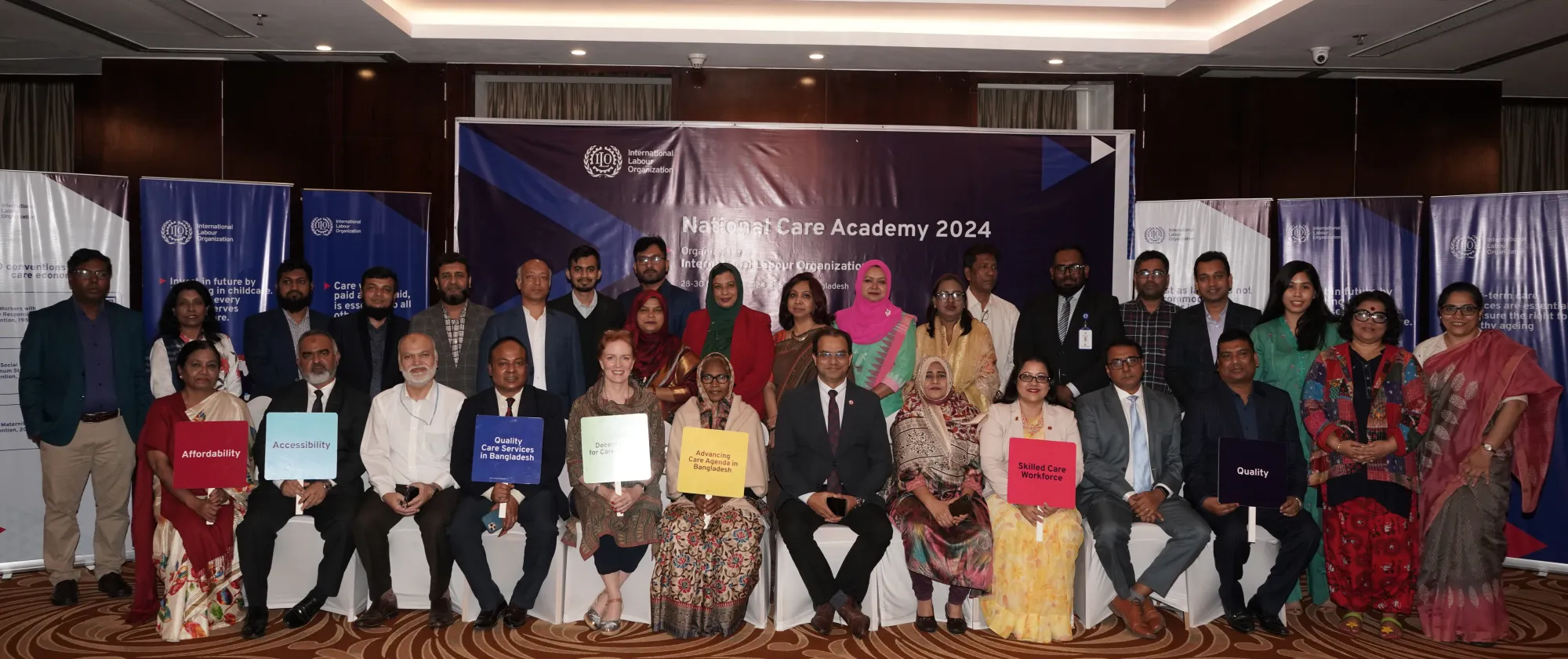
DHAKA (ILO news)- In late November 2024, Sylhet a divisional city in north-eastern Bangladesh became the hub for a significant milestone in advancing the Care Agenda in Bangladesh. The International Labour Organization (ILO) Country Office for Bangladesh with technical support from ILO Regional Office for Asia and the Pacific (ROAP), and ILO Sub-Regional Office for South Asia (SRO), organized a two-and-a-half-day technical workshop at the Grand Sylhet Hotel. This residential event brought together representatives from key government ministries, employers’ and workers’ organizations, and other critical stakeholders, all united by a common goal: strengthening the Care Agenda in the world of work.
Aiming for impact
The workshop was designed with two overarching objectives. Firstly, it sought to deepen participants’ understanding on the Care Agenda by introducing ILO approach of ‘Care at Work’, and disseminating ILO’s global research on care work and care economy including concepts on care leaves, policies and services, and also introducing different policy tools including the ILO Global Care Policy Portal. The tools introduced new concepts and encouraged dialogues on investing in comprehensive care systems through a multi-stakeholder, system-wide, and life-cycle approach.
Secondly, the workshop aimed to build capacity among ILO constituents to co-create effective solutions. This included drawing on examples of other countries and policy tools for developing care service models and packages aligned with international labour standards, with particular attention to vulnerable workers in Bangladesh's informal economy. According to the Bangladesh Labour Force Survey 2022, about 96% women in the workforce are engaged in informal employment.
National Care Academy: building blocks for a transformative approach to care policies and services
The two-and-a-half-day programme, aptly titled the National Care Academy, featured a rich mix of sessions. The first day laid the foundations by introducing the concepts of ‘care work’, ‘care economy’ and its connection to promoting gender-equality in the world of work, followed by presenting the ILO 5R framework to advance decent work in care work, and regional examples of care systems and protection of care workers. Day two focused on translating these concepts into actionable strategies for Bangladesh by introducing the key concepts of social protection, the interconnectedness of ‘care’, ‘gender’ and ‘social protection’, and ILS related to social protection geared towards improving reach, coverage and overall cost-effectiveness of various social protection tools and measures for addressing the existing and emerging care needs- including extending policy tools to expand the coverage to informal sector workers.
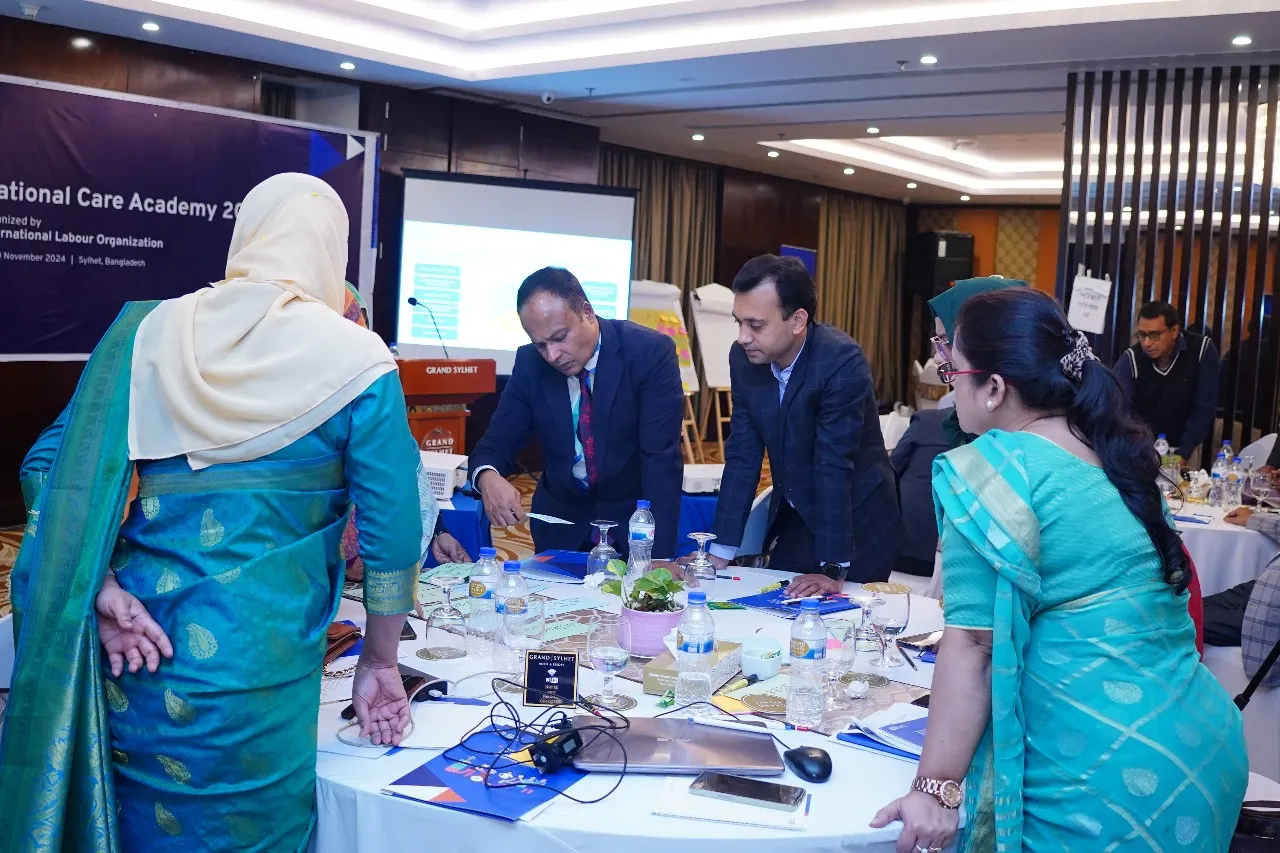
Improving working conditions for care workers and re-adjusting the focus on the gender-responsiveness of all policy measures remained central to all the sessions the workshop. The third and final day focused on exploring current and future country measures against the ILO 5R Framework—to firstly, recognize, reduce, redistribute unpaid care burden between the state, market, and communities, secondly, reward the care workers with decent working conditions and wages, thirdly, ensure meaningful and strong representation of care workers in social dialogues—and all of these must be accompanied with timely investment in the care economy.
The closing session, presided over by Ms. Mamtaz Ahmed, Senior Secretary of the Ministry of Women and Children Affairs (MoWCA), highlighted the urgency of advancing the care sector in Bangladesh. “The care sector has been overlooked for too long, but we can no longer afford to ignore it. MoWCA will take every necessary step to make care services affordable and accessible for all while ensuring gender equality,” she emphasized.
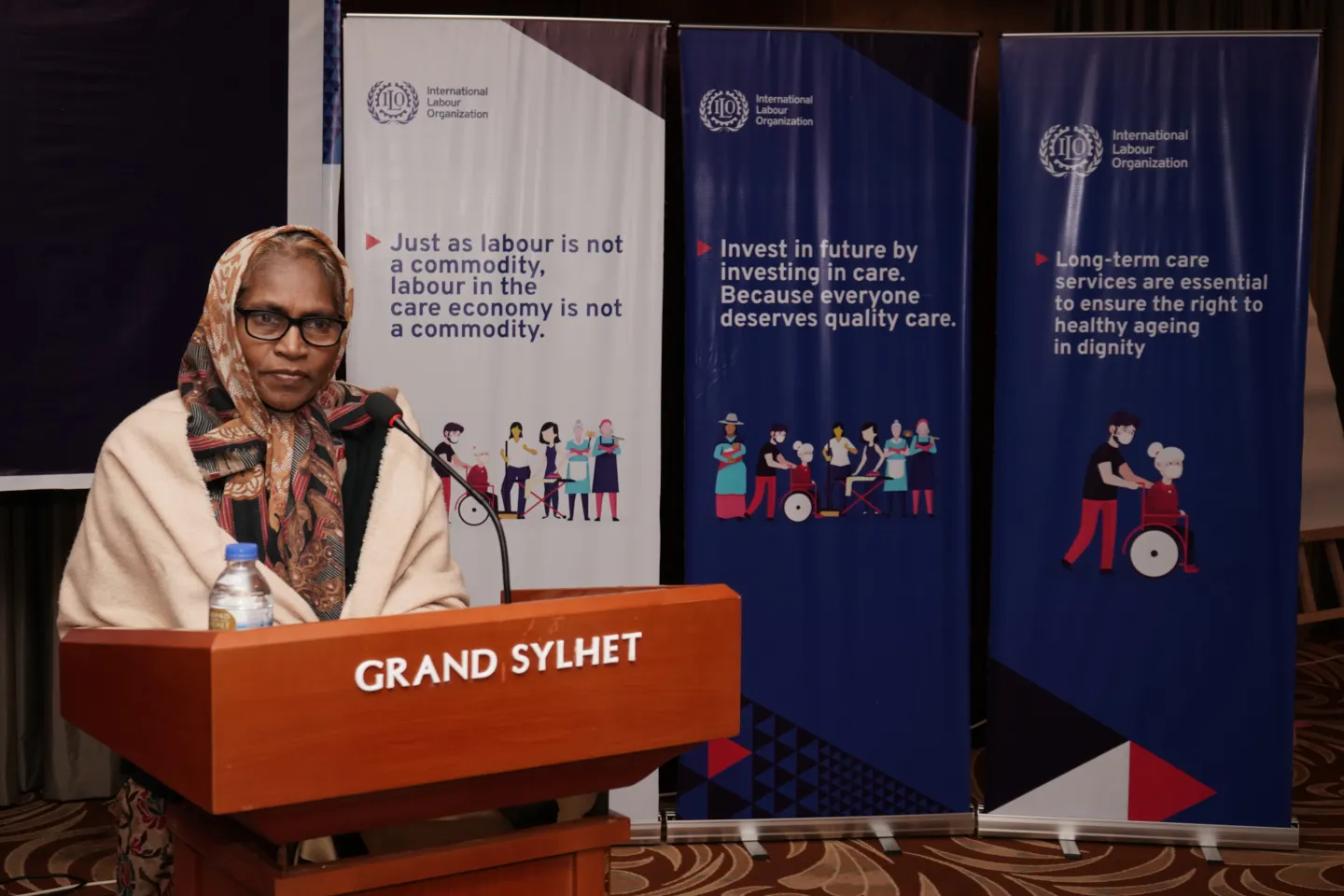
Jennifer Mudge, ILO Senior Specialist, Gender Equality, Non-Discrimination and Inclusion, ROAP, underscored the importance of recognizing care workers. “We must think about those who provide care, so that others can participate in the workforce. It is essential to create a decent working environment for them, with a gender-equality lens on their rights and well-being,” she stated.
The event was attended by 38 representatives from MoWCA, the Ministry of Social Welfare, the Ministry of Labour and Employment, the Ministry of Education, the Planning Commission, the National Skills Development Authority (NSDA), and local government bodies- reflecting a strong multi-stakeholder commitment to advancing the Care Agenda in Bangladesh.
Key Takeaways
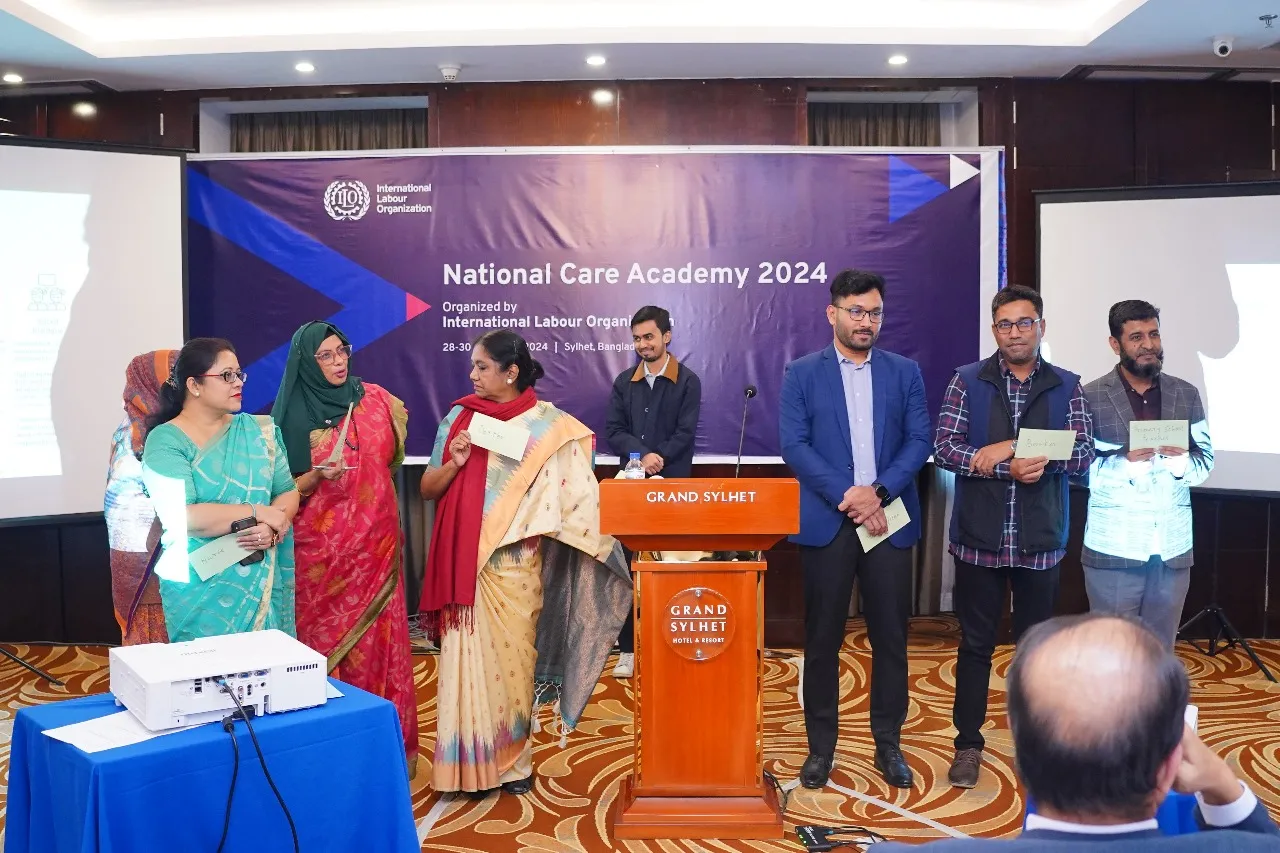
The workshop generated a wealth of insights and outcomes:
- Deepened understanding: Participants gained a nuanced appreciation of the connections between gender and care, the importance of care work, and the broader care economy.
- Identifying emerging needs: The discussions spotlighted critical care needs in Bangladesh, including childcare, long-term care, and healthcare support.
- ILO’s role in focus: Attendees explored the ILO’s approach to the care economy and its potential to help Bangladesh address gaps in care systems and policies.
- Challenges and opportunities: The vulnerabilities of care workers, particularly in informal sectors, were examined alongside strategies for extending care services and improving working conditions.
- Social protection in action: A deeper understanding emerged about the role of social protection in expanding access to care services and reorganizing care systems.
Charting the path forward
‘Ensuring inclusive and affordable quality care services by formulating laws and policies for a holistic and sustainable development of the care system in Bangladesh’ – is the vision identified by all participants at the workshop. As the workshop concluded, participants expressed a unified commitment to prioritizing investments in the care economy and strengthening social protection frameworks. These initiatives form the foundational steps for advancing gender equality, improving working conditions of care workers, and addressing the diverse care needs of Bangladesh’s population.
For further information on the ILO’s initiatives in advancing the Care Agenda, visit https://www.ilo.org/topics-and-sectors/care-economy