

Skills development
ILO and EU continue to advance vanilla farming in Timor-Leste with practical training on curing, quality and markets
The Agroforestry Skills for Employment and Resilience Project continues to support vanilla farming in Timor-Leste, aiming to build a more competitive and sustainable vanilla industry.
1 July 2025
TIBAR, Timor-Leste (ILO News) - The Agroforestry Skills for Employment and Resilience Project, implemented by the ILO in Timor-Leste and funded by the European Union (EU), conducted the second phase of its Good Agricultural Practices (GAP) Training on vanilla curing in Tibar from 16–18 June at the National Centre for Employment and Vocational Training (CNEFP). Supported by Quinta Portugal, the training brought together 24 participants from diverse backgrounds, including vanilla farmers, private sector representatives, and agricultural extensionists from the Ministry of Agriculture.
This training programme was a continuation of the initial session held a few months earlier in Aileu Municipality. The first phase focused on equipping participants with practical knowledge and skills to improve vanilla production quality, reduce post-harvest losses, and enhance access to premium markets.
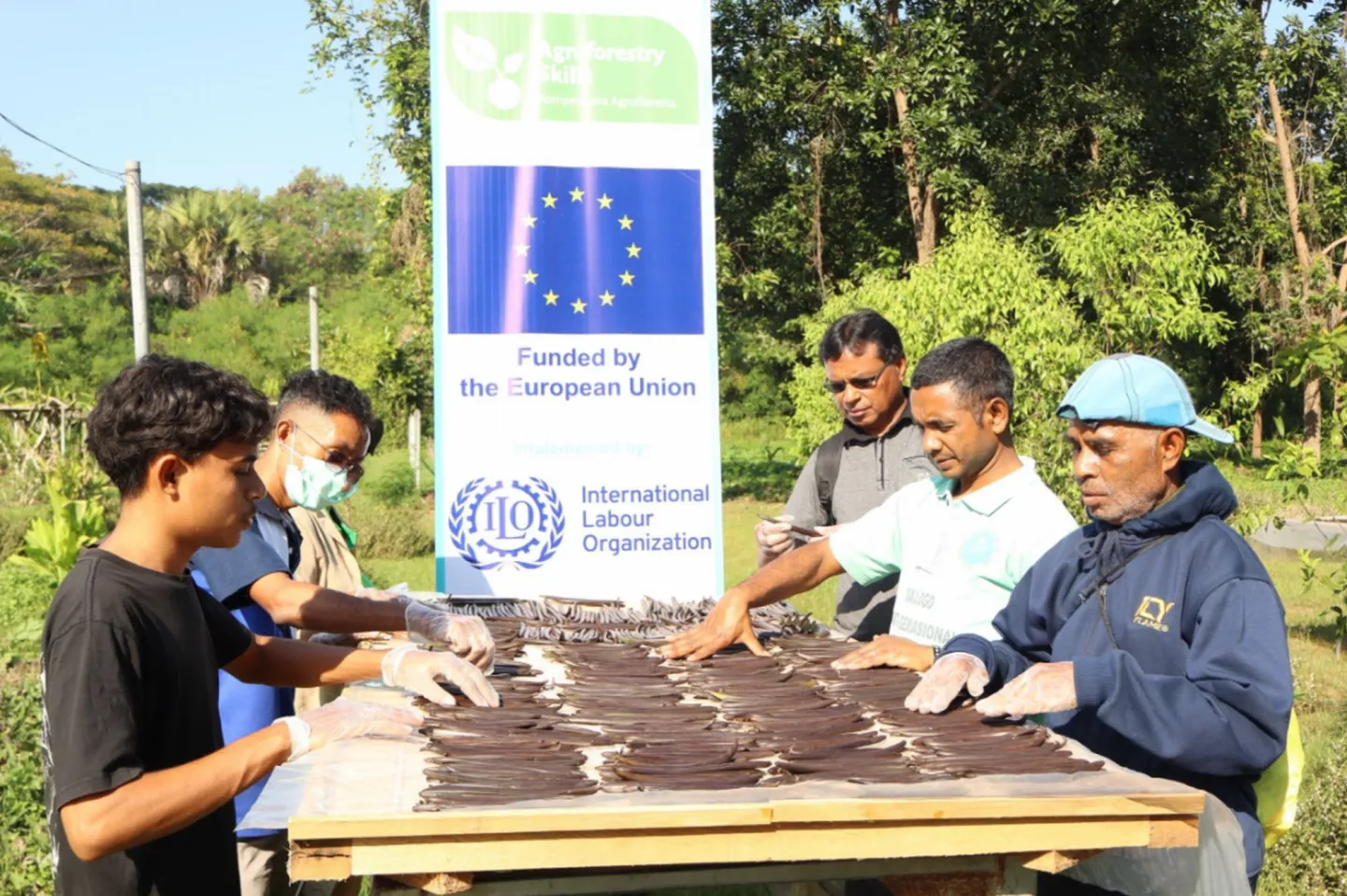
Over three days, participants explored vanilla curing practices through a series of in-depth sessions led by Daniel Stassen—an internationally recognized vanilla expert from Belgium, widely known as “Mister Vanilla.” They also learned essential steps such as sorting and grading, water killing, in-box sweating, sun curing and in-shed curing.
During the training, we also learned a lot about the market potential and can see the benefits if we put effort into it.
Abílio da Costa, one of the participants
The participants also learned proper harvesting techniques, as well as how to process vanilla beans and understand the dynamics of the vanilla market. They had the opportunity to practice curing techniques themselves, witnessing the transformation of vanilla beans and gaining insight into how each step affects the final quality.
“Even though some of us are already trainers and have farming experience, we’re happy and always open to learning new things, especially when it comes to vanilla cultivation. During the training, we also learned a lot about the market potential and can see the benefits if we put effort into it,” said one of the participants, Abílio da Costa.
In addition to technical skills, participants were provided with business ideas and strategies for marketing their vanilla beans—encouraging them to think beyond the farm gate and explore ways to increase value and income through smart branding, improved processing and building connections with both local and international buyers.
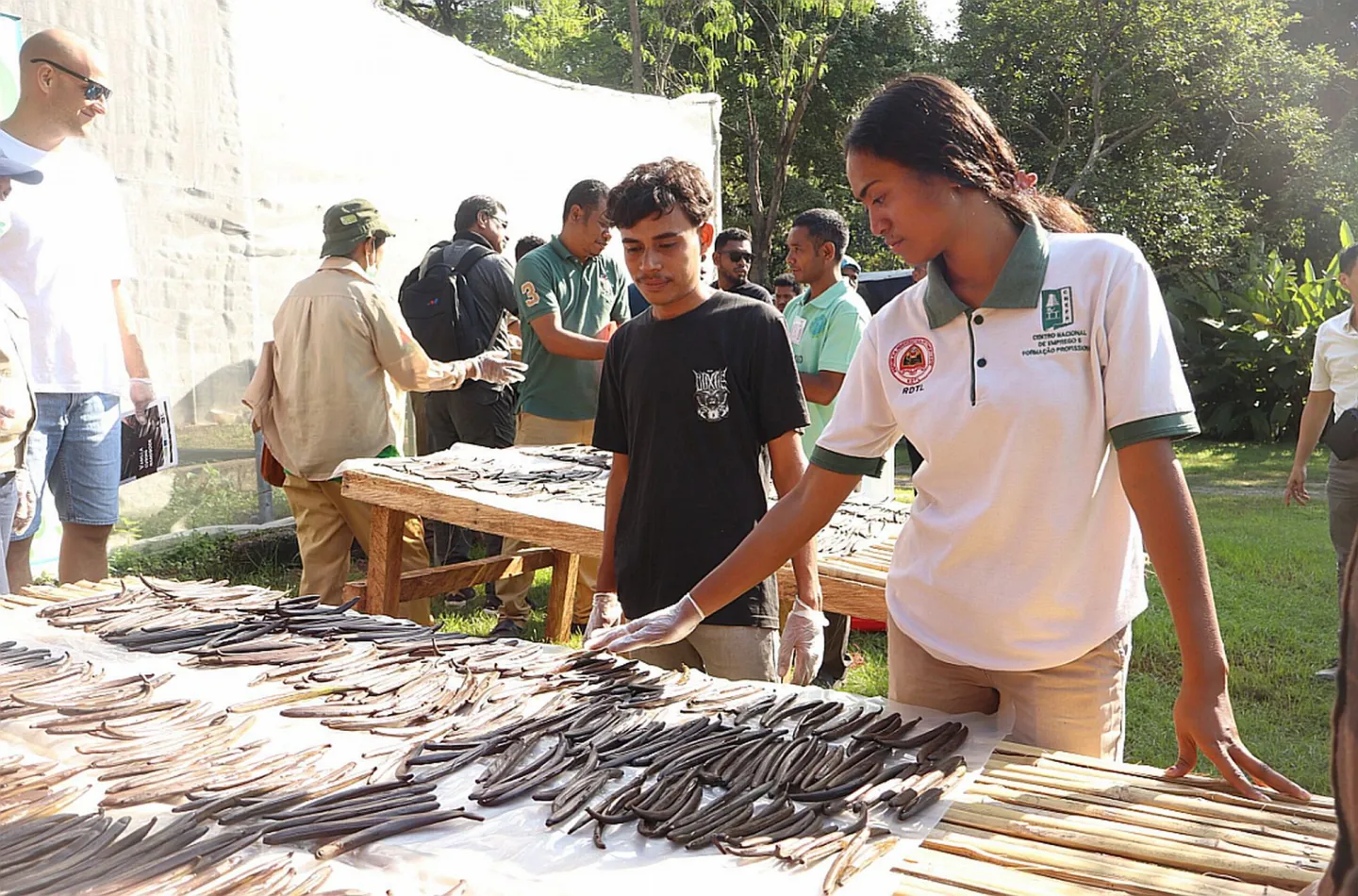
To put theory into practice, participants joined a field visit to two vanilla farms in Ermera Municipality. There, they observed and took part in real-life demonstrations, practicing vanilla harvesting techniques, plant care during seasonal changes and post-harvest handling. This hands-on experience helped bridge the gap between the training content and practical application on the ground.
“In the past, when we harvested our vanilla, we didn’t know or use the proper techniques, which affected the quality and led to low production. Now that we’ve learned, I believe the next harvest will bring the best results, with high-quality vanilla beans that can be sold at better prices,” remarked Alexandrinho de Jesus, a vanilla farmer from Liquica, with confidence.
Through a series of training programmes, the ILO, EU, and their partners continue to support farmers and relevant stakeholders in building a more competitive and sustainable vanilla industry, while strengthening agroforestry skills across the country.
Now that we’ve learned, I believe the next harvest will bring the best results, with high-quality vanilla beans that can be sold at better prices.
Alexandrinho de Jesus, a vanilla farmer from Liquica
Related content
EU Programme
Agroforestry skills for employment and resilience in Timor-Leste

News
Empowering Timor-Leste’s vanilla farmers through intensive training of trainers on vanilla cultivation

Our impact, their voices
From tradition to transformation: A young Timorese farmer’s journey into vanilla cultivation
Relevant projects
EU Programme
Agroforestry skills for employment and resilience in Timor-Leste