

Business and human rights
ILO and Apindo team-up to promote responsible business and skills development in Batam’s electronics sector
Known as a free trade zone, Batam improves its responsible business conduct and skills development with support from the ILO and the Indonesian Employers’ Association (Apindo).
27 August 2024
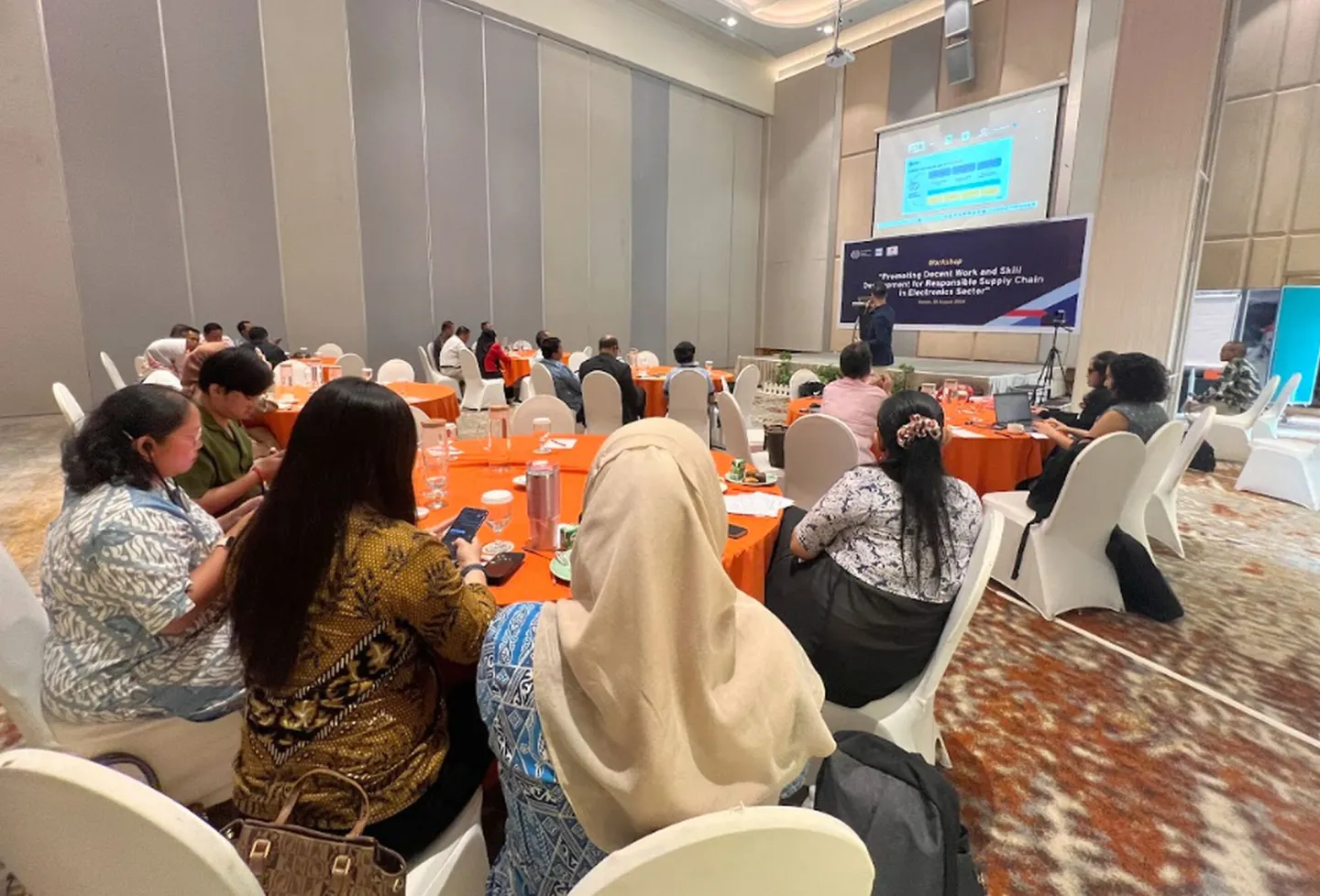
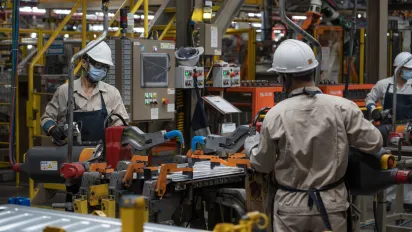
BATAM, Riau, Indonesia (ILO News) - The electronics industry in Batam, the largest city in Indonesia’s Province of Riau and known as a free trade zone, is a critical link in the global supply chain; yet there remains much untapped potential to upgrade social and economic performance and ensure industry success amid a changing trade and business landscape.
These issues were discussed in a recent workshop jointly conducted by the ILO through its two Japan-funded projects in the electronics sector—the Resilient, Inclusive and Sustainable Supply Chains (RISSC) project and the Skills Development and Responsible Business project—and the Indonesian Employers’ Association (Apindo) on 22 August. The workshop aimed to support the electronics industry to foster a more resilient, inclusive and sustainable supply chain through improvements to responsible business conduct and decent work, including skills development.
Respecting human rights through responsible business conduct will create opportunities for electronics firms, especially SMEs, to upgrade and access new clients and destination markets for Indonesian electronics sector.
Rafky Rasyid, Chair of Apindo Batam
The workshop was attended by 30 participants, representing governmental officials from Ministry of Manpower, Coordinating Ministry for Economic Affairs and Ministry of Law and Human Rights, management and trade unions of the electronics sector as well as the Batam office of the Indonesian Chamber of Commerce and Industry (Kadin).
The workshop showcased Indonesia’s recent efforts to strengthen the national policy context for responsible business, with government speakers presenting both the National Strategy on Business and Human Rights (Stranas BHAM), which was launched in 2023, and related self-assessment tools of Ministry of Law and Human Rights’ PRISMA and the Ministry of Manpower Guide of Norm 100, designed to help enterprises benchmark their own labour compliance and responsible business standards.
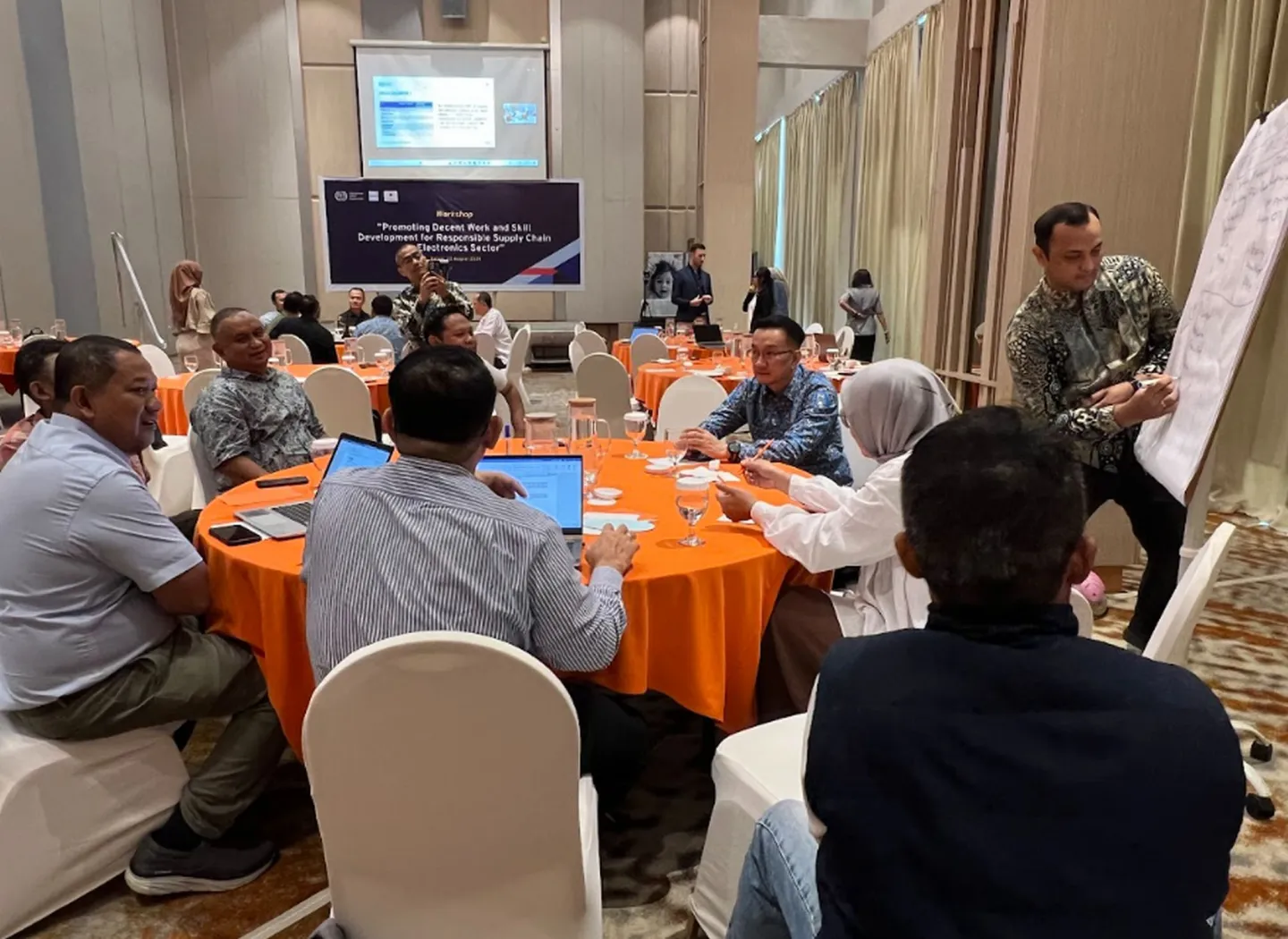
Number of key challenges in the electronics sector in Indonesia as identified by the latest ILO research, among others, are casualization and employment insecurity, recruitment practices, wages, excessive working hours, gender inequalities and discrimination, skills gaps and shortages, fundamental rights at work, including freedom of association and collective bargaining and occupational safety and health.
Using the key findings and recommendations from recent ILO studies, the ILO will continue supporting Indonesia to strengthen bipartite social dialogue and human rights due diligence both at the enterprise and industry level.
Tauvik Muhamad, ILO’s Project Coordinator for RISSC Project
Rafky Rasyid, Chair of Apindo Batam underlined his organization’s steadfast commitment to respecting human rights in business activity, including in electronics. In recent years, Apindo has scaled up its engagement with its members on responsible business conduct.
“Respecting human rights through responsible business conduct will create opportunities for electronics firms, especially SMEs, to upgrade and access new clients and destination markets for Indonesian electronics sector,” said Rafky.
Meanwhile, Tauvik Muhamad, ILO’s Project Coordinator for RISSC Project, noted the ILO commitment to continuously support Indonesia’s electronic sector to comply with Stranas BHAM. “Using the key findings and recommendations from recent ILO studies, the ILO will continue supporting Indonesia to strengthen bipartite social dialogue and human rights due diligence both at the enterprise and industry level,” he concluded.
Related content
Tripartism and social dialogue
Resilient, Inclusive and Sustainable Supply Chains Asia (RISSC) in Indonesia

Project
Skills development and responsible business conduct in Indonesia
Relevant projects

Tripartism and social dialogue
Resilient, Inclusive and Sustainable Supply Chains (RISSC) in the Philippines
Skills development and responsible business conduct
Skills Development and Responsible Business Conduct for Transition in Thailand
ILO-Japan Partnership
Automotive Supply Chain Programme in Thailand

Skills Development and Responsible Business Conduct for Transition in Japan