

Held: 113th International Labour Conference
The 113th International Labour Conference (ILC), held in Geneva from 3 to 14 June 2025, brought together over 4,000 delegates representing governments, workers and employers from the ILO’s 187 Member States.
15 June 2025
MADRID (ILO News) – The Spanish tripartite delegation played an especially active role, reaffirming the country’s commitment to decent work, social justice and international labour standards.

Over the course of the two-week session, the Conference addressed several of the most pressing challenges facing the world of work today:
- Biological hazards in the workplace: The Conference adopted the ILO’s first dedicated standard on the prevention and protection against biological hazards at work (Convention No. 192), drawing on lessons learned from the COVID-19 pandemic. The new instrument establishes guidance on risk assessment, preventive measures, health surveillance and workers’ rights in environments where biological agents are present.
- Work on digital platforms: Technical discussions were held on working conditions in the platform economy, paving the way for a possible future international labour standard. The discussions covered social protection, collective representation, and the governance of algorithmic management. Spain presented its pioneering regulatory experience, including the tripartite “Rider Law”, which was widely recognised as a global reference.
- Innovative approaches to informality: Strategies were explored to support transitions to the formal economy, including integrated policies combining fiscal incentives, social protection and institutional strengthening. Spain shared national experiences in sectors such as domestic work and agriculture.
- Review of the Maritime Labour Convention (MLC, 2006): Amendments were adopted aimed at enhancing the mental health protection of seafarers, ensuring their right to medical care ashore and improving repatriation conditions.
- Contribution to the Second World Summit for Social Development (Doha, 2025): Delegates discussed the ILO’s tripartite contribution to the Summit, with emphasis on decent employment, universal social protection and social dialogue as key pillars in addressing inequality.
- World Day Against Child Labour: On 12 June, a special session was held to highlight the global rise in child labour following the pandemic. The session called on governments to step up labour inspections and invest in inclusive education systems. A new report with updated data was presented.
- Social justice for fair globalisation: The Conference discussed efforts to strengthen the ILO’s mandate through the Global Coalition for Social Justice. Spain expressed its full support for the initiative, in line with its commitment to social multilateralism.
- Application of international labour standards: The Committee on the Application of Standards examined the implementation of ratified Conventions by Member States, highlighting cases relating to freedom of association, non-discrimination, and employment protection.
Spain’s participation:
The Second Vice-President and Minister of Labour and Social Economy, Yolanda Díaz, addressed the plenary, highlighting decent work as a cornerstone of democracy. She reaffirmed Spain’s commitment to ratifying Convention No. 190, advancing the care economy, reducing working time, and promoting a just digital and green transition. She also underscored Spain’s leadership in the area of labour regulation, particularly in relation to platform work.

Representing Spanish workers, the trade unions CCOO and UGT highlighted the role of social dialogue in advancing labour rights in Spain, advocated for the ratification of key Conventions, and called for a global governance framework that prioritizes formalization of employment, protection of vulnerable workers, and regulation of platform work.
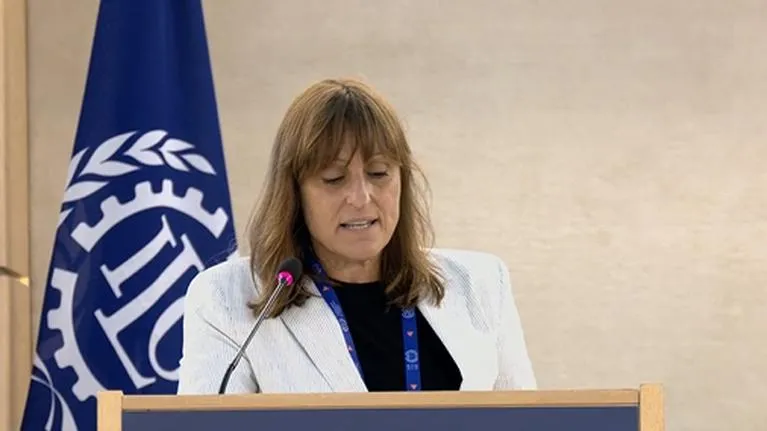
The Spanish employers’ organizations, CEOE and CEPYME, advocated for a balanced regulatory framework that ensures business competitiveness, particularly in the context of the digital and green transitions. They also underscored the role of the private sector in advancing the Sustainable Development Goals (SDGs) and promoting responsible investment that respects labour rights.
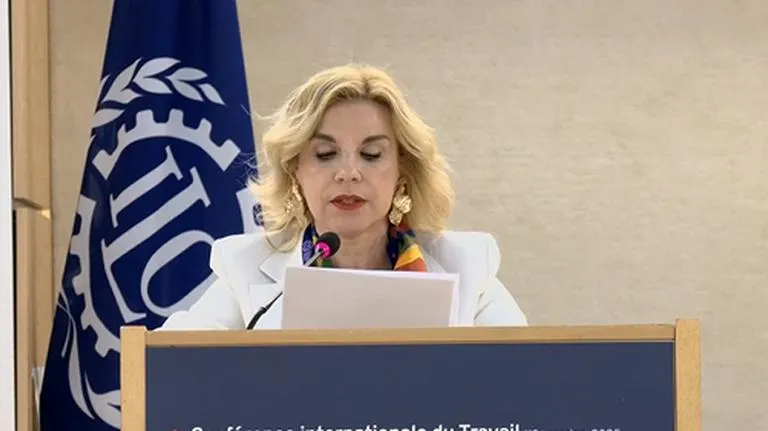
The Director of the ILO Office for Spain, Félix Peinado, took an active part in the Conference, attending high-level sessions, meeting with representatives of other countries, and contributing to the strengthening of cooperation ties between Spain and the ILO.
Ultimately, the 113th International Labour Conference once again reaffirmed the central role of tripartite social dialogue as a key tool to address the challenges of the world of work. The decisions adopted—from the new standard on biological hazards to the discussions on platform work, the promotion of decent work in the care economy, and the pursuit of a just transition—reflect the ongoing global commitment to social justice and dignity at work. The active engagement of governments, employers and workers from across the world confirms that only through multilateralism and cooperation can we build a more inclusive, safe and sustainable future of work.