

Just transition
Identifying priority actions for a just transition in Viet Nam's paper and pulp sector
Stakeholders from government, industry and trade unions gathered in Hanoi to identify priority actions for a just transition in Viet Nam's paper and pulp sector, addressing green finance gaps, skills mismatches and worker protections.
21 April 2026
HA NOI (ILO News) - The International Labour Organization (ILO), in collaboration with the Viet Nam Pulp and Paper Association (VPPA), held a multi‑stakeholder consultation and validation meeting to discuss priority actions to advance a just transition in Viet Nam’s paper and pulp sector, under the support by the ILO-Korea Partnership Programme.
The meeting brought together more than 40 representatives from government ministries, employers’ and workers’ organizations, paper and pulp enterprises, training institutions, research organizations and development partners. Discussions went beyond feedback on the draft Just Transition assessment and focused on how evidence‑based recommendations could be gradually translated into practical and feasible actions to support enterprises and workers as the sector begins its green transition.
Opening the meeting, Ms Sinwon Park, Director of the ILO Country Office for Viet Nam, emphasized that progress toward a just transition requires sustained effort, coordination and inclusive governance. “A just transition can only succeed through effective social dialogue, strong policy coordination and the meaningful participation of both employers and workers,” she said.

The consultation was informed by key findings from a draft assessment on just transition in Viet Nam’s paper and pulp sector, conducted by the MBI research team and grounded in the ILO’s Just Transition Guidelines. The research indicates that while the sector has expanded and plays a growing role in the national economy, it is under increasing pressure from green transformation and automation. Key challenges include high investment requirements for cleaner technologies, uneven access to green finance, particularly for micro, small and medium‑sized enterprises, skills mismatches, limited cooperation between enterprises and training institutions, emerging occupational safety and health (OSH) risks, and gaps in social protection, especially among workers in informal segments of the value chain. Overall, while the sector has entered a transition phase, its readiness for a just transition remains uneven, underscoring the need for more focused and responsive policy support.
Discussions during the meeting therefore centred on identifying prioritized actions that could deliver practical results while ensuring the inclusiveness and “just” dimensions of the transition. Jointly facilitated by the ILO, VPPA and VCCI, attended participants stressed that recommendations need to be embedded within a clear just transition governance framework, supported by coherent and well‑coordinated policies across ministries. The involvement of employers and workers in decision‑making was highlighted as a critical enabling factor, with consultation and dialogue recognized as central to managing change and addressing emerging risks. Participants also emphasized the importance of adopting a more integrated approach, linking skills development, green finance and enterprise support, particularly for small and medium‑sized enterprises, rather than advancing these areas separately. Several speakers noted that while just transition and competitiveness can reinforce one another, this link will depend on concrete improvements in job quality, productivity and enterprise capabilities.
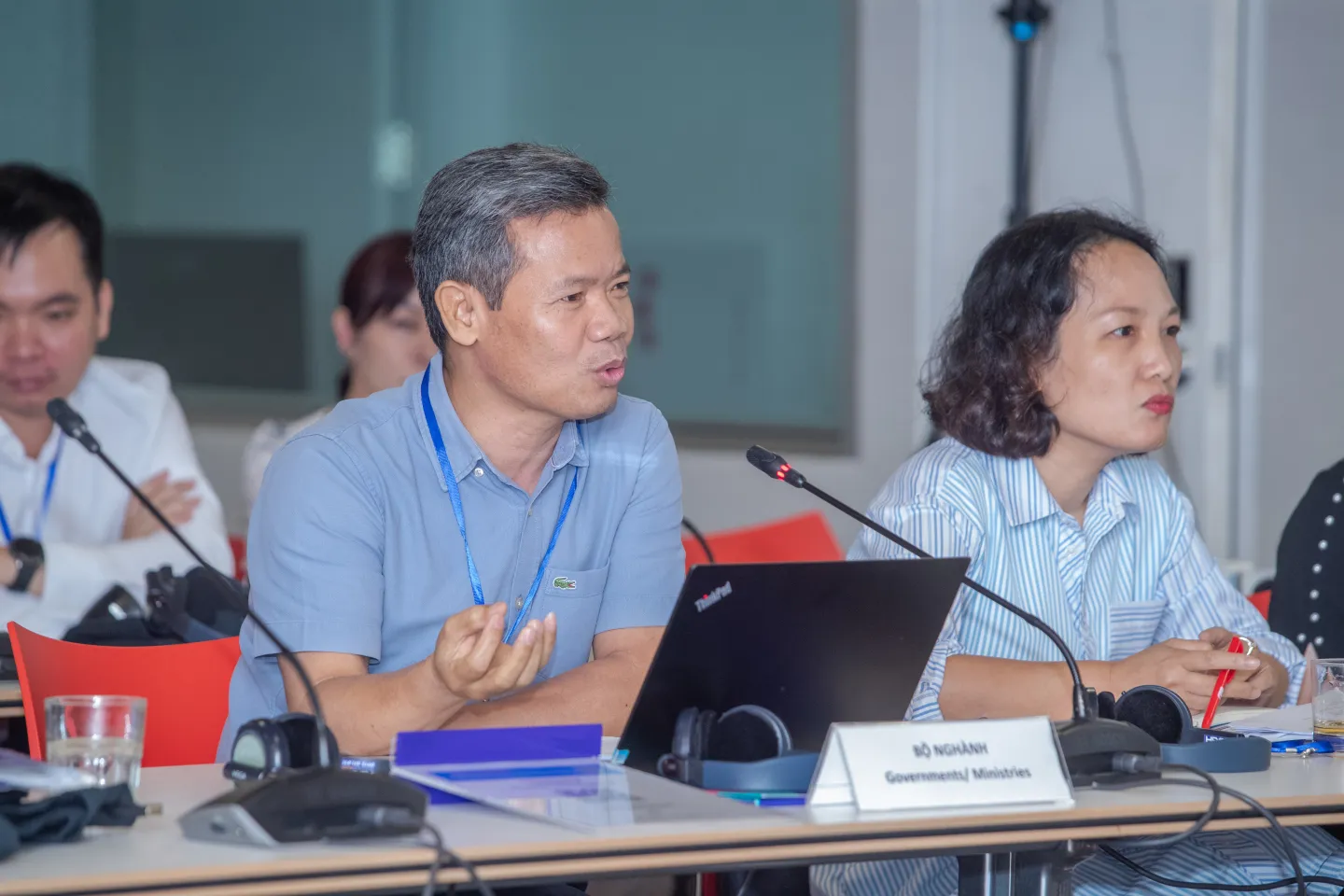
Reflecting the policy perspective, Mr Nguyen Manh Thang, representative of the Agency for Innovation, Green Transition and Industry Promotion, Ministry of Industry and Trade (MOIT), noted that further work is needed to embed these considerations into sectoral planning. “Just transition considerations should be integrated into the draft development strategy of the paper and pulp industry to help ensure that green transformation is aligned with sustainable growth,” he said.

Representatives from the business community shared experiences from early efforts to reduce emissions, improve energy efficiency and comply with environmental requirements, while also pointing to persistent constraints. These include complex procedures, limited policy clarity and difficulties accessing technical and financial support needed to expand green investments. From the employers’ perspective, Ms Tran Thi Hong Lien, Deputy Director of the Bureau for Employers’ Activities at the Viet Nam Chamber of Commerce and Industry (VCCI), emphasized the need to focus on realistic steps. “Prioritizing feasible, short‑term actions is important to help businesses, especially small and medium‑sized enterprises, better understand and access to information, skills development, and technical support required for the green transition,” she noted.

Some enterprises also acknowledged a growing awareness of the importance of moving toward more sustainable practices, while recognizing that progress remains gradual. Ms Nguyen Tran Phuong Dinh, representing HHP Global company, highlighted the need for targeted support to sustain current efforts. “While enterprises are taking initial steps toward greener and more inclusive practices, clearer green finance mechanisms and appropriate technical assistance would be important to help sustain these efforts and, over time, scale them up,” she shared.
Trade union representatives at different levels emphasized that protecting workers throughout the transition remains a key priority, particularly through reskilling and upskilling, strengthened OSH measures, and expanded access to social protection. They also stressed that social dialogue at both enterprise and sectoral levels will be essential to anticipate risks, manage workforce adjustments and ensure that vulnerable workers are not left behind.
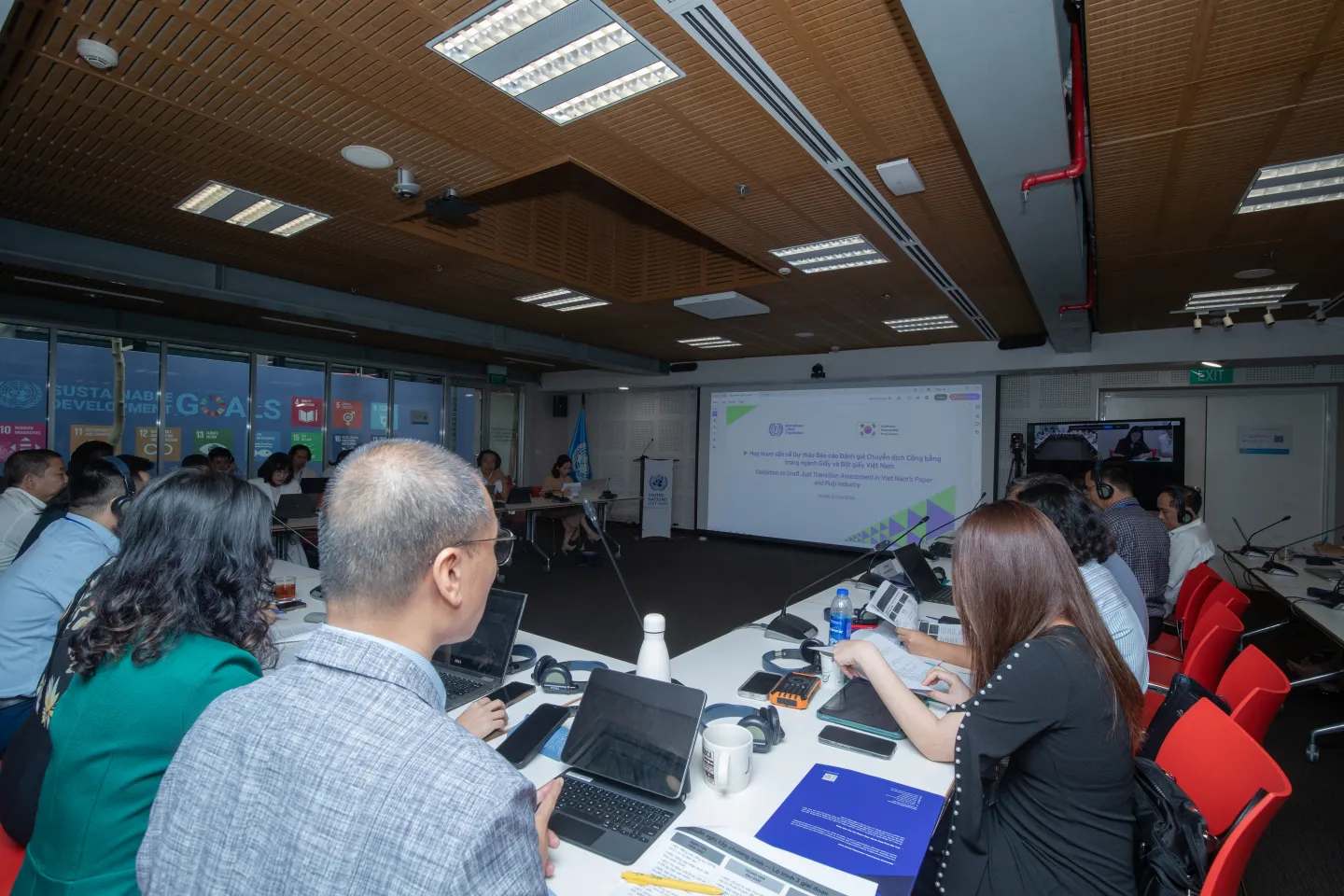
The meeting concluded with agreement on several next steps. The research team will finalize the assessment report by incorporating stakeholder feedback, with greater emphasis on prioritization and implementation pathways. The ILO, VPPA, VCCI and other stakeholders will explore opportunities for concrete pilot initiatives, while continued dialogue on skills development is expected through a forum involving enterprises and training institutions, tentatively planned alongside Viet Nam Paper Day later in May.
The ILO reaffirmed its commitment, together with the Government of the Republic of Korea through the ILO–Korea Partnership Programme, to continue supporting stakeholders in Viet Nam as they work to translate evidence and dialogue into concrete, step‑by‑step actions toward a just, green and sustainable future for the paper and pulp sector.