Gender equality takes centre stage at Baku Conference
The ILO Conference highlighted the urgent need to close gender gaps in the workplace and accelerate gender-responsive reforms in the transition to a just and inclusive economy.
8 May 2025
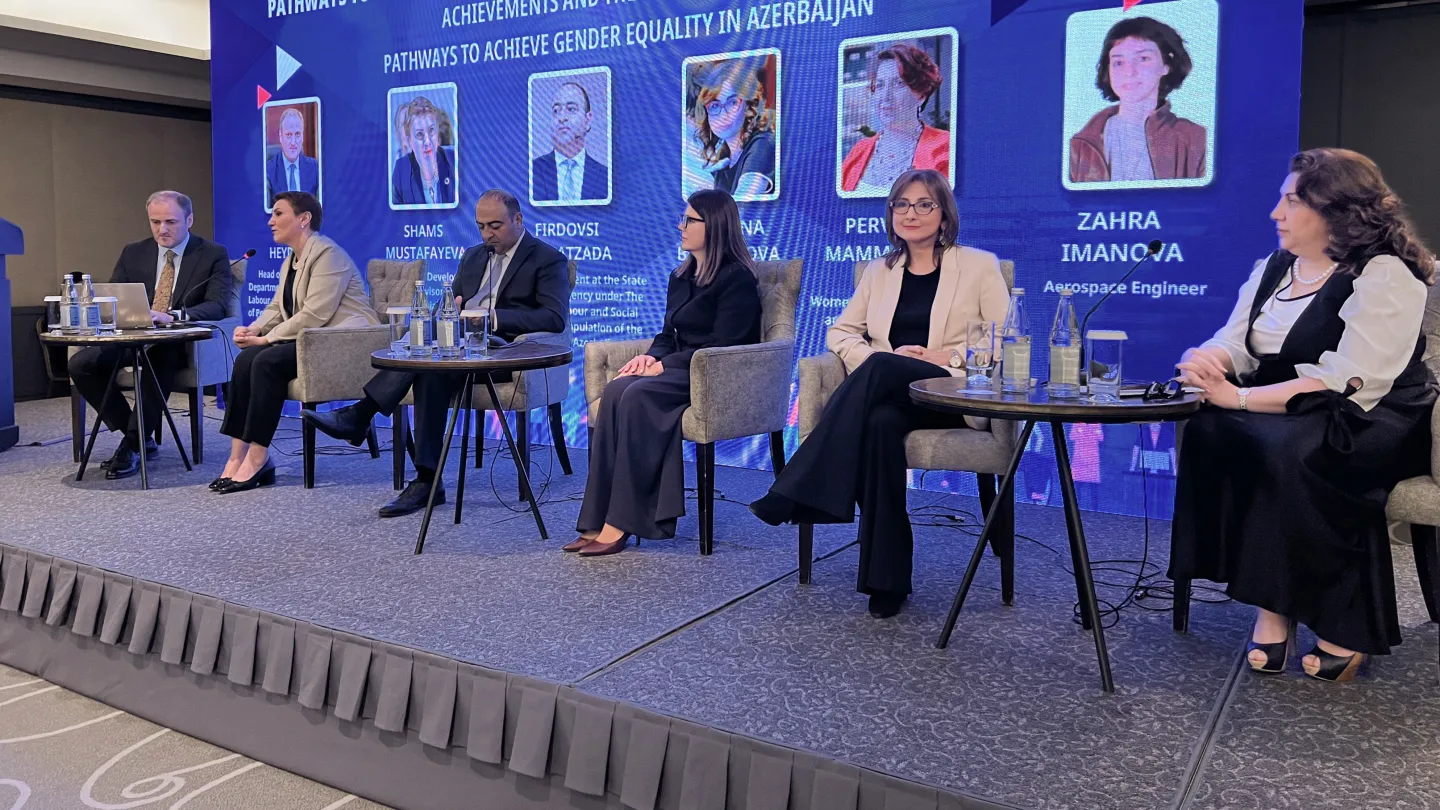
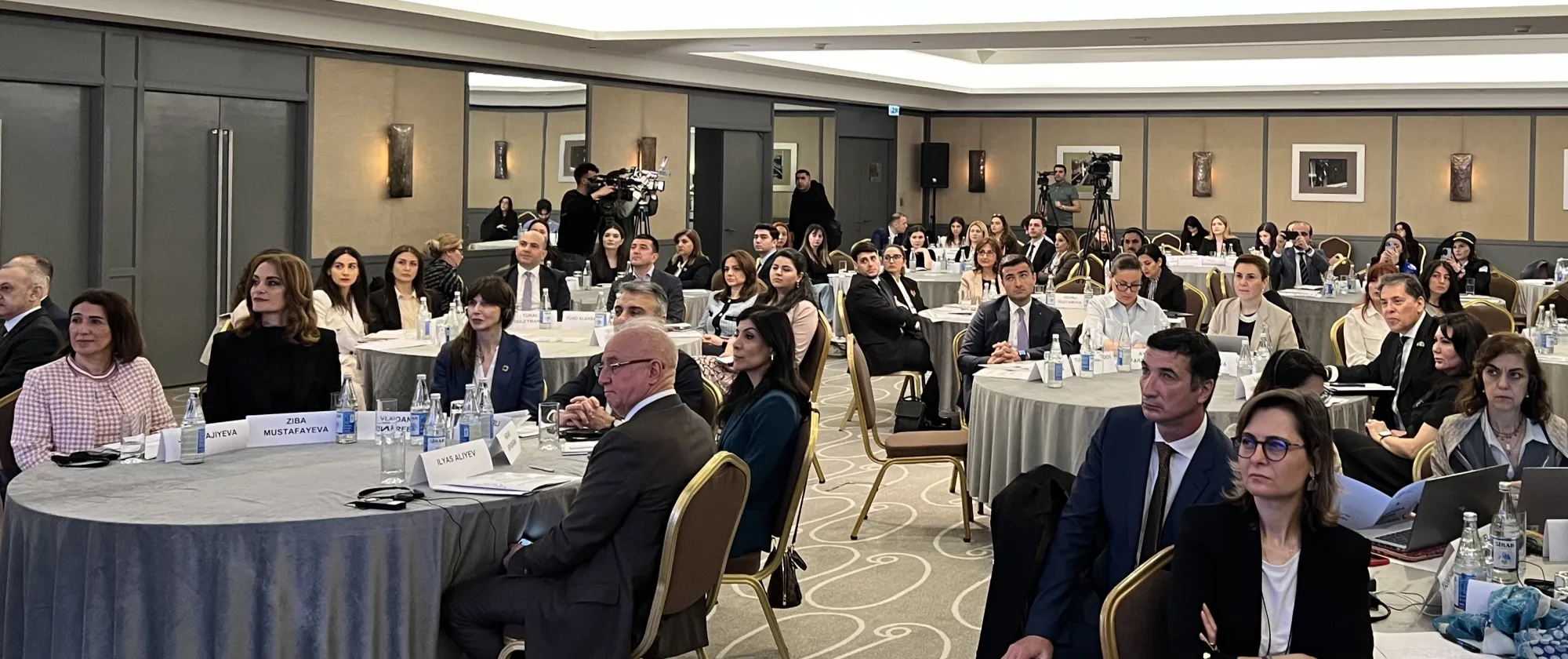
BAKU (ILO News) — A two-day Conference held in Baku on 6-7 May 2025 brought together Government officials, workers’ and employers’ organizations, UN, international partners, NGOs, private sector and women from different sectors to address persistent gender inequalities in the world of work, build momentum for inclusive rights-based labour reforms and celebrate achievements of women. Titled “Pathways to achieve social justice and gender equality in Azerbaijan: Achievements and the way forward”, the Conference offered a platform for tripartite dialogue and practical policy exchange, with particular attention to wage gaps, underrepresentation in key sectors, care economy, gender-responsive just transition and the transformative role of inclusive social dialogue.

Opening the Conference, Deputy Minister of Labour and Social Protection of the Population of the Republic of Azerbaijan, Vusal Nasirli, reaffirmed that ensuring gender equality, expanding women’s rights and increasing their participation in the labour market remain key priorities of state policy. “We are confident that the discussions and experience-sharing during today’s conference will create new opportunities for the protection of labour rights both nationally and regionally,” he added.
“The convergence of political crises, climate emergencies and economic insecurity has slowed and, in many countries, reversed progress on gender equality. But we must not let these setbacks define our trajectory. We have less than five years to meet the Sustainable Development Goals, and gender equality is essential to that vision,” said Vladanka Andreeva, UN Resident Coordinator in Azerbaijan.
The urgency of closing the gender pay gap
Gender inequality is not just unfair, it is costly.
Chidi King, Chief of the ILO’s Gender, Equality, Diversity and Inclusion (GEDI) Branch.
The Conference placed a strong focus on the gender pay gap – a persistent issue in both global and national labour markets. Despite progress in recent years, women in Azerbaijan continue to face structural and cultural barriers that hinder their full and equal participation in the labour market, including sectoral segregation, limited access to care services and wage disparities in the private sector.
“We know that gender equality is central to social justice. That it matters for individuals, families, societies, businesses and economies. And that gender inequality is not just unfair, it is costly,” said Chidi King, Chief of the ILO’s Gender, Equality, Diversity and Inclusion (GEDI) Branch.
In a session on achieving equal pay for work of equal value, experts discussed practical measures to close the gender pay gap. Key topics included the role of international initiatives like the Equal Pay International Coalition (EPIC) in advancing pay equity, as well as effective tools to assess and address pay inequality. Discussions emphasized the need for transparency, effective enforcement and a cultural shift toward valuing care work and social contributions.
“We must remove deeply embedded barriers that impede women’s access to decent jobs in all sectors, including male-dominated ones,” said Beate Andrees, ILO Regional Director for Europe and Central Asia.
Women’s voices at the centre

Throughout the Conference, the lived experiences and leadership of Azerbaijani women were central to the discussions. From aerospace engineer to transport workers and young entrepreneurs, their stories helped reframe the gender equality agenda around real-world challenges and possible solutions.
“Despite the challenges, positive change is under way, and women are becoming more present in male-dominated fields,” said Zahra Imanova, an aerospace engineer. “In school, we heard more about Albert Einstein than Marie Curie. Yet female scientists have made remarkable contributions, just less talked about. We try to be the voices of these women and role models for girls, showing that dreams can come true.”
Voices of women of Azerbaijan highlighted barriers such as unpaid care burdens, workplace discrimination and a lack of representation in decision-making, while also showcasing women's resilience and innovation in emerging sectors.
“While we celebrate our achievement, we must also acknowledge that the challenges still lie ahead, and women across various industries still face barriers to advancement. There are still wage gaps, and there's still limited access to leadership opportunities. True progress requires continuous efforts and also a policy shift and commitment to systematic change where we must work together,” said Ziba Mustafayeva, Vice-president of the State Oil Company of Azerbaijan (SOCAR).
Collective action and shared responsibility
The event underscored that advancing gender equality requires coordinated efforts from all sides of the labour market. Constituents stressed the critical role of social dialogue, inclusive policymaking and collective bargaining in developing sustainable and gender-responsive reforms.
“The path to equality is a marathon, not a sprint. The principle of non-discrimination must be embraced by the modern society. Respect for workers should never be based on sex, background or age,” said Ilyas Aliyev, First Vice-Chair of the Azerbaijan Trade Unions Confederation (AHIK) and Vice-President of the International Trade Union Confederation (ITUC).

The private sector was recognized as one of the key drivers in this effort. Employers shared examples of workplace initiatives, including equal pay reviews, recruitment strategies to support women in non-traditional sectors and steps to prevent violence and harassment at work. These were complemented by trade union-led advocacy on care infrastructure, pay transparency and gender-sensitive negotiation practices.
“Today's gathering is not just a platform for discussion – it is a strategic milestone in shaping a roadmap for the future. We firmly believe that a gender-sensitive approach is not just an act of social responsibility, but a smart and strategic economic policy. By amplifying women's participation in economic and social life, we elevate the prosperity of society as a whole,” said Jhale Hajiyeva, Vice-President of the National Confederation of Entrepreneurs (Employers) Organizations of the Republic of Azerbaijan (ASK).
A shared path forward
While rooted in Azerbaijan’s national context, the Conference drew from the ILO’s global mandate to promote decent work, gender equality and social justice. It also contributes to broader efforts under the ILO Global Coalition for Social Justice, which aims to build fairer and more inclusive economies through multilateral cooperation.
Coming after Azerbaijan’s hosting of COP29, the event further underscored the country’s increasing role in shaping inclusive and sustainable development agendas, nationally and globally. Nigar Arpadarai, Member of the Parliament and UN Climate Change high-level champion for COP29 underlined the need to translate social justice from principle into practice. She called for stronger education systems, inclusive infrastructure and collective responsibility to close gender and regional gaps. “Social justice,” she said, “is not just a principle or a slogan – it is a value that affects people’s lives, their rights and their opportunities.”
The Baku Conference concluded with renewed commitments from national and international actors to continue working together, turning shared goals into tangible, measurable results.