


Five years of partnership on social security in the Kurdistan Region of Iraq
The Kurdistan Region, ILO and European Union mark five years of major social security reform and set priorities for the next phase of joint work.
10 September 2026
ERBIL (ILO News) – Kurdistan Regional Government of Iraq, the International Labour Organization and the European Union marked five years of partnership on social security at an event in Erbil. Over the course of this partnership, the share of workers registered under the Region’s social security law more than doubled.
The event was co-hosted by the ILO and the Ministry of Labour and Social Affairs (MoLSA), Kurdistan Region of Iraq (KRI), under the EU-UN Joint Programme on Social Protection in Iraq, funded by the European Union and delivered by the ILO, UNICEF and the World Food Programme.
During the event, KRI Minister of Labour and Social Affairs Kwestan Mohamad thanked the EU, the ILO and their partners, for their continued cooperation in supporting social security in the region, pointing to progress in social security, digital services, private-sector pensions and working conditions, as well as the rise in the Region’s minimum wage from 275,000 to 450,000 Iraqi dinars.
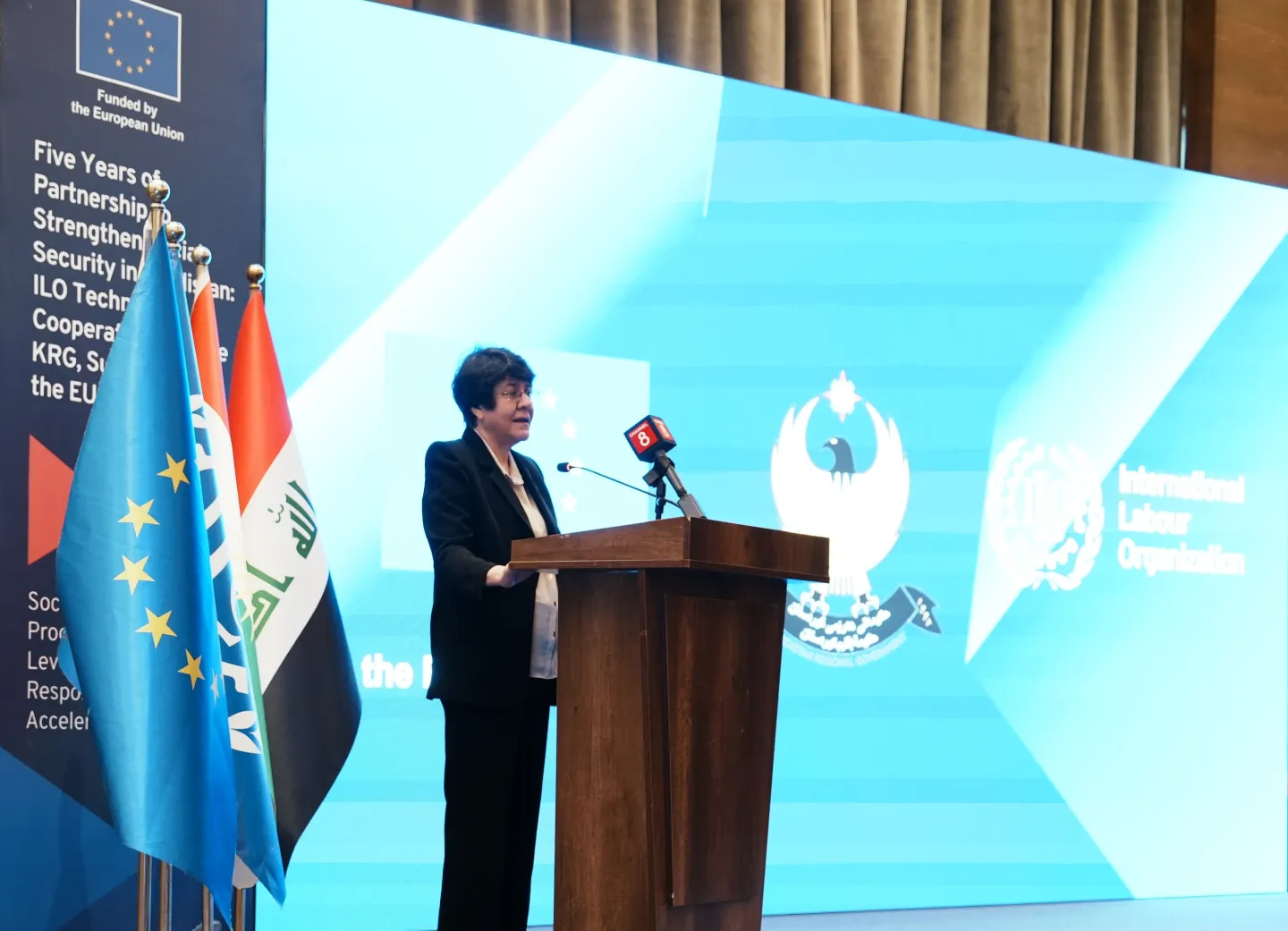
In her opening remarks, she said: “The support of these five years has moved social security and services for workers forward. I thank the ILO and the partners supporting the Kurdistan Region. I hope now to see the digitalization of services for private-sector workers implemented, so that workers receive better quality of service.”
KRI law covers more than 434,000 private-sector wage employees, as measured for the first time by the Iraq Labour Force Survey 2021. The share registered rose from 20 percent in 2021 to above 40 percent in 2025. Coverage for women nearly doubled, from about 13 to nearly 23 percent of new registrations.
Nineteen administrative processes at the Erbil directorate have been redesigned to cut the compliance burden and cost for employers: a document that once took up to a month now clears in about two hours. The Ministry also presented its online social security services, job matching platform and grievance handling portal, all running as pilots. Improving the service workers receive is the next step.
Since 2024, a tripartite technical working group convened by the Ministry has set the reform agenda, meeting six times with the Kurdistan Federation of Chambers of Commerce and Industry (KFCCI) and the Kurdistan United Workers Union, and produced the Region’s extension and formalization strategy.
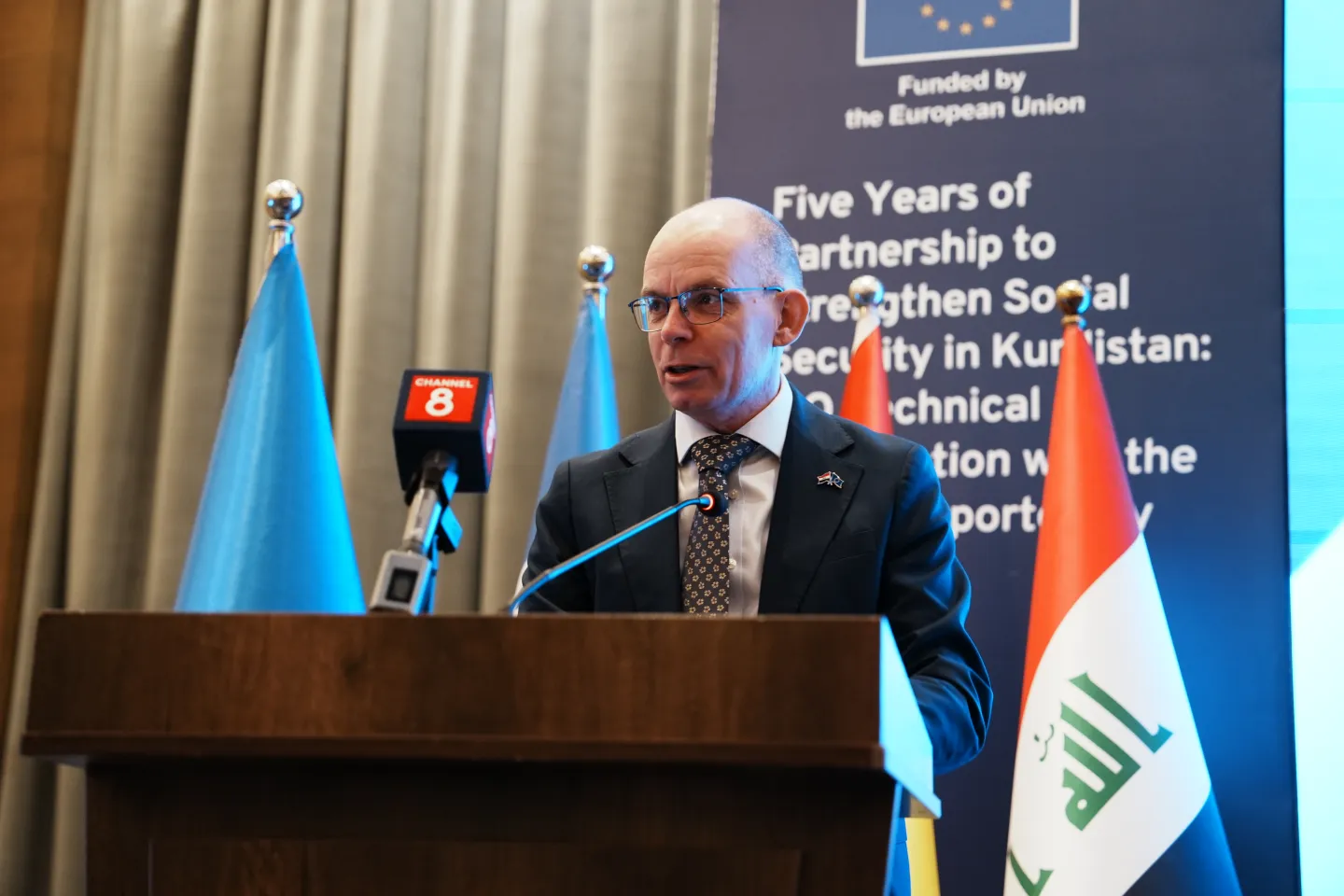
Head of Cooperation at the EU Delegation to Iraq Wim Riepma said the European Union had invested in institutions rather than one-off support, so that what has been built remains a public service of the Region. He concluded by stressing the need to strengthen the system’s financial and administrative sustainability, and to deliver more short-term protection to workers against employment injury, sickness and maternity.

ILO Deputy Regional Director for Arab States Claire Courteille-Mulder praised KRI’s sustained commitment, visible in rising coverage, and thanked the European Union for its sustained support, as the Region prepares a new law to align with ILO Convention No. 102 and reach parity with federal Law No. 18 of 2023. Iraq ratified the Convention in March 2023, accepting all nine branches, which few ratifying States do.
Every registered worker represents a long-term commitment for KRI, lasting 20 to 50 years and often longer. Three next steps were named: the first actuarial valuation in the scheme’s history, the sickness and maternity branch brought into service, and stronger capacity among the tripartite partners.
Relevant projects
Social Protection Programme for Iraq: Leveraging Effective Response and Accelerating Reform