

Financial skills help migrant fishing communities in Indonesia build financial resilience
The ILO’s financial education training programme helps Indonesian migrant fishers and their families be more financially protected, productive and resilient against forced labour at sea.
16 July 2024
PEMALANG, Central Java, Indonesia (ILO News) - Indonesian migrant fishers are vulnerable to excessive recruitment fees and debt bondage. The fishers have been taking out loans so that they can go work abroad, with little consideration going into the actual size of the loan that they have accumulated.
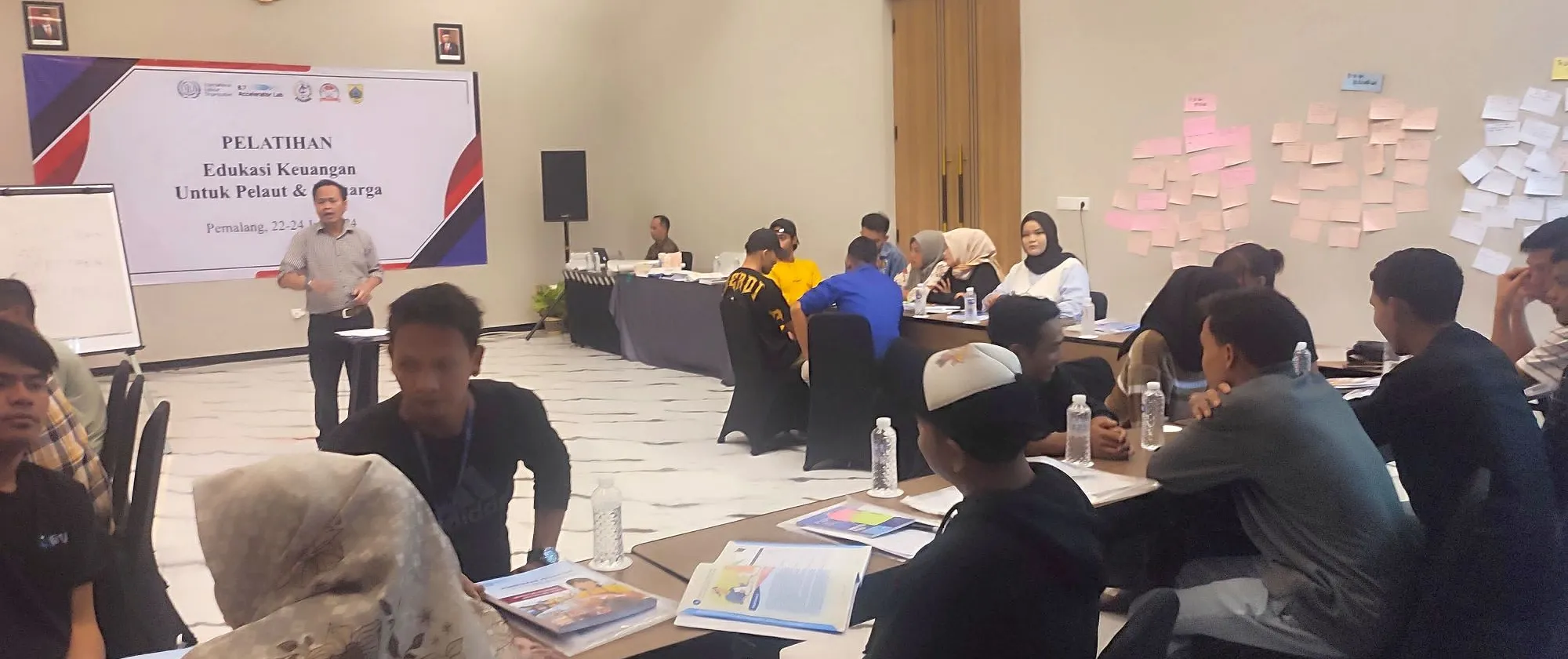
To provide the prospective migrant fishers and their families with the financial skills, the ILO’s 8.7 Accelerator Lab Programme conducted a three-day financial education training programme from 8-10 July for 25 prospective migrant fishers and their families in Pemalang, Central Java. Using the ILO’s Financial Education module, the participating fishers and their families learn about the importance of family financial management and planning.
This financial literacy training programme for prospective migrant fishers and their families is truly relevant to the Pemalang’s Manpower Office to maximize positive impacts of remittances through productive and smart spending behaviour.
Umroni, Head of Manpower Office of Pemalang
The ILO Financial Education training materials include a range of practical topics, including budget planning, savings management, prudent spending, wise borrowing and effective risk management, that are essential to building a solid basis of financial skills. Beneficiaries also get access to useful money management tools via a comprehensive workbook that accompanies their training programme which includes budget templates, lists of questions to ask financial institutions, glossaries, training aids and the like.
“By increasing their financial literacy, migrant fishers and their families can discover new opportunities and save for the future. Most importantly, enhanced financial literacy can help them escape debt bondage, as a key indicator of forced labour,” stated Muhamad Nour, National Coordinator of the ILO’s 8.7 Accelerator Lab Programme in Indonesia.
A similar hope was also voiced by Ilyas Pangestu, Chair of Indonesian Fishery Workers Union (SPPI), the ILO’s partner in conducting the training. “It is hoped that this training programme can prepare our members, particularly migrant fishers and their families, to manage their finance wisely, plan their business and protect themselves from debt.”
He also stated that regularly recording their finances would enable migrant fishers and their families to develop good financial management habits that, in turn, will increase not only the family’s welfare but also the migrant communities.
Similarly, Umroni, Head of Manpower Office of Pemalang, highly appreciated the relevance of the training programme with the programmes of Pemalang’s Manpower Office. “This financial literacy training programme for prospective migrant fishers and their families is truly relevant to the Pemalang’s Manpower Office to maximize positive impacts of remittances through productive and smart spending behaviour.”
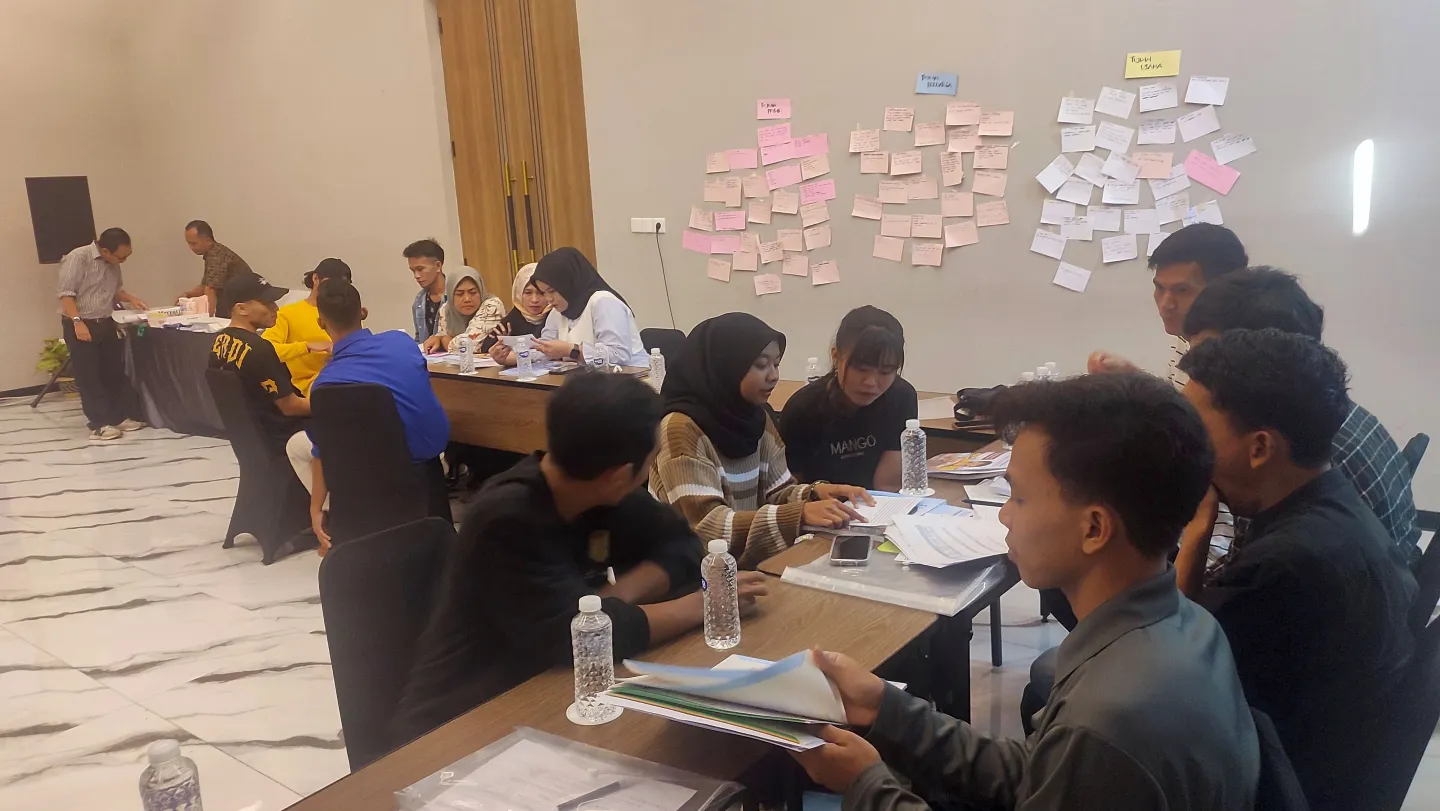
During the training programme, the participating fishers and their families actively learnt how to manage their money wisely by creating a budget plan and becoming a smart spender. They also examined different types of savings and credit products and learnt about the money transfer operators and how they can safely transfer and receive money.
Most importantly, enhanced financial literacy can help tmigrant fishers escape debt bondage, as a key indicator of forced labour.
Muhamad Nour, National Coordinator of the ILO’s 8.7 Accelerator Lab Programme in Indonesia
To continue assisting the participating fishers and their families apply what they have learnt, Nour explained the final draft of the adaption of the training booklets for fishers and their families is now being reviewed by the ILO’s Social Finance Programme in coordination with the ILO’s 8.7 Accelerator Lab Programme. “Through this adaptation, the ILO Financial Education Materials have been adapted based on our target beneficiaries, their financial habits and cultural contexts,” he concluded.
Located in a coastal area, Pemalang district in Central Java is known for its fishing industry and fisheries potential. Pemalang is also a home for 28 Indonesian Migrant Workers Placement Companies (P3MI) and 22 manning agencies that have sent 892 Pemalang residents working abroad as migrant workers and 2,596 as migrant fishing boat crews.
The ILO’s support is given through its 8.7 Accelerator Lab programme, created to accelerate progress towards the eradication of forced labour and the elimination of child labour. Target countries which have been selected to implement Multi Partner Fund’s interventions in the fisheries sector are Indonesia, South Africa and Ghana and the Democratic Republic of Congo for the mining sector.
Related content

8.7 Accelerator Lab Initiative