

Skills Development
Enhanced approach to work-based learning promotes skills development and decent work in Thailand’s automotive industry
Thailand’s Dual Vocational Training system enhanced in line with ILO standards on apprenticeships, with training developed to equip enterprises in the automotive industry to provide quality on-the-job training.
23 May 2025
BANGKOK (ILO News) - To meet the changing skills needs of Thailand’s evolving economy, efforts are underway to enhance the country’s approach to work-based learning, with technical support from the International Labour Organization (ILO), focused on the automotive manufacturing sector.
To this end, ILO has facilitated the alignment of on-the-job training with ILO’s Quality Apprenticeship Recommendation, 2023 (No. 208). In line with ILO standards on apprenticeships, apprenticeship should lead to recognized qualifications and sustainable career opportunities, while upholding Fundamental Principles and Rights at Work, with programmes underpinned by robust social dialogue and strong public-private collaboration.
“As labour markets face sweeping transformations - from technological advancements to challenges such as climate change and youth unemployment - the value of quality apprenticeships in reducing skills mismatches and promoting lifelong learning is gaining traction among policymakers and employers alike,” says Jordi Prat Tuca, Technical Specialist in Skills and Future of Work at the ILO.
“With the necessary regulatory framework and sufficient funding, apprenticeships can be leveraged to facilitate effective school-to-work transitions with appropriate working conditions and protection for apprentices, while enhancing the productivity and resilience of the workforce,” Tuca added.
Although Thailand does not have a specific apprenticeship system, its dual vocational training (DVT) model operates in a similar way, allowing students to gain both theoretical knowledge and practical skills while working alongside employers, through a blend of classroom-based education and hands-on workplace training. With a view to addressing the country’s skills shortages, the objective of the DVT system is to make vocational education more practice-oriented, relevant to industry needs and aligned with the skills required by employers.
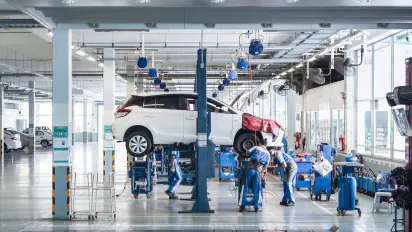
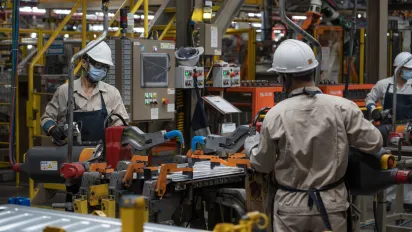
With Thailand’s automotive industry undergoing a significant transition towards electric and low-carbon vehicles, digitalization and automation, enhancements to the country’s work-based learning system are particularly timely, responding to the urgent need to upskill and reskill the industry’s manufacturing workforce.
Following a situational analysis of Thailand’s DVT system, ILO’s technical assistance in this area has focused on strengthening the capacity of enterprises to deliver effective work-based learning, in line with Recommendation No. 208. This has included the enhancement of the national in-company trainers manual to develop the capacities of in-company trainers, aiming to improve the quality of work-based learning opportunities as a pathway to decent work. The training will be rolled out by Thailand’s Office of Vocational Education Commission (OVEC) to their network of trainers, responsible for training around 130,000 students per year.
“The alignment of on-the-job training in the sector with ILO’s recommendation on apprenticeships will not only benefit workers and employers, it will ensure adherence to international labour standards that are critical for participation in global trade, positioning Thailand’s automotive sector for sustainable growth in a rapidly changing global marketplace,” said Tuca.
These efforts have been spearheaded by ILO’s Skills Development and Responsible Business Conduct for Transition Project, funded by Japan’s Ministry of Economy Trade and Industry, which focused on strengthening Thailand’s automotive industry.
Related content
Skills development and responsible business conduct
Skills Development and Responsible Business Conduct for Transition in Thailand
ILO/Japan Multi-bilateral Programme
Relevant projects
Skills development and responsible business conduct
Skills Development and Responsible Business Conduct for Transition in Thailand
ILO-Japan Partnership
Automotive Supply Chain Programme in Thailand

Skills Development and Responsible Business Conduct for Transition in Japan

Project
Skills development and responsible business conduct in Indonesia