

Empowering coffee farmers: Snakebite awareness training by ILO Vision Zero Fund and Nestlé Indonesia
The ILO Vision Zero Fund and Nestlé Indonesia jointly enhance knowledge and protect Indonesian coffee farmers from the significant biological hazard of snakebites.
19 February 2025
LAMPUNG, Indonesia (ILO News) - As per estimates by the WHO, annually, 5,4 million people worldwide are bitten by snakes, the majority of them living in rural areas in the tropics and sub-tropics and engaging in farm work. Next to farm workers, children are also at high risk. The estimation also shows that approximately, between 81,000 and 138,000 people globally die each year of a venomous snake bite and an additional 400,000 suffer a permanent disability due to snakebites.
As I have learned in this training, we need to remain calm and avoid fast movement when encountering snakes in the field. They cannot see well but they react to motion.
Eci Atona, a coffee farmer from Kecamatan Sekincau, West Lampung
As an archipelago country, according to the Ministry of Health of Indonesia, Indonesia has between 350 to 370 species of snakes, 77 of which are venomous. It is estimated that the number of annual snake bites amounts to 135,000 cases, based on information recorded by the Indonesia Toxinology Society over the last 10 years. It is further estimated that 10 percent of snake bites result in fatalities.
Snakes were identified as a major biological hazard for farm workers in a 2024 survey by the ILO Vision Zero Fund on occupational safety and health (OSH) risks on coffee farms in Tanggamus District, Lampung Province. Many of the related fatalities and cases of morbidity could be prevented if farm workers had better knowledge of how to prevent snakebites, knew how to administer first aid, and had timely access to antivenom.

To address this, ILO Indonesia, in partnership with Nestlé PT. Indonesia, organized training sessions to raise coffee farmers’ awareness of common snake species in Indonesia—including their hazard levels (non-venomous, mildly venomous, or potentially lethal), habitats, and behaviour.
Held from 5-6 February 2025, the training included sessions on snakebite prevention and first aid, as well as the availability of public health services for treating snakebites—addressing the tendency of farmers to seek help from traditional healers instead of visiting clinics, which might have antivenom or could assist in referring victims to appropriate hospitals.
This training helped participants to reduce their fear of snakes because it equipped them with essential knowledge to understand better a snake’s behaviour in its interaction with humans.
Kristina Kurths, Project Manager, ILO Vision Zero Fund, Indonesia
The training, conducted in Balai Kec. Sumberejo and Balai Pekon Ngarip villages, Tanggamus district, Lampung province, was attended by 76 participants, including coffee farmers, representatives from district and community facilities (agriculture extension center, Health Department, primary health care clinics, teachers and students) as well as the private sector (Nestlé agronomists, coffee suppliers).
Kristina Kurths, Project Manager, ILO Vision Zero Fund, Indonesia, emphasized that the exposure to biological hazards through insects and animals, snakes in particular, pose a threat to coffee farmers’ safety and health. “This training helped participants to reduce their fear of snakes because it equipped them with essential knowledge to understand better a snake’s behaviour in its interaction with humans. Applying this knowledge reduces farmers’ risk to get bitten by a snake.”
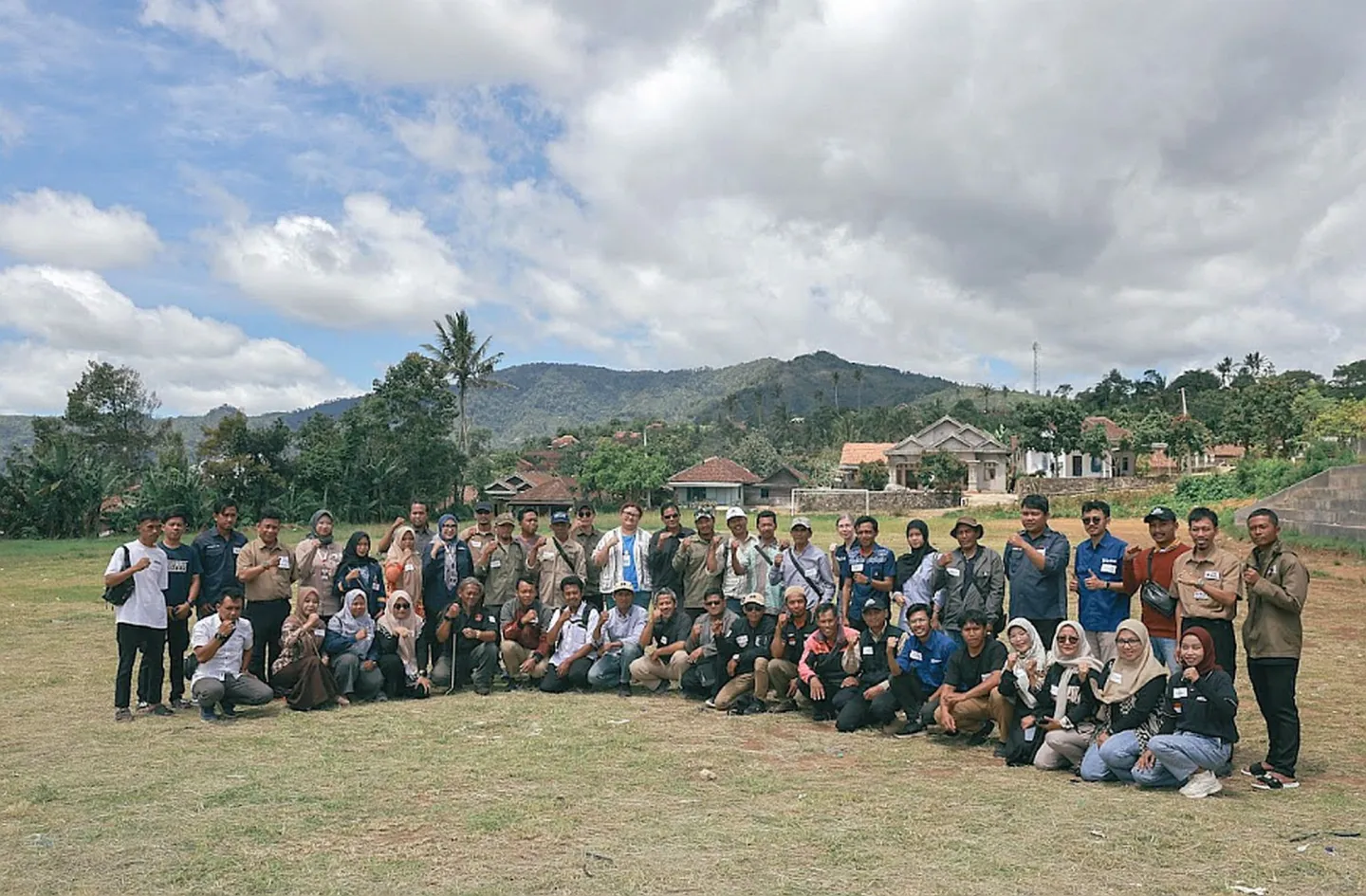
During the training, participants also learned what to do and what to avoid if bitten by a snake. Eci Atona, a coffee farmer from Kecamatan Sekincau, West Lampung, shared her experience of witnessing farmers in her community being bitten while weeding or pruning.
“As I have learned in this training, we need to remain calm and avoid fast movement when encountering snakes in the field. They cannot see well but they react to motion,” she shared.
By inviting stakeholders from local organizations and service providers, such as primary health care, we can promote knowledge on OSH hazards and risk management at community level as well.
Adi Wicaksana, Head of Sustainable Coffee Agriculture of Nestlé Indonesia
While the training highlighted good practices in snake bite prevention and first aid, it also served as a reminder that substantial gaps in these areas - notably in terms of awareness, knowledge and access to treatment - still exist. The ILO and Nestlé, through engaging with relevant authorities and service providers, will continue to address these gaps, with focus on knowledge dissemination that will help farmers stay unharmed when encountering a snake.
Adi Wicaksana, Head of Sustainable Coffee Agriculture of Nestlé Indonesia, stated that this training illustrates the commitment of Nestlé commitment to share with coffee farmers its values and increase their understanding of work-related hazards they are exposed to, especially biological hazards. “By participating in this training, farmers gain the capacity to take preventive action to ensure that their farm activities become safer and healthier. And by inviting stakeholders from local organizations and service providers, such as primary health care, we can promote knowledge on OSH hazards and risk management at community level as well.”
Related content
Vision Zero Fund
Improving OSH and social conditions for women and men in coffee farmer communities in Indonesia
Relevant projects
Vision Zero Fund
Improving OSH and social conditions for women and men in coffee farmer communities in Indonesia

Occupational Safety and Health
Improving OSH and social conditions for women and men in coffee farmer communities in Vietnam – a Vision Zero Fund project
Occupational Safety and Health
Improving Safety and Health in the Coffee Supply Chain in Viet Nam - a Vision Zero Fund Project