

Egypt's ready-made garments and textiles sector enhances tripartite collaboration
The Second Annual Report of the Better Work Egypt Programme took centre stage in the discussions.
21 July 2024
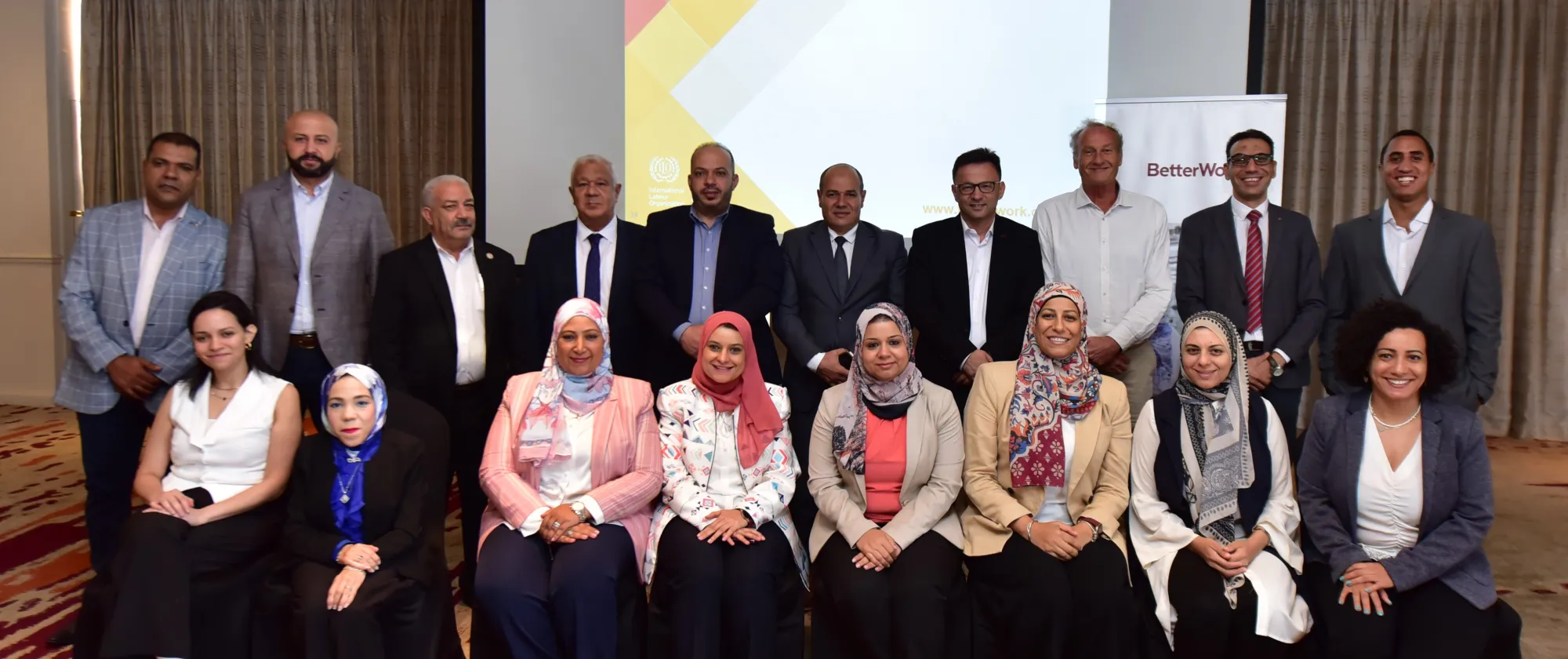
Cairo, Egypt (ILO News)– In alignment with the Egyptian government’s continuous efforts to enhance productivity and exports in the local garments and textiles sector, the Better Work Egypt programme convened a tripartite meeting with representatives from the Ministry of Labour (MoL), employers, and workers. The meeting focused on discussing the findings of the programme’s second annual report for 2023.
Key achievements over the past year were highlighted during the discussions, including increased awareness of minimum wage compliance, streamlined trade union registration processes, and significant progress in areas such as the inclusion of persons with disabilities and women’s representation in occupational safety and health (OSH) committees. Moreover, persistent challenges—such as emergency preparedness—were also addressed, underscoring the need for sustained collaborative efforts.
Coen Kompier, International Labour Standards Senior Specialist at the International Labour Organization (ILO) Cairo Office, stressed the importance of enterprises adhering to due diligence practices regarding risks in the garments and textiles supply chain. He emphasized, "Due diligence in respecting international labour standards and human rights throughout supply chains is no longer just a recommendation; it has become a legally binding obligation in many countries."
Rasha Abdel Basset, Head of the International Relations Department at the MoL, commended the achievements of the Better Work Egypt programme. She stated, "The noticeable advancements achieved by registered factories over the past year are truly commendable." Abdel Basset highlighted the positive outcomes of the 2023 report compared to 2022, reflecting a promising future for Egypt’s garments and textiles sector. She also praised the ongoing collaboration between the MoL and Better Work Egypt, which has influenced the ministry’s approach to aligning inspector training and practices with international standards.
The meeting reviewed the implementation of recommendations from the 2022 Industry and Compliance Review. According to Ala’a Al-Saifi, Operations Manager for Better Work Egypt, "2023 witnessed significant progress, including improved social dialogue between employers and workers through regular meetings on OSH measures, workshops prioritizing women workers' rights, and the establishment of a memorandum to enforce the minimum wage law—a key challenge across industries."
Dr. Khaled Abdelazim, Executive Director of the Federation of Egyptian Industries (FEI), emphasized the importance of tripartite cooperation to ensure compliance with international labour standards and national legislation. He noted that such efforts would open new export opportunities with international brands for Egyptian employers.
Child labour and occupational safety highlighted
The meeting also discussed progress in combating child labour. Marwa Salah, Project Manager for the Combatting the Worst Forms of Child Labour programme, noted, "In 2023, no cases of non-compliance with child labour below the age of 15 were recorded, reflecting the success of collaborative efforts with key partners." However, she stressed the need for further awareness of hazardous work and working hours restrictions for children under 18.
Emergency preparedness was identified as the most pressing OSH challenge, with the highest rates of non-compliance. In response, Mohamed El Sayaad, Board Member of the Ready-Made Garments and Textiles Chamber at the FEI, proposed a joint initiative with the MoL to address these gaps. The initiative would involve identifying root causes of challenges, providing best practices, and developing an industry-wide model for emergency preparedness.
Trade unions and industrial stability
The day concluded with a call to uphold minimum wage standards and overtime compensation. Mohamed Hanafi, President of the General Union for Workers in Communications and representative of the Egyptian Trade Union Federation, stressed the vital role of trade unions in ensuring the implementation of comprehensive policies in the garments sector. He remarked, "Trade practices that prioritize workers’ interests are essential for industrial stability and economic growth."
Saad Shaaban, President of the Egyptian Democratic Labour Congress, echoed these sentiments, emphasizing the importance of establishing social dialogue platforms. These platforms would enable workers to address issues such as wage disparities, human resources policies, and employment contracts.