

Egypt and UN agencies mark World Day against Trafficking in Persons
Joint efforts to raise awareness about the dangers and forms of human trafficking and the importance of family and community.
30 July 2024
Cairo (ILO News)– In collaboration with the National Coordinating Committee for Combating and Preventing Illegal Migration and Trafficking in Persons (NCCPIM&TIP), the United Nations Office on Drugs and Crime (UNODC), the International Organization for Migration (IOM), the International Labour Organization (ILO), UNICEF Egypt, UNHCR, and Save the Children, an event was organized to commemorate the 2024 World Day Against Trafficking in Persons under the theme "Leaving No Child Behind in the Fight Against Human Trafficking."
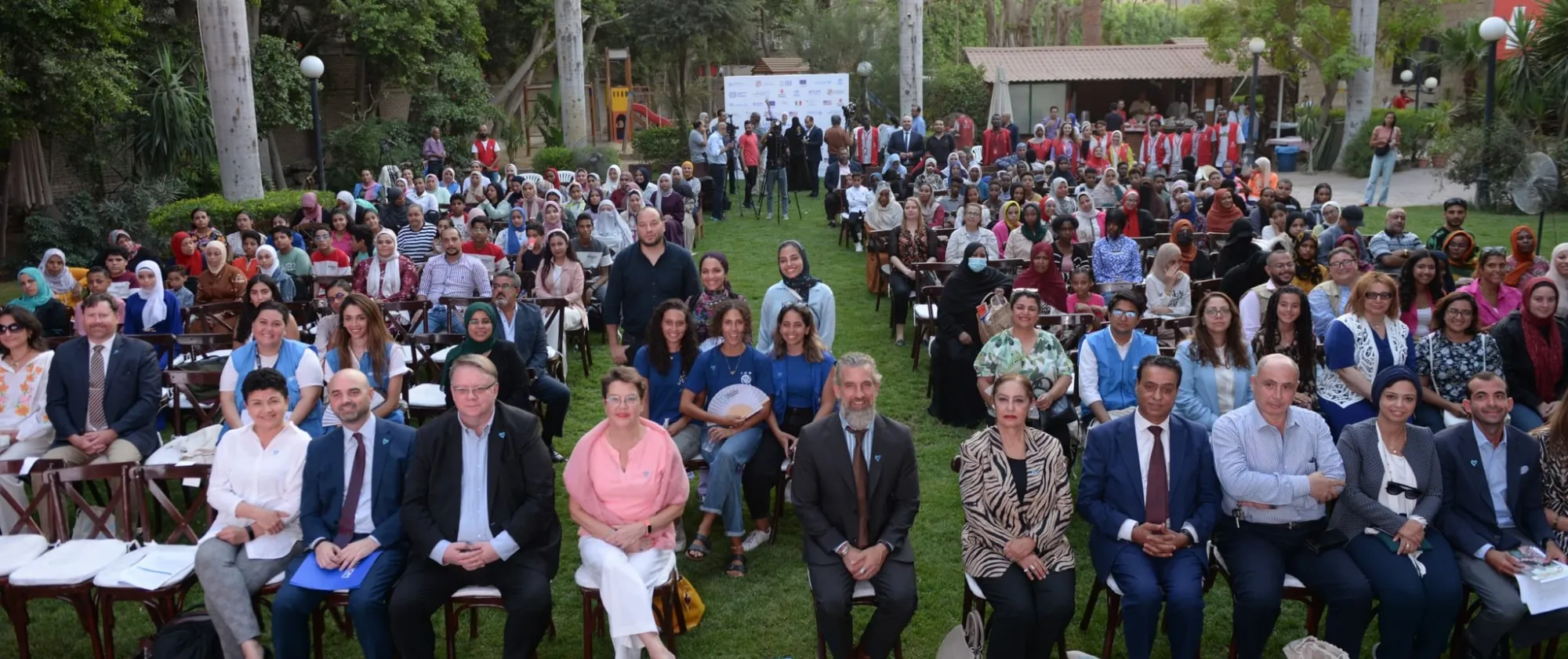
The event, held at the Swiss Club in Cairo, brought together representatives from national and international entities, media outlets, as well as Egyptian and refugee children and their families.
The event commenced with a speech delivered on behalf of H.E. Dr Mostafa Madbouly, Prime Minister of Egypt, by H.E. Ambassador Naela Gabr, Chairperson of NCCPIM&TIP. In his address, the Prime Minister emphasized that this year's celebration focuses on protecting children from all forms of exploitation.
He stated, "It is evident that Egypt has always prioritized its citizens, particularly the most vulnerable, as seen in our various strategies, action plans, and social programmes. Child protection has always been at the forefront of these efforts. With over 9 million foreign residents in Egypt, it is only natural that we extend our care to their children".
Dr Madbouly confirmed: "It is important to highlight that all the protection services provided to Egyptian citizens are also available to foreigners. This includes awareness campaigns on human trafficking translated into English and the availability of hotlines with translation services for anyone wishing to file a complaint. In addition, shelters linked to the national referral mechanism welcome both Egyptians and foreigners, whether adults or children".
He reaffirmed Egypt’s commitment to its international obligations despite the challenging circumstances facing the region. "Egypt remains dedicated to upholding the international agreements and UN conventions it has ratified to ensure the protection of refugees and migrants," he said.
Ambassador Naela Gabr underlined that Egypt has developed a comprehensive protection mechanism for victims or potential victims of human trafficking, where national agencies together to provide assistance and protection. This process begins with receiving reports and extends to rehabilitation and reintegration into society. Addressing the children, she said: "We are utilizing all available resources to safeguard your rights and protect you from the dangers posed by human trafficking networks."
Eric Oechslin, Director of the ILO Cairo Office, commended the Egyptian government and the NCCPIM for their efforts in combating human trafficking. He emphasized that today’s event underscored that combating human trafficking requires collective action. "Human trafficking affects women, men, and children from all walks of life, but children are twice as likely to be trafficked as adults," he stated.
Oechslin noted that traffickers often use deception, coercion, threats, or abduction to exploit children, but the result remains the same: victims lose their rights and identity and are subjected to abuse and exploitation. He expressed the hope that the event would help parents and children learn more about human trafficking, how to protect themselves, and how to raise awareness in the wider community.
Representatives from UNODC, IOM, UNICEF Egypt, UNHCR, and Save the Children stressed the importance of protecting children from human trafficking. They highlighted the crucial role of international organizations, NGOs, civil society, and the private sector in raising awareness, providing support services, and advocating for necessary reforms.
The event aimed to raise awareness about the dangers and forms of human trafficking, as well as the importance of the family and community in prevention. It included activities for children and their parents, including awareness videos, games, and the distribution of comic books and colouring books focused on the theme of the event.
The World Day against Trafficking in Persons, observed globally on 30 July, serves as a reminder of the importance of raising awareness about a crime that affects not only its victims, but also communities. This year's global campaign theme, "Leaving No Child Behind in the Fight Against Human Trafficking," emphasizes the urgency of intensifying efforts to end child trafficking. Child trafficking, which involves the exploitation of children in various ways, is a serious violation of human rights.
The crime of child trafficking has devastating effects on the physical, cognitive, social, and emotional development of children. Victims often suffer from long-term health problems, severe trauma-related disorders, anxiety, depression, and difficulties in reintegrating into society. All partners called for collective community action and increased awareness to address this issue. Children make up a significant proportion of trafficking victims worldwide, with girls being particularly vulnerable. Globally, one in three victims of trafficking is a child.