

Eastern Indian state advances action to eliminate child labour and empower young people
Marking International Youth Day 2026, an ILO-supported consultation strengthens coordinated action on child labour and seeks feedback on Jharkhand's draft State Action Plan.
12 August 2026
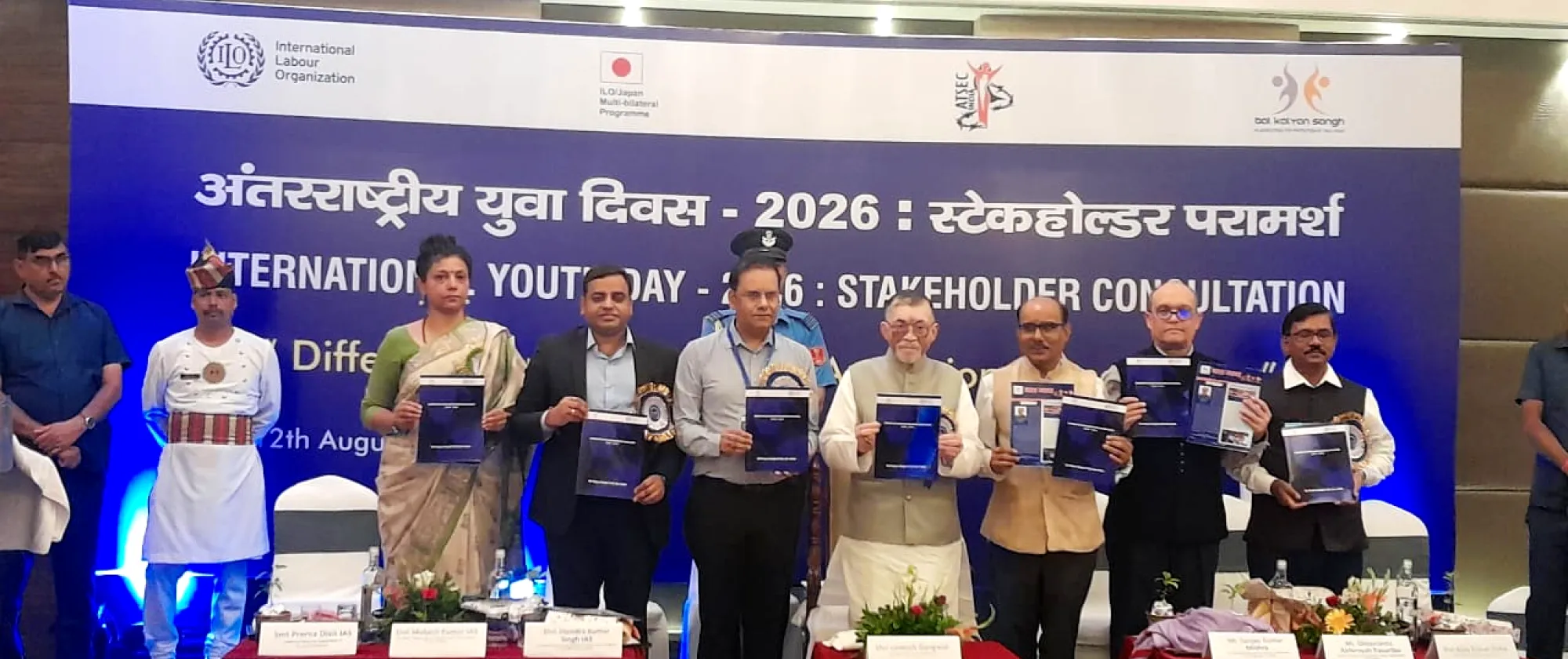
RANCHI, India (ILO News) – The eastern Indian state of Jharkhand has taken a further step towards eliminating child labour with the launch of a draft State Action Plan for stakeholder review and feedback for subsequent finalization at a state-level consultation supported by the International Labour Organization (ILO).
Held in Ranchi, the capital of Jharkhand, on 12 August 2026 to mark International Youth Day, the consultation brought together around 200 representatives from government departments, civil society, development partners, communities, the media and youth groups to discuss how stronger coordination, child protection and youth empowerment can help address the root causes of child labour.
The event was organized under the ILO's Policies, Partnerships, Learning & Local Empowerment (PPLL) Project on Child Labour in collaboration with its partner agency Bal Kalyan Sangh (BKS).
The draft State Action Plan for the elimination of child labour in Jharkhand was presented during the consultation, providing stakeholders with an opportunity to review the proposed approach and contribute feedback before the plan is finalized.
“Every child has the fundamental right to a safe and secure environment, quality education, healthcare, dignity and equal opportunities to realise their aspirations,” said Santosh Kumar Gangwar, Governor of Jharkhand. “Addressing the serious challenges of child trafficking and child labour requires a coordinated and sustained approach.”
Discussions also highlighted the interconnected challenges affecting children and young people, including child labour, trafficking, child marriage, unsafe migration, violence, school dropout and substance abuse. Participants emphasized that many of these risks are closely linked to poverty and limited access to education and livelihood opportunities, requiring coordinated responses involving government agencies, schools, police, Panchayats, families and civil society.
Participants underscored the importance of identifying children who are out of school or engaged in labour, particularly in remote, migrant and vulnerable communities, and supporting their return to education through government schemes, learning materials, counselling, attendance monitoring and stronger community-level reporting.
Jitendra Kumar Singh, Secretary of the Department of Labour, Government of Jharkhand, emphasised the important role of education in empowering children and helping them build a better future. “Through education, awareness, protection and proper support, vulnerable children can be prevented from entering child labour, trafficking and other forms of exploitation,” he said.
The consultation also emphasised that removing children from exploitative situations is only the first step. Effective responses require counselling, rehabilitation, family support and social reintegration, alongside social protection and livelihood support for vulnerable families to address the underlying factors that can push children into child labour.
“The goal should be clear: every child should be in school, no child should be engaged in hazardous labour, every rescued child should receive proper rehabilitation, and every vulnerable family should be supported so that children can continue their education instead of entering the workforce,” said Mukesh Kumar Jha, Secretary of Youth Affairs and Planning and Development, Government of Jharkhand.
Young people, particularly adolescents, are among the important beneficiaries of the PPLL project's work besides children who are the primary beneficaries. The project's focus on preventing and eliminating child labour in mining and mineral-producing communities is particularly relevant to protecting adolescents from hazardous work. By addressing risks in these communities, the project aims to protect adolescents at a critical stage of development while supporting their safe transition into decent work when they reach legal working age.
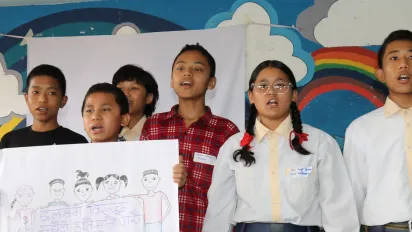
Youth empowerment was also central to the discussions. Young people, Youth Champions and Bal Manch (Childrens’ Collectives) representatives shared their experiences of child protection and youth development and explored how community campaigns, peer networks and digital platforms can help promote child rights, education, safe migration and gender equality, while supporting the early identification of children at risk.
Looking ahead, participants identified a protection pathway linking early identification and community vigilance with timely intervention, counselling and rehabilitation, family welfare and social protection, educational re-enrolment, skills and sports development, and social reintegration. Priorities included stronger coordination among government departments, mobilization of Village Level Child Protection Committees and youth-led initiatives to promote safe, healthy and empowered communities.
“Every child should have the opportunity to enjoy childhood and learn. Every adolescent should be protected from exploitation and hazardous work. And every young woman and man should have the opportunity to enter the world of work safely, with skills, rights, dignity and hope for the future. Achieving this requires all of us,” said Oktavianto Pasaribu, Deputy Director for Country Office for India.
The consultation reinforced a shared vision for Jharkhand in which children are protected from exploitation and have access to education, while young people have the skills, opportunities and voice to shape their futures. Feedback gathered through the consultation will contribute to the finalization of the State Action Plan and efforts to strengthen coordinated action towards a child labour-free Jharkhand by 2030.
Relevant projects
Policies, Partnership, Learning and Local Empowerment (PPLL): A Project on Child Labour in South Asia: Nepal Component
Policies, Partnerships, Learning & Local Empowerment (PPLL): A Regional Child Labour Project for South Asia