

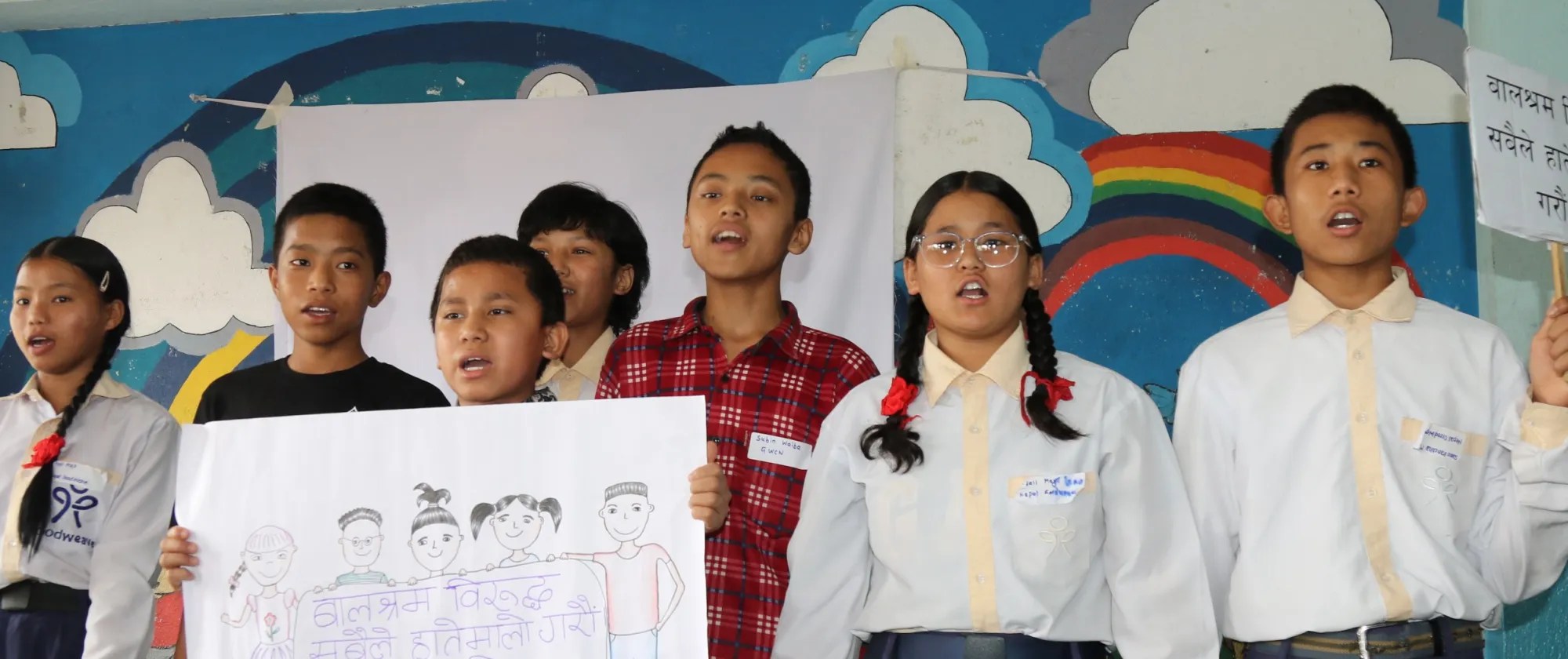
Policies, Partnership, Learning and Local Empowerment (PPLL): A Project on Child Labour in South Asia
The Nepal component of the PPLL Project aims to reduce vulnerability to child labour by supporting the Government of Nepal in implementing its National Master Plan (2018–2028) to eliminate child labour. In collaboration with social partners (workers’ and employers’ organizations), civil society and social media, the project complements the Government of Nepal’s efforts as a Pathfinder Country under Alliance 8.7- a global partnership dedicated to achieving Target 8.7 of the Sustainable Development Goals, including the elimination of child labour in all its forms by 2025.
Duration
1 April 2024 - 30 November 2026
Development partner(s)
ILO/Japan Multi-bilateral Programme
Reference
RAS/24/01/JPN
Background
Despite in decreasing trend, child labour is still a serious problem in Nepal. The 2021 Nepal Child Labour Report revealed that there were 1.1 million child labourers in the country as of 2018. The regions with the lowest Human Development Index (HDI) scores such as Karnali (25%) and Sudurpaschim (21%) have the highest child labour incidences. Agriculture (78%) accounts for the highest number of child labourers and those in the lower stratum such as Dalits (19%) and indigenous communities (18%) have larger proportion of child labour than other groups.
A 2019 survey done in the brick kiln industry found out around 17,000 children were working in the sector comprising around 10% of its total workforce[1]. A similar survey[2] done in the carpet and garment sector revealed that 6.7% of workers in the former were children. Child Labour has also strong linkage with the slavery-like systems in Nepal such as in cases where children among the Kamaiya, Haliya and Haruwa-Charuwa families tend to be working together with their parents as farm workers in debt bondage.
Ministry of Youth, Labour and Employment (MoYLE) has come-up with the second National Master Plan (2018 – 2028), NMP-II, to eliminate child labour and proposed an area-based approach, called Child Labour Free Local Government (Municipalities) to fight child labour that has identified 17 different sectors of child labour in Nepal.
Objectives
The overall objective of the PPLL Project is to contribute to the acceleration of actions against child labour in South Asia. The Nepal Component of the project supports Nepal Government to accelerate actions to implement the NMP-II and the Pathfinder Country roadmap to achieve UN-SDG Target 8.7.
Key areas of Interventions:
The project contributes to government efforts to generate fresh data and information on child labour through Labour Force Survey and other diagnostics in carpet and brick production supply chain. It provides technical support to the MoLESS on reviewing the laws and policies to accelerate the application of ILS on Child Labour (C138 and C182). Bringing together the social partners and other stakeholders the project provides a platform for creating strong collaboration culture, sharing and learning on child labour elimination. It works together with MoLESS to expand and consolidate Child Labour Free Zone (CLFZ) as a holistic and area-based approach for sustainable child labour elimination in Nepal.
Partners
- Ministry of Youth, Labour and Employment (MoYLE)
- Department of Labour and Occupation Safety Health, Child Labour Elimination Cell
- Nepal Alliance 8.7 Secretariat X Ministry of Women, Children and Senior Citizen (MoWCSC)
- National Child Rights Council X National Statistics Office (NSO) and
- Institutes involved in research on labour rights X Local Governments (Municipalities and Rural Municipalities) participating in Child Labour Free Zone (CLFZ) declarationprocess X Worker’s and Employer’s Organizations X Civil Society Organizations working on child labour and child protection issues.
For further information please contact:
Narayan P Bhattarai
National Project Coordinator
[1] ILO, Employment Relationship Survey in the Brick Kiln Industry in Nepal (2019)
[2] World Vision International, Changing state and prevalence of child labour in carpet and garment industries in Nepal (2020)
Project updates
Policies, Partnership, Learning and Local Empowerment (PPLL): A Project on Child Labour in South Asia.
Related content
World Day against Child Labour
Woven with dignity: Making Nepal’s carpets child-labour free

Press Release
Provincial dialogue and frontline training advance Nepal’s child labour free zone approach
Campaign Video
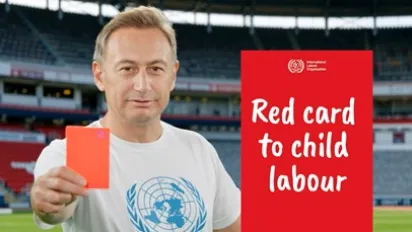
ILO Nepal Director raises the red card against child labour

Child Labour
Local governments in Nepal strengthen action to eliminate child labour