

Catalyzing decent work and sectoral resilience: ILO at National Conference on Responsible Business Conduct 2025
ILO highlighted responsible business conduct and ESG integration at NCRBC 2025, emphasizing inclusive growth, SMEs engagement, and decent work through sectoral approaches and global frameworks such as the MNE Declaration.
3 July 2025
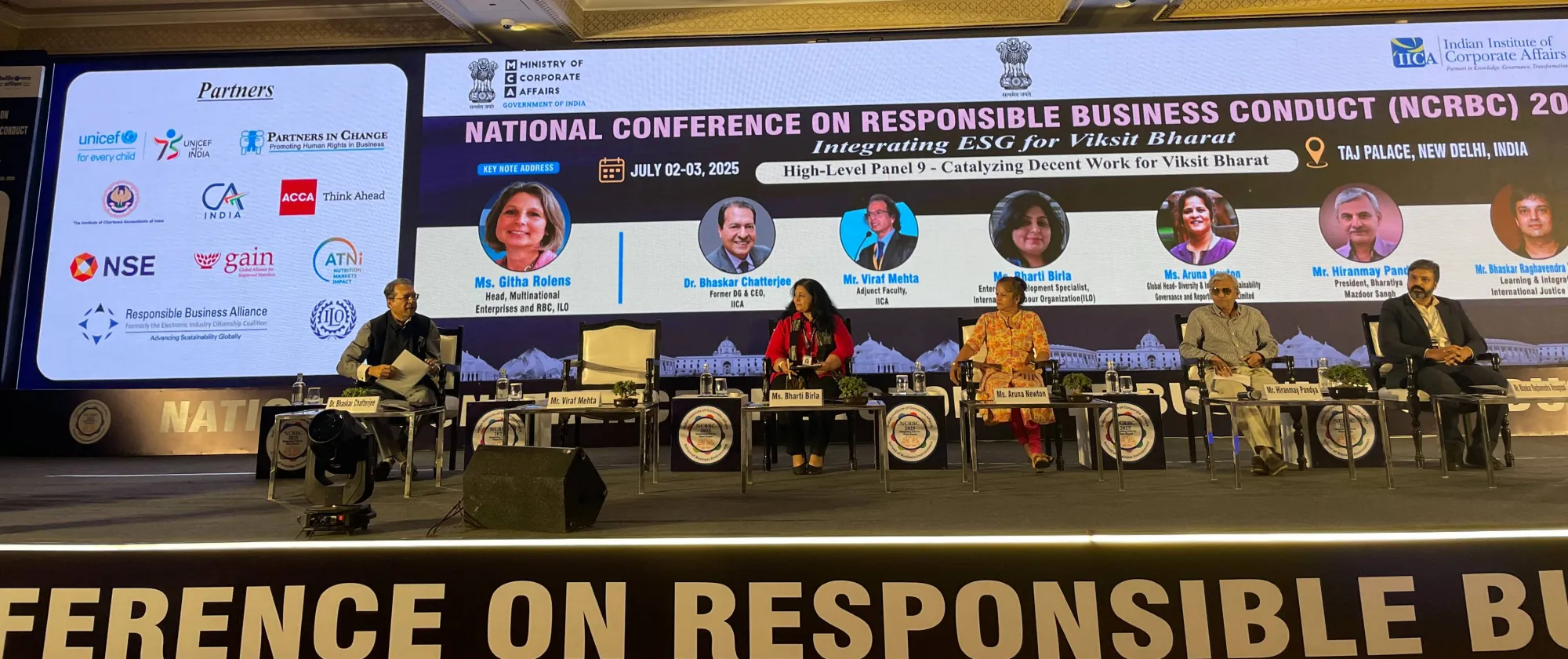
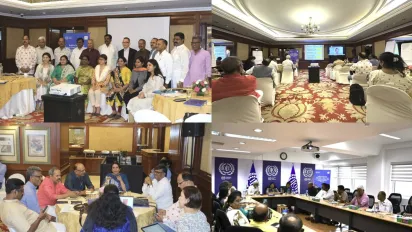
The International Labour Organization (ILO) played a prominent role at the National Conference on Responsible Business Conduct (NCRBC) 2025, held on 2–3 July in New Delhi. Organized by the Indian Institute of Corporate Affairs (IICA) under the Ministry of Corporate Affairs, the conference convened over 370 participants including policymakers, industry leaders, and global experts to advance the theme “Integrating ESG for Viksit Bharat.” The conference focused on embedding Environmental, Social, and Governance (ESG) principles into corporate strategies to support “Viksit Bharat”, a long-term vision of the Government of India to transform the country into a fully developed nation by 2047, which will mark the 100th anniversary since its independence.
Among the key sessions were “Catalyzing Decent Work for Viksit Bharat” and “Advancing Sectoral Adaptation of Responsible Business Practices: Focus on Emerging Industries”, where senior ILO officials shared global perspectives on responsible business conduct (RBC) and inclusive growth.
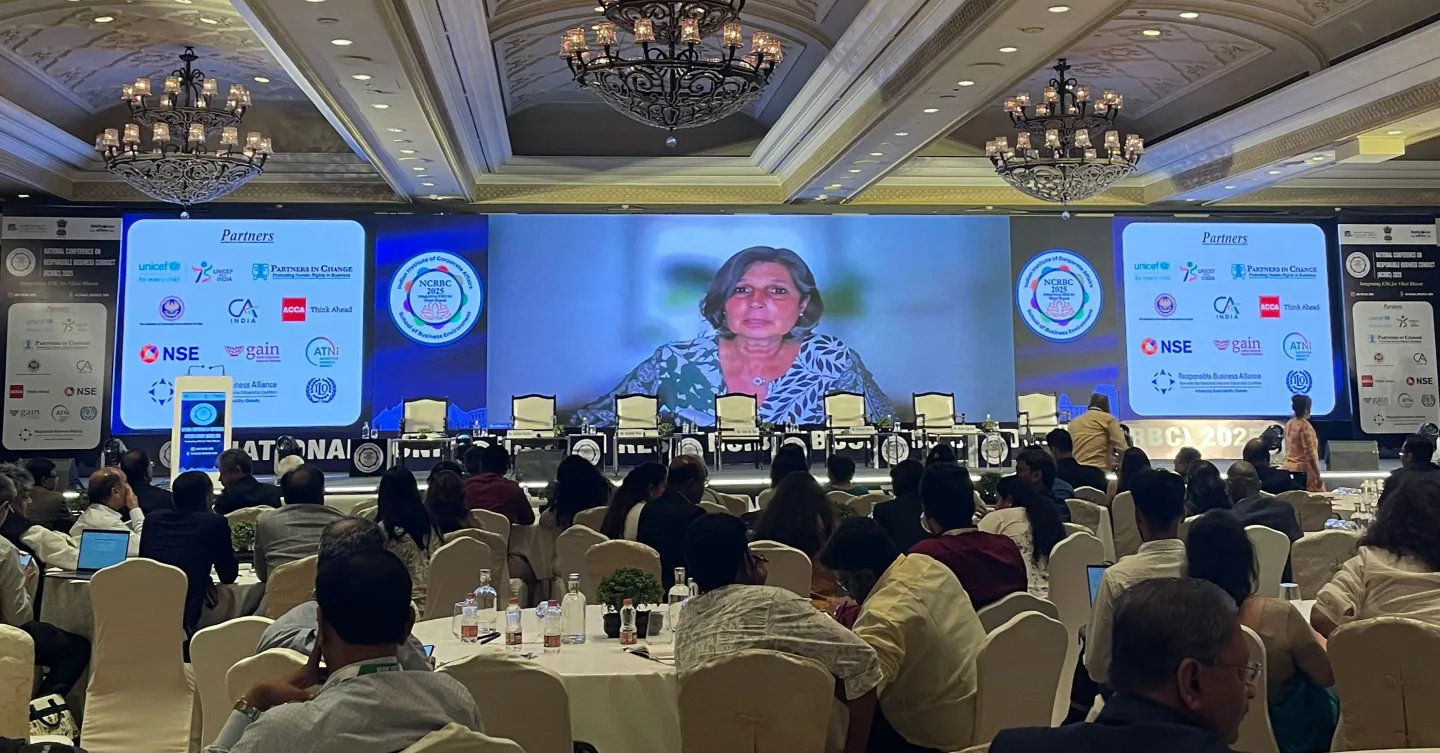
Ms. Githa Roelans, Head of the Multinational Enterprises and Responsible Business Conduct Unit at ILO Headquarters, emphasized the transformative potential of RBC:
“Creating responsible business practices can make the shift towards becoming trusted, sustainable, and resilient business partners. This will enable their integration into value chains, where RBC and compliance with ESG standards are increasingly prerequisites for trade, investment, and collaboration.”
She highlighted the role of the ILO Tripartite Declaration of Principles concerning Multinational Enterprises and Social Policy (MNE Declaration) as a guiding framework for inclusive growth and decent work:
“Adopting socially responsible business practices inspired by the principles of the ILO MNE Declaration will help Indian companies meet due diligence and reporting requirements, build robust labour practices, mitigate social risks, and achieve long-term productivity and competitiveness.”
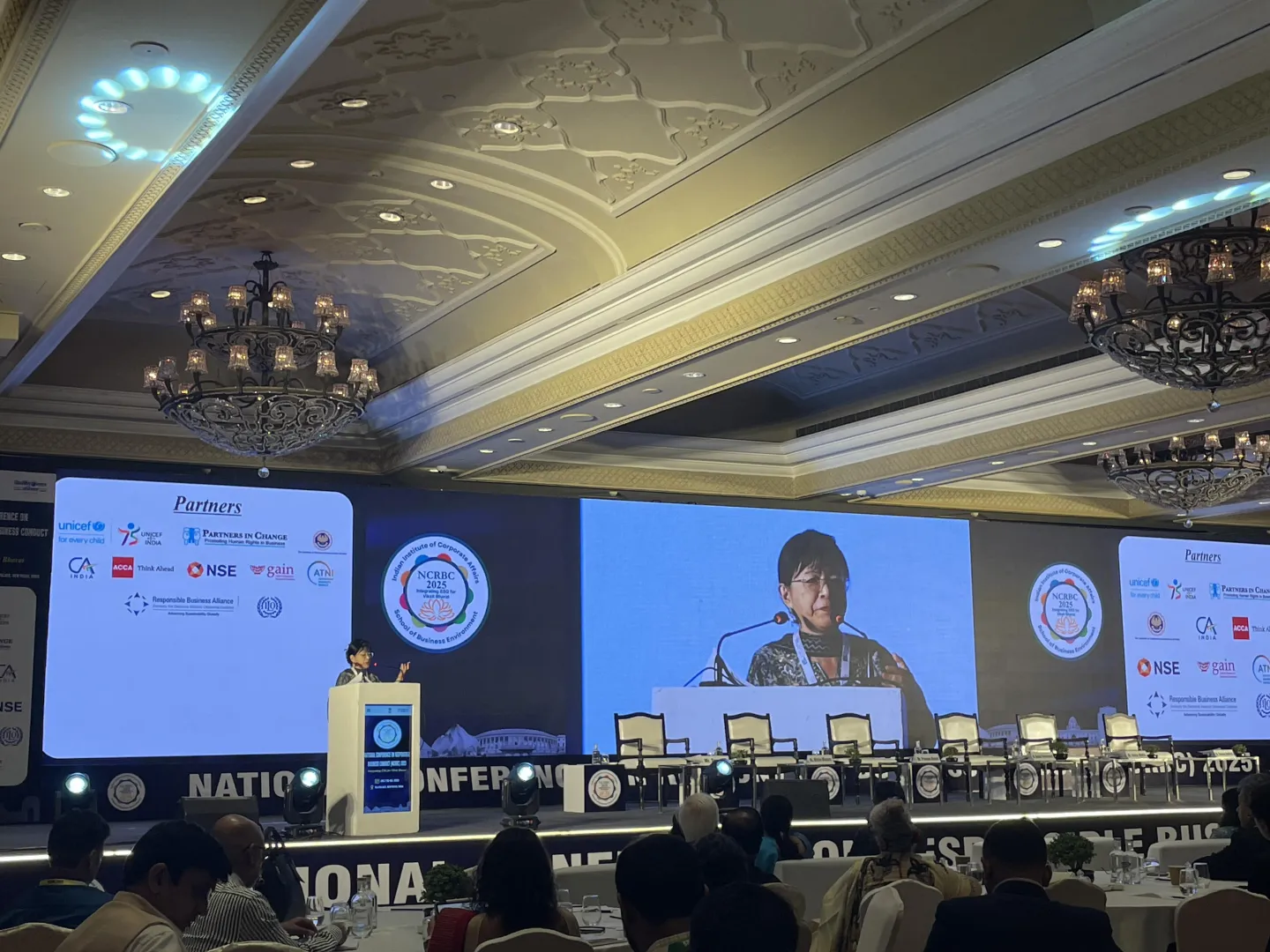
Ms. Michiko Miyamoto, Director of the ILO Decent Work Team and Country Office for India and South Asia, joined a panel discussion on “Advancing Sectoral Adaptation of Responsible Business Practices: Focus on Emerging Industries’’. The panel discussed the importance of sectoral approaches, including the preparation of relevant guidelines; the effective inclusion of SMEs in operationalizing RBC; and how existing mechanisms can be built on to nurture ownership of stakeholders concerned.
“Sectoral guidance helps identify common challenges and enables collective solutions that no single company can solve alone. Industry associations and government agencies play a key role in shaping ecosystems that support responsible business practices”, said Ms. Miyamoto.
She also underscored the need to include Small, and Medium Enterprises (SMEs) in the RBC discourse:
“You cannot ignore SMEs—they are the majority of the sector. Many small-scale industries are unfamiliar with responsible business concepts. We must start by asking: Do SMEs know about RBC? Do they know how to act on it?”
Ms. Miyamoto called for greater awareness, capacity building, and leadership from larger industry players to support MSMEs in integrating RBC principles, thereby enhancing their participation in domestic and global supply chains.
The ILO’s support for NCRBC 2025 was made through the ILO project “Building Responsible Value Chains in Asia through the Promotion of Decent Work in Business Operations (Phase II)”, funded by the Ministry of Economy, Trade and Industry of Japan. It aims to promote inclusive, responsible and sustainable enterprises and decent work in supply chains through capacity-building programme for enterprises and ILO’s constituents - government, employers and workers - in four Asian countries including India.
Related content

Project
Building Responsible Value Chains in Asia through the Promotion of Decent Work in Business Operations (Phase II)
Supporting enterprises in Pune to promote Responsible Business Conduct in supply chains

Launch of India Component and Technical Workshop for “Building Responsible Value Chains in Asia through the Promotion of Decent Work in...

From Compliance to Commitment: Industry Leaders gathered to promote Responsible Business Conduct in New Delhi
Trade unions as key enablers of effective Responsible Business Conduct in India

Exploring ground realities and opportunities to drive Responsible Business Conduct in India’s Automobile Sector

Advancing Responsible Business Conduct in India’s manufacturing sector: Insights from the capacity building workshop in Chennai

Multi-stakeholder dialogue marks launch of historic bipartite roadmap on responsible business conduct for decent work in India