

Dispute resolution
Caribbean institutions put labour justice into practice
Across Belize, The Bahamas and Trinidad and Tobago, labour institutions are moving from regional commitments to practical measures aimed at making workplace dispute resolution more timely, accessible and effective.
14 August 2026
PORT OF SPAIN, Trinidad and Tobago (ILO News) — For a worker who believes they have been unfairly dismissed, or an employer trying to resolve a workplace conflict, access to labour justice is about more than having somewhere to file a complaint. The existence of a tribunal or other dispute-resolution mechanism is only part of access to labour justice. The time and cost involved, the opportunity to resolve a dispute fairly at an early stage and whether a final decision leads to an effective remedy, are all factors that shape what justice means in practice. With ILO technical support, those questions are receiving renewed attention across the Caribbean.
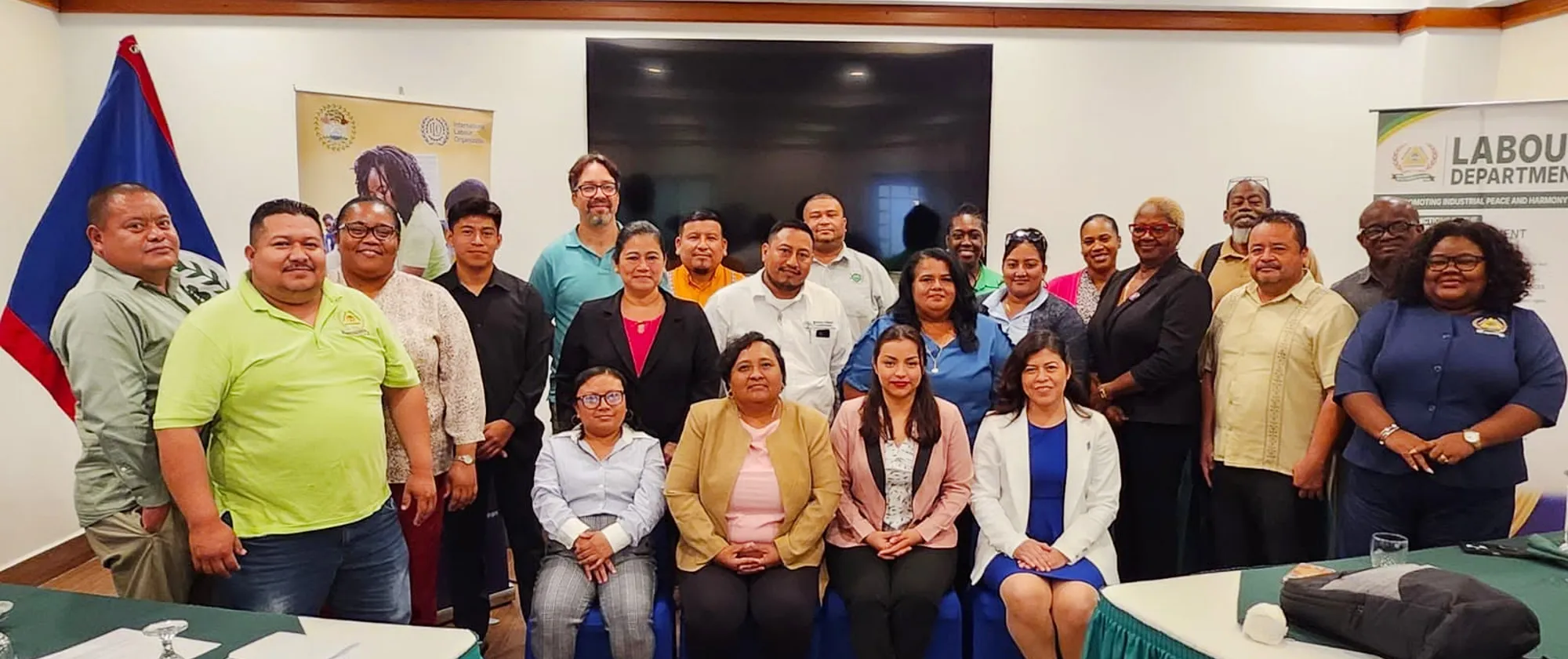
In August 2026, the Labour Complaints Tribunal of Belize and the Industrial Tribunal of The Bahamas undertook ILO-supported institutional self-assessments. In Belize, that work was paired with practical training in negotiation, conciliation and dispute resolution. In The Bahamas, it provided an opportunity to review reforms already under way and to consider how the diagnostic could be adapted to the Tribunal's particular statutory and procedural framework. Representatives from both countries then joined the Industrial Court of Trinidad and Tobago on 12 August for a regional exchange on improving access to labour justice.
From commitment to action
The work builds on discussions held in October 2024, when 30 senior officials and heads of dispute-resolution institutions from 13 Caribbean countries met in Port of Spain for an ILO subregional symposium on making labour justice accessible to all. Participants adopted conclusions intended to guide follow-up and encourage continued cooperation among Caribbean institutions.
Opening the three-country exchange on 12 August, Nancy Varela, Social Dialogue and Labour Administration Specialist with the ILO Decent Work Team and Office for the Caribbean, recalled the 2024 call for continued cooperation and exchanges among institutions and practitioners. “Today's session is therefore a step in implementing those conclusions,” Varela said.
The shift matters because the effectiveness of labour justice systems depends on more than the legislation that establishes them. How institutions manage cases, how accessible their procedures are, whether appropriate disputes can be resolved before they escalate and how effectively remedies are delivered can all influence the experience of workers and employers.
The ILO diagnostic tool used in Belize and The Bahamas is designed to help institutions examine those questions themselves. Self-assessment teams work through structured criteria, discuss and validate the results and identify priorities for improvement. The purpose is to build a shared understanding of how a system is functioning and what practical changes may be useful.
“A diagnostic is not about prescribing one model. It gives the people who operate the system a structured way to examine how it works in practice, agree on priorities and identify realistic improvements that fit their own institutional context.” Pablo Arellano, ILO Senior Social Dialogue and Labour Relations Specialist
Resolving disputes before they escalate
Belize illustrates why institutional assessment and practitioner skills need to move together. Following the Labour Complaints Tribunal assessment on 10–11 August, training covered conflict dynamics, interest-based negotiation, reframing, effective questioning, paraphrasing and conciliation, supported by practical role plays.
The emphasis was not simply on disputes once they reached formal adjudication, but also on preventing conflict from escalating and helping parties find workable solutions earlier.
“Belize’s labour dispute system is designed to promote early and fair resolution of workplace disputes. Conciliation, mediation and early resolution form important elements of Belize’s approach to workplace conflict,” Labour Commissioner Rissela Dominguez-Patt said during the regional exchange. She explained that in Belize's approach to workplace conflict, fair early settlement may avoid a longer contested process and help preserve working relationships for workers and employers.
Trinidad and Tobago brought another perspective. The Industrial Court uses case management and, with the parties' agreement, can refer appropriate matters to conciliation, or remit the matter to the parties, or as a final resort, hear and determine the matter- showing how settlement and adjudication can operate alongside one another within a different institutional framework.
“Regional exchange allows us to compare how different systems manage disputes, identify practices that are working and consider what can be adapted to our own institutions. The systems may differ, but we can still learn from each other's experience.” Herbert Soverall, Vice-President of the Industrial Court of Trinidad and Tobago.
Different systems, shared questions
The value of the exchange lay in those differences. Belize, The Bahamas and Trinidad and Tobago do not have identical laws, institutions or procedures, but their discussions returned to common questions around case management, settlement, internal procedures, technology, accessibility, enforcement and timeliness.
The Bahamas brought another dimension to the discussion showing how institutional assessment can support a reform process that was already underway. In addition to the Industrial Relations Tribunal (Procedure) Rules, 2025, the Industrial Tribunal has introduced a series of procedural and technological changes, that strengthened case-management arrangements, electronic filing and virtual hearings. In the particular geographic context of the Bahamas, those changes have had positive impact on the issue of access, as virtual participation and electronic processes can reduce the need for people in the Family Islands to travel to New Providence to take part in proceedings, and reduce challenges associated with costs of airfare, accommodation and time away from work.
President Indira Demeritte-Francis told the exchange, “the ILO-supported self-assessment in August 2026 has enabled the Tribunal to examine and build upon a programme of institutional, procedural and technological reform that was already well advanced. The Bahamas did not simply apply the tool to its existing processes; we identified and suggested amendments and adaptations having regard to our statutory and procedural requirements and the legal framework governing the Industrial Tribunal.”
Peer learning is not about identifying one “best” Caribbean model. Common questions can be examined across jurisdictions while allowing for differences in legislation, institutional mandates, procedures, resources and stages of reform.
Building a regional practice
The August knowledge exchange also suggested that cooperation itself can become part of institutional development, and the discussion among the three dispute-resolution institutions moved beyond presentations into practical questions about procedure, conciliation, accessibility, enforcement and timeliness. Continued exchange can widen the pool of experience available to Caribbean decision-makers and practitioners.
Varela closed the session by noting both the diversity of institutional arrangements and a shared commitment to making labour dispute prevention and resolution mechanisms “fair, accessible and effective”.
The next stage will depend on how institutions carry forward the priorities emerging from their assessments, continue strengthening the capacities of practitioners and sustain exchanges with their regional counterparts.
The significance of the August activities lies in that progression. With ILO support, the Caribbean conversation on access to labour justice is moving beyond identifying common concerns towards examining, testing and sharing practical ways to address them.
Related content

Social Dialogue
Regional Initiative for the Strengthening of Social Dialogue and Collective Labour Relations in Latin America and the Caribbean