

Due diligence
Business and human rights: important advances in the application of the Guiding Principles in Chile
15 January 2025
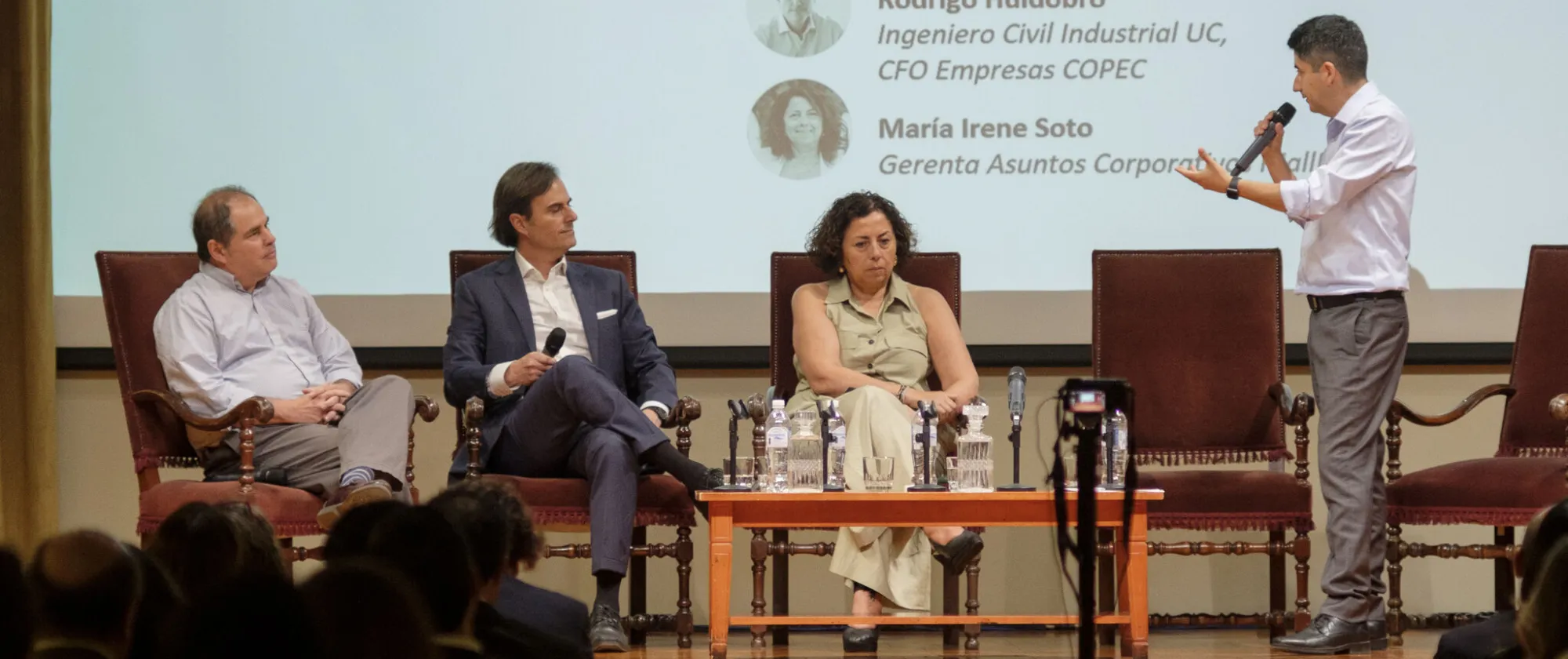
SANTIAGO (ILO News).- With the support of the International Labour Organization (ILO), the Corporate Sustainability Program of the Catholic University of Chile presented the results of the Third Diagnosis on Business and Human Rights 2024 (available in Spanish only), a key report that assesses the level of commitment of the business sector to the United Nations Guiding Principles on Business and Human Rights (UNGPs) in Chile.
The study, presented on January 10, 2025, it shows significant progress in the adoption of international standards, consolidating a trend of maturity and commitment in responsible business management. In this third edition, the report expanded its scope by incorporating, for the first time, the wine sector, a key player in the national economy.
Corporate commitment to human rights
Over the past three years, the diagnosis has evaluated IPSA index companies and public companies, analyzing their alignment with the UNGPs. The 2024 results reveal a growth of 7 percentage points in compliance with these principles compared to the previous year in both cases, reaching an average of 46% compliance for the former, and 21% for the latter, highlighting important advances in strategic sectors.
Key findings of the report:
- Electricity sector leadership: IPSA companies in the energy sector achieved 68% compliance, while the retail sector showed significant progress, reaching 51%, followed by the extract and mineral processing sector with 48% implementation.
- The average results obtained by all public companies indicate that the implementation of the UNGPs is still in an incipient stage. But some leading companies stand out with above-average compliance.
- Incorporation of the wine sector: Its inclusion in the diagnosis shows its economic and cultural relevance but also exposes challenges in the face of the lack of public information on the level of commitments of companies in the sector in terms of human rights.
- Persistent challenges: The need to strengthen stakeholder participation, including workers and unions, improve due diligence mechanisms, and advance remediation of adverse impacts was identified.
The role of the ILO in promoting responsible business conduct
The ILO's commitment to responsible business conduct and human rights in the world of work has been key in this process. Through the Responsible Business Conduct in Latin America and the Caribbean Project (CERALC), with the support of the European Union and international partners, the ILO has supported the promotion of international standards and the strengthening of policies on responsible business conduct, which set the expectation that all companies address the impacts of their operations on the human and fundamental rights of work. while contributing to sustainable development in the countries where they operate.
The ILO's Tripartite Declaration of Principles concerning Multinational Enterprises and Social Policy (MNE Declaration), which explicitly incorporates the UNGP framework, states that "enterprises, including multinational enterprises, should exercise due diligence to identify, prevent and mitigate their actual or potential negative impacts on internationally recognized human rights, that encompass, at a minimum, the rights set forth in the International Bill of Human Rights and the principles relating to fundamental rights set out in the ILO Declaration on Fundamental Principles and Rights at Work, and to be accountable for how they address such consequences" (paragraph 10 (d). It is these international standards, which the ILO promotes, that feed into the measurement carried out by the academic institution.
In this regard, Jaime Godoy, Coordinator of the RBCLAC Project at the ILO for Argentina, Brazil and Chile, highlighted: "The ILO promotes decent work, based on respect for fundamental labour rights. This diagnosis reflects a significant commitment from the chilean business sector, promoting a frank conversation about the challenges and the way forward to achieve decent work for all." Fabio Bertranou, Director of the ILO Office for the Southern Cone, said: "Business plays a key role in promoting human rights in the world of work. Advancing in the implementation of the Guiding Principles not only strengthens trust between companies and workers, but also contributes to the construction of a fairer and more sustainable development model."
A call to action for 2025
The Third Diagnosis on Business and Human Rights 2024 reiterates the importance of companies integrating due diligence into their operations, strengthening transparency and stakeholder participation. The ILO will continue to accompany business actors, government and workers to consolidate a development model based on respect for human rights and decent work.
Related content
RBCLAC - Phase II
Responsible business conduct project in Latin America and the Caribbean
Relevant projects
RBCLAC - Phase II
Responsible business conduct project in Latin America and the Caribbean