


Social security
Bangladesh expands Employment Injury Scheme to workers in Export Processing Zones
27 February 2025
DHAKA (ILO News) – The International Labour Organization (ILO), Deutsche Gesellschaft für Internationale Zusammenarbeit (GIZ) and Bangladesh Export Processing Zones Authority (BEPZA) have signed a letter of intent to extend the pilot Employment Injury Scheme (EIS) to garment factories in the country’s eight Export Processing Zones (EPZs).
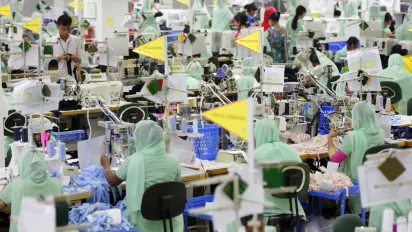
This marks the beginning of enhanced income protection for garment workers in EPZs enabling them to receive benefits for employment-related injuries and deaths like those for workers in the wider readymade garments’ sector. There are more than 450 factories operating in the country’s EPZs employing more than 500,000 workers.
The Government of Bangladesh and its social partners - employers’ and workers’ organizations, piloted the Employment Injury Scheme (EIS) in the readymade garment sector in June 2022, providing income security for an estimated four million workers and their families in the event of work-related accidents. Since 1st July 2024, the scheme extended coverage to commuting accidents.
The ILO and GIZ are providing technical assistance, while more than 60 global fashion brands and garment buyers provide financial support to the EIS. Since inception, the scheme has made significant progress establishing criteria and systems for compensation payouts, reviewing cases of work-related accidents and commencing payments to beneficiaries.
“The EIS-Pilot has proven vital to providing long-term income support to garment workers who suffer disability because of work-related accidents, and the dependents of those who die, in accordance with ILO Employment Injury Benefits Convention, 1964 (No. 121). As we move forward to replicate the pilot in the EPZs, we encouraged by the progress and challenged to go the extra mile to ensure all workers, even those in the informal sector benefit from employment injury insurance,” said Tuomo Poutiainen, Country Director, ILO in Bangladesh.
The Executive Chairman of BEPZA, Major General Abul Kalam Mohammad Ziaur Rahman, said: "The Employment Injury Scheme will strengthen the social protection of workers in EPZs in line with international standards, contributing to sustainable industrial growth in Bangladesh."
The roll-out of the EIS will improve the capacity of EPZs to update and digitalize worker databases and strengthen factory accident reporting systems, which are vital for building a robust employment injury system for the country.
This initiative is part of the ‘Implementation of a Pilot Employment Injury Scheme’ jointly funded by the Embassy of the Kingdom of the Netherlands and the Global Affairs Canada for the ILO, and the Social Protection Project, funded by German Government for GIZ.
Relevant projects

Project: Decent work
Advancing Decent Work in Bangladesh
Project: Social security
Implementation of a pilot Employment Injury Scheme (EIS) in Bangladesh
Social security project
Developing a national employment injury insurance (EII) scheme for the Bangladesh ready-made garment sector