


News
African tripartite partners advance policy pathways for decent work in displacement at regional meeting
The International Labour Organization along with governments and employers’ and workers’ organizations discussed more inclusive labour markets benefiting refugees and host communities during a regional forum.
27 July 2026
Nairobi, KENYA (ILO News) – Governments, employers’ and workers’ organizations from five African countries have agreed on policy priorities to strengthen access to decent work for refugees and host communities at the close of the PROSPECTS Africa Forum on Decent Work and Forced Displacement.
The Forum was convened by the International Labour Organization (ILO), one of the five agencies implementing the PROSPECTS Partnership and the partner leading its work on employment, labour market governance, skills development, enterprise development and social dialogue.
Held in Nairobi 21 to 23 July 2026, the Forum brought together tripartite delegations from Egypt, Ethiopia, Kenya, Sudan and Uganda, as well as representatives of regional institutions, development partners and the PROSPECTS Partnership.
Participants exchanged experiences on employment policy, skills development, social protection, digital transformation and regional cooperation. They also examined how social dialogue can help countries build stronger and more inclusive labour market systems in displacement-affected contexts.
The country teams tested and refined their country policy pathway proposals through a peer policy clinic, with a focus on feasibility and links to ongoing national reforms.

At the opening, I asked what has worked and what must change to bring solutions to scale. I am very pleased to see that together, we have provided answers based on the experiences you have exchanged.
- Dr Coffi Agossou, ILO Deputy Regional Director for Africa
“Refugees and host communities participate in one labour market. Parallel systems are neither effective nor sustainable. National employment, skills, enterprise, labour inspection and social protection systems should include refugees and deliver better services for all,” he added.
The Forum also underlined that training alone is often insufficient to secure employment. Skills-development programmes need to respond to employer demand and connect participants with work-based learning, apprenticeships, recognition of prior learning and employment services.

Speaking at the Forum, Dr Abdelmoneim Awad, Director General for External Relations, Ministry of Human Resource and Social Welfare, Sudan, said, “Our priority is to build consensus among ministries, institutions, employers, workers, communities and refugees so that we can develop integrated policies that promote equity, inclusion and shared national goals.”
Social protection and labour protection emerged as important foundations for economic inclusion. Participants noted that effective protection systems can help people manage risks, invest in skills, seek employment, establish enterprises and move from informal to formal work.
While digital technologies, artificial intelligence and platform work can expand access to employment and markets, participants stressed that investment in connectivity and digital skills must be accompanied by suitable policies, regulations and protections for workers.

Representing the voice of workers, Richard Bigriwa, Secretary General, National Organization of Trade Unions (NOTU), Uganda, said, “Workers are among those most vulnerable to displacement. We remain committed to working with governments and employers to support refugees and host communities, and we hope PROSPECTS can be extended to more countries across the region.”
Employers’ representatives emphasized the importance of aligning skills systems with labour market demand and strengthening the role of enterprises in work-based learning, job creation and economic inclusion.
“The way forward is to continue working together. Productivity creates profitability, and profitability creates opportunities to employ both local workers and refugees. With the ILO’s continued support and partnership, we can turn these opportunities into lasting results," said Dr Dawit Moges Alemu, President, Confederation of Ethiopian Employers’ Association
Regional institutions, including the East African Community, the Intergovernmental Authority on Development and the Southern African Development Community, also considered how cooperation across borders can complement national reforms. Areas identified for further collaboration included labour mobility, recognition and portability of qualifications, portable social protection, cross-border digital work and common standards.

We have learned from our different country experiences and shared best practices. It is now our responsibility, as governments, employers, workers and partners, to turn these lessons into action and ensure that refugees—our brothers and sisters—can access decent work.
— Samantha Charity, Ministry of Labour and Social Protection, Kenya
The Forum further emphasized that refugees and host communities should remain actively involved in the design, implementation and review of policies affecting their employment and livelihoods.
The outcomes will inform the remaining period of the second phase of PROSPECTS, which runs from 2024 to 2027 and places increased emphasis on policy coherence, institutional change and the sustainability of results.
“The ILO is ready to accompany you in strengthening national systems towards inclusive labour markets that provide decent work for all,” said Agossou as he closed the Forum.
Read the workshop synthesis report here
Related content
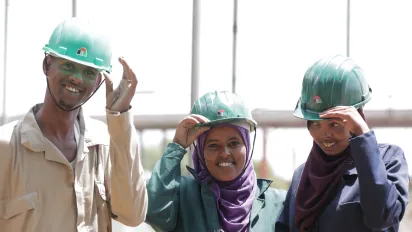
Programme
Partnership for improving prospects for forcibly displaced persons and host communities (PROSPECTS)
Lessons Learned report
Responding to Forced Displacement - Lessons from the International Labour Organization’s Engagement in the PROSPECTS Programme

Review of national policy framework and practice
Review of national policy, legislative and regulatory frameworks, and practice
Guiding principles on the access of refugees and other forcibly displaced persons to the labour market
Relevant projects
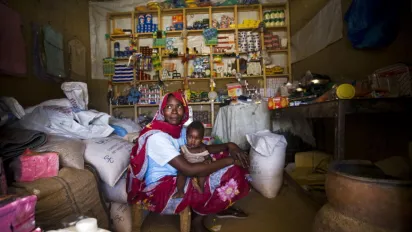
ILO-Netherlands Partnership
Partnership for improving prospects for forcibly displaced persons and host communities (PROSPECTS) in Sudan
ILO-Netherlands Partnership
Partnership for improving prospects for forcibly displaced persons and host communities (PROSPECTS) in Ethiopia
ILO-Netherlands Partnership
Partnership for improving prospects for forcibly displaced persons and host communities (PROSPECTS) in Uganda
ILO-Netherlands Partnership
Partnership for improving prospects for forcibly displaced persons and host communities (PROSPECTS) in Egypt