

Care economy
Advancing Indonesia’s care economy through documentary films
Through a compelling series of documentaries, the ILO supports the implementation of Indonesia’s Care Economy Roadmap.
10 July 2025
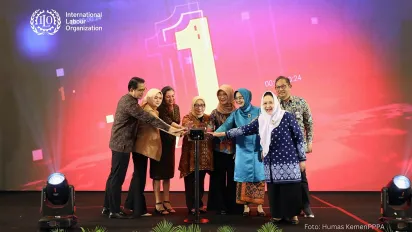
JAKARTA, Indonesia (ILO News) - Over 650 participants, both in person and online, attended the launch of the ILO’s video documentaries on the care economy during the inauguration of the Care Economy Working Group. The event was jointly organized by the ILO and the Ministry of Women’s Empowerment and Child Protection in Jakarta at the end of June. These videos also serve as part of the Working Group’s campaign materials to promote and implement care economy initiatives and policies in Indonesia.
The documentaries were developed in collaboration with the Ministry of Women’s Empowerment and Child Protection to support the implementation of the seven priorities outlined in the Indonesia Care Economy Roadmap 2025–2045. These priorities include: 1. Childcare services; 2. Elderly and long-term care services; 3. Integrated care services; 4. Maternity leave; 5. Paternity leave; 6. Decent work for care workers; and 7. Social protection for workers in the care economy.
“The ILO is pleased to present three video documentaries, demonstrating that investment in care work helps close gender gaps in employment, creates jobs, and boosts productivity by freeing up time for women, who disproportionately shoulder the burden of unpaid care work, to participate in the workforce. We also hope that these documentaries will strengthen the ongoing campaign on care work in the country,” stated Early Dewi Nuriana, the ILO’s Programme Coordinator for the Care Economy.
“A Journey of a Stay-at-Home Father” promotes greater involvement of men in care work. This documentary tells the story of a stay-at-home dad who chooses to take on household chores and care for his children, while encouraging his wife to pursue her career. The video highlights the challenges and stigma he faces from both his family and community. It also illustrates that care work can be shared by both women and men, based on mutual agreements within the household.
The second video, titled “Home for My Child,” demonstrates that the development of accessible, affordable, and quality early childhood care and education services can significantly boost women’s participation in the workforce. This documentary follows the journey of a single mother who works as a trader in the Beringharjo Market, Yogyakarta. The availability of quality, nearby, and affordable daycare centres—supported by the Ministry of Women’s Empowerment and Child Protection—enables mothers working in the market to leave their children in safe hands, allowing them to focus on earning a living, performing their jobs, and remaining active in the labour market.
The documentary “Elderly Care: The Visible and Invisible” aims to highlight the importance of strengthening aged and long-term care services, paid and unpaid care works, while also recognizing the need for decent work for care workers. It tells the story of two forms of elder care: one provided informally by family members, and the other by a professional care worker. The film compares the experiences of older people receiving care at home versus those in integrated aged care services. It also explores the challenges families face in balancing work responsibilities with caregiving duties.
Related content
Press release
Ministry of Women’s Empowerment and Child Protection and ILO launch Care Economy Working Group to advance Indonesia’s care system

Care economy
Pressing for progress: Indonesia’s media drive the care economy forward

Care economy
ILO-KBR Media “Care Support” campaign boosts awareness of Indonesia’s care economy
Project
The Care Economy in Indonesia
Relevant projects
Project
The Care Economy in Indonesia