


Child labour
Viet Nam marks 25 years of action to eliminate the worst forms of child labour
Viet Nam today commemorates 25 years since ratifying the International Labour Organization (ILO) Convention No. 182 on the Worst Forms of Child Labour - a landmark commitment to protect children from exploitation and uphold their rights.
19 December 2025
HA NOI (ILO News) - This anniversary reaffirms the nation’s long-standing commitment to protecting children and promoting inclusive, sustainable development aligned with international labour standards.
Since ratifying the Convention in 2000, Viet Nam has made steady, evidence-based progress in preventing and eliminating child labour, including the worst forms. Through comprehensive legal reforms, national programmes, and coordinated action across sectors, the country has strengthened child protection systems, expanded access to education, and improved the monitoring of children’s participation in economic activities. This sustained national leadership is underscored by Viet Nam's role as a Pathfinder Country in Alliance 8.7.
A key driver this progress is the National Programme on the Prevention and Reduction of Child Labour for the period 2021–2025, with orientation to 2030, which prioritizes prevention, early identification, and sustainable solutions for vulnerable groups. The programme links child labour prevention with education, social protection, and employment policies - creating a holistic approach to child rights.
Tangible progress in data-driven policy is evident: The proportion of children engaged in economic activities fell to 3.5% in 2023, down from 9.1% in 2018, according to national surveys conducted by the National Statistics Office with ILO support. Despite this progress, 94,300 children remain in hazardous work, and nearly 12 out of every 100 children in child labour face health risks.
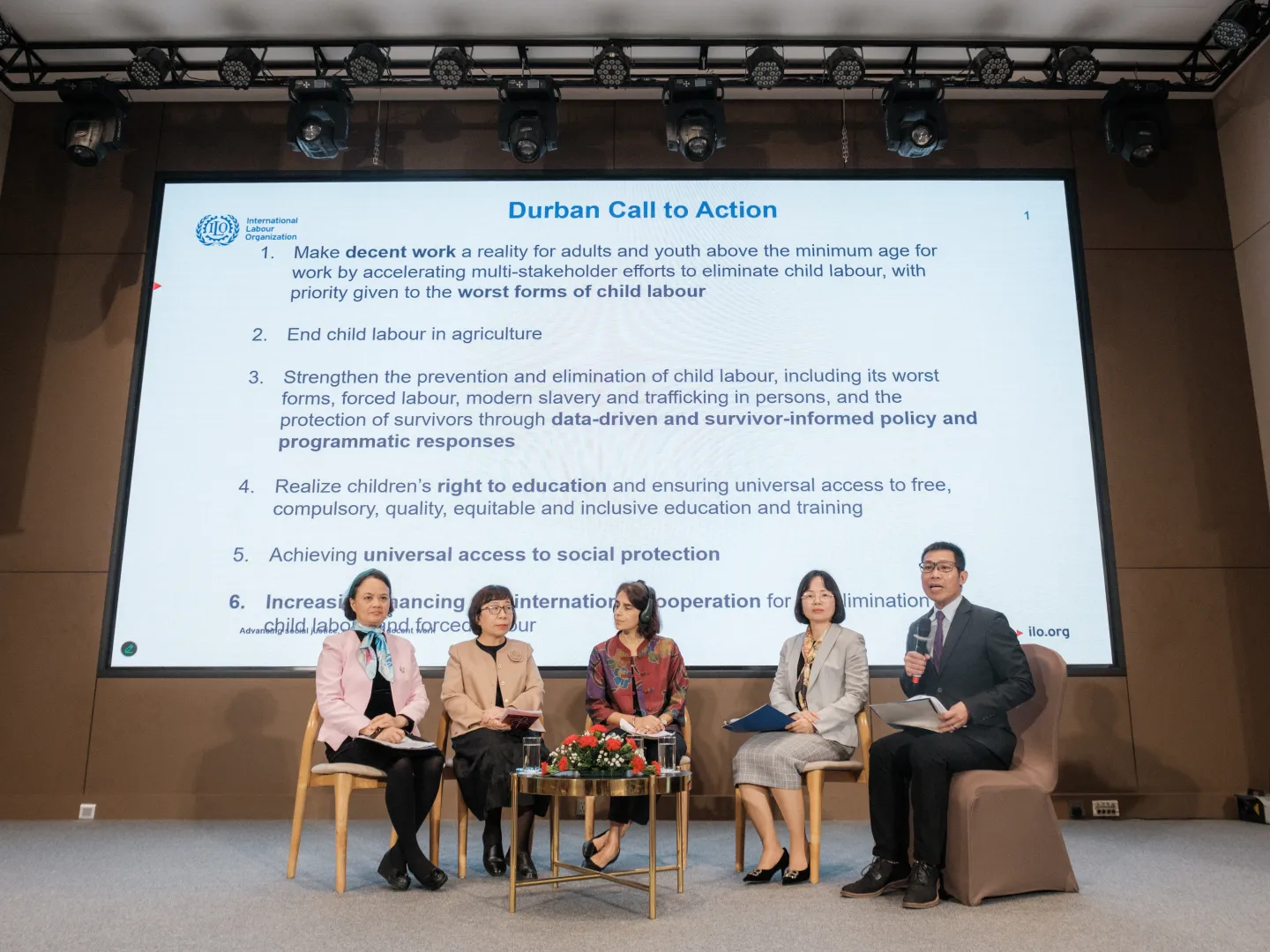
“Eliminating child labour is not only about protecting children’s rights, but also about strengthening Viet Nam’s future workforce and supporting inclusive economic growth,” said Ms. Sinwon Park, Country Director, ILO Country Office for Viet Nam. “When children stay in school and develop skills, and when adults have decent and productive work, the benefits extend to families, enterprises, and the economy as a whole. Ending child labour is a strategic investment in the quality and sustainability of Viet Nam’s economic future.”
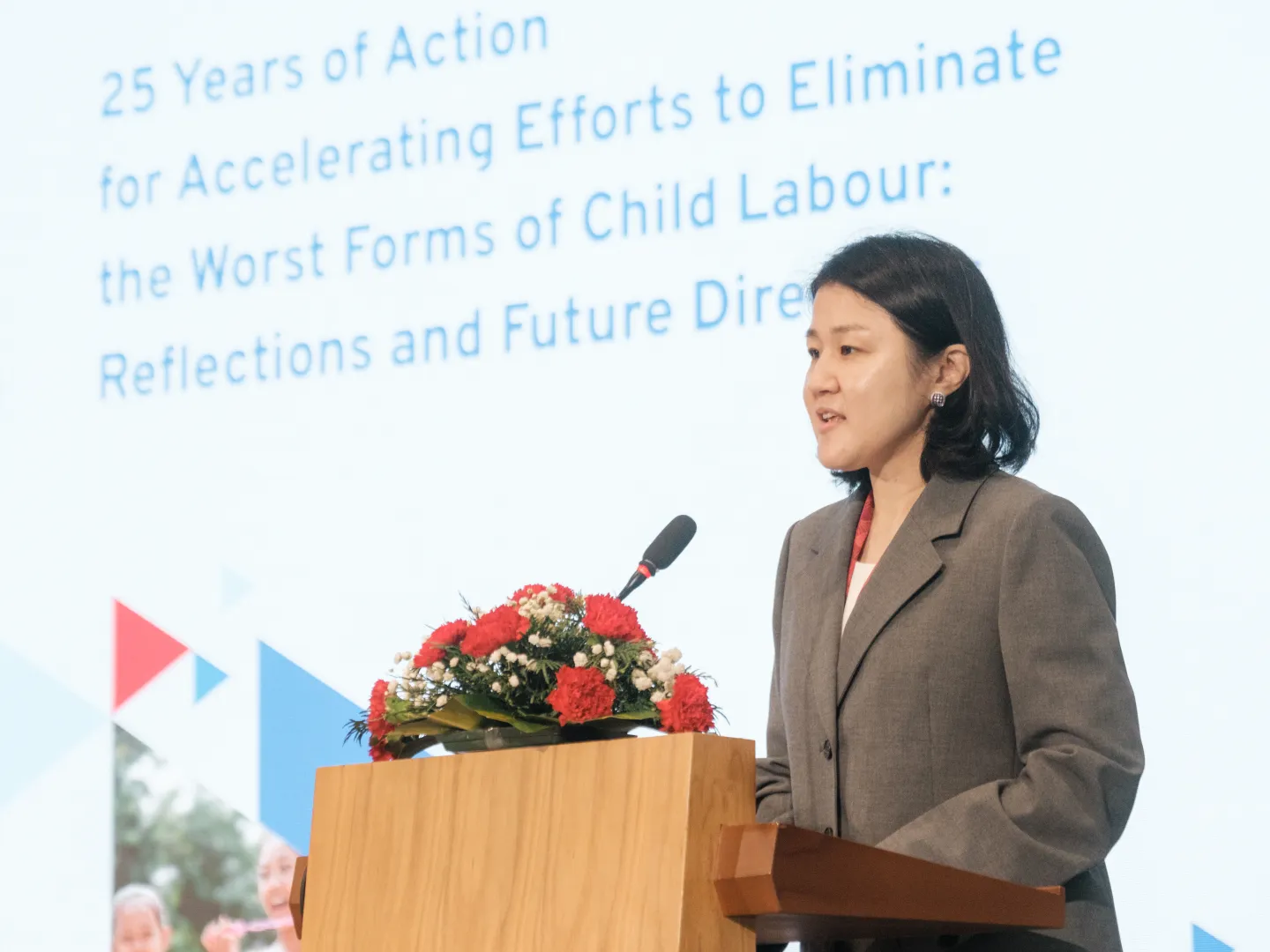
When children stay in school and develop skills, and when adults have decent and productive work, the benefits extend to families, enterprises, and the economy as a whole. Ending child labour is a strategic investment in the quality and sustainability of Viet Nam’s economic future.
Country Director, ILO Country Office for Viet Nam, Sinwon Park
Efforts to strengthen coordination among ministries, sectors, and local authorities have also been pivotal. Enhanced inter-agency cooperation mechanisms now support labour inspection, enforcement, and referral services for children at risk. Capacity-building activities have raised awareness among labour inspectors, local officials, employers, and communities about legal responsibilities and child protection.
Looking ahead, stakeholders stress that eliminating child labour requires continuous vigilance, particularly as Viet Nam deepens its integration into the global supply chains. Children in vulnerable households - those affected by poverty, migration, climate impacts, informal employment and limited access to services -remain a priority for future efforts.
“Protecting children is a shared responsibility of families, communities, government institutions, workers, employers, and businesses,” emphasized Ms. Tran Thi Bich Loan, Deputy Director of Administration of Maternal and Children's Affairs, Ministry of Health. “No single actor can eliminate child labour alone. It requires collective action, from strengthening social safety nets for vulnerable families to enforcing the law and heightening responsibility among businesses. This collaboration is the only way to build a solid foundation for the long-term, healthy development of future generations.”

As Viet Nam advances in the digital age, new risks such as online exploitation intersect with existing vulnerabilities such as poverty, migration, and informal work. Addressing these challenges requires child protection systems that are responsive both offline and online, grounded in prevention, education, and effective law enforcement.
To realize this shared goal and accelerate Viet Nam’s vision for high-quality growth, the focus must be on safeguarding children's fundamental rights through education and social protection.
“Every child has the right to a safe childhood and the opportunity to learn and develop,” said Mr. Ly Phat Viet Linh, UNICEF OIC Deputy Representative in Viet Nam. “Preventing child labour starts with protecting children from harm, ensuring that schools and social services are accessible to all, and that families in vulnerable situations receive timely support to break the cycle of poverty.”
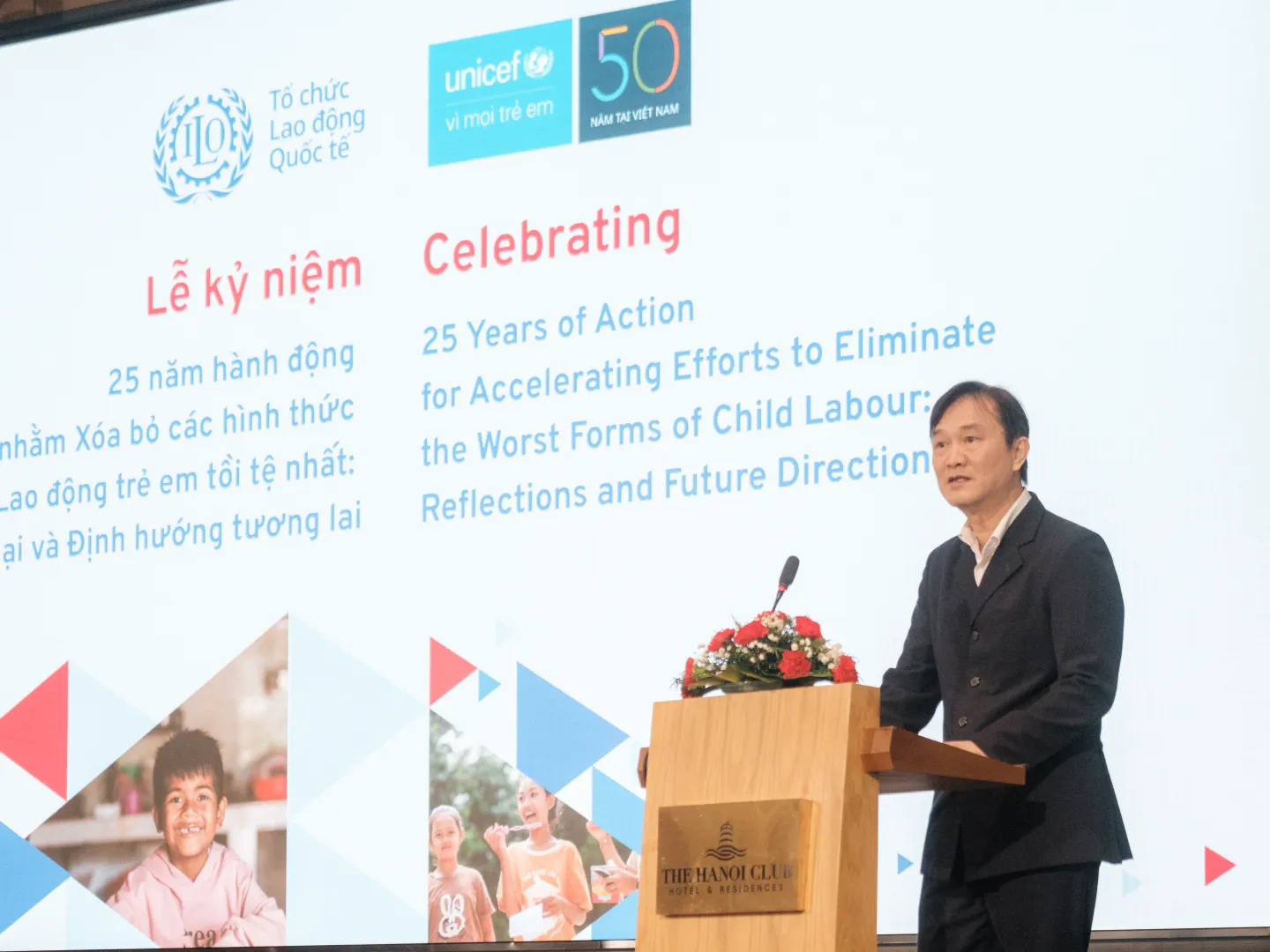
The ILO, UNICEF, and the United Nations Country Team in Viet Nam reaffirm their commitment to supporting Viet Nam in implementing national programmes and strengthening labour law enforcement. As Viet Nam develops its new National Programme on Child Labour for 2026–2030, this 25th anniversary offers a timely opportunity to accelerate progress toward Sustainable Development Goal Target 8.7 - ending child labour in all its forms.
You may also be interested
Country portal
Viet Nam

Child labour
CLEAR Supply Chains: Ending child labour in supply chains

Child labour
Technical Support for Enhancing the National Capacity to Prevent and Reduce Child Labour in Viet Nam (ENHANCE)

ASEAN launches new regional roadmap to prevent child labour
Child labour
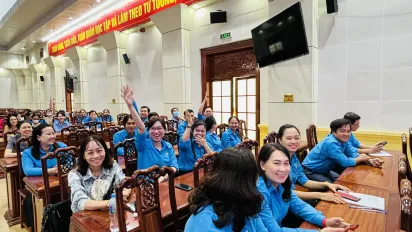
Workers join forces to prevent child labour: A call to action in Tien Giang
Two songwriters from Hanoi and HCM City win Music Against Child Labour song competition
Child labour
Viet Nam’s child labour action plan launched

Child labour statistics
Viet Nam National Child Labour Survey (NCLS) 2018 - Key findings

Viet Nam National Child Labour Survey 2012 - Report
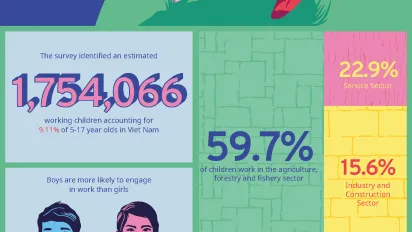
Infographics: Second Viet Nam National Child Labour Survey
The ILO ENHANCE Project
Tackling child labour in Viet Nam through vocational training and educational support
Child labour
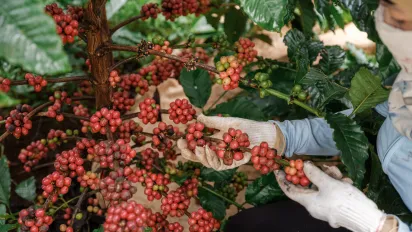
Strengthening coffee farming communities in Viet Nam to prevent child labour
Relevant projects
Child labour
CLEAR Supply Chains: Ending child labour in supply chains
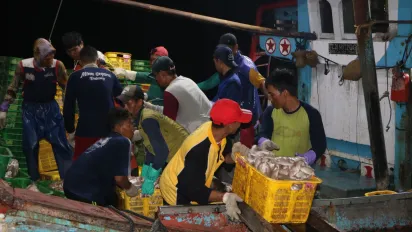
Ship to Shore Rights South East Asia - Indonesia
Migrant workers
Ship to Shore Rights South East Asia (SEA)