

Pilot Initiative for Integrated Local Development
Unlocking the potential of oasis communities in Kebili, Tunisia
Sustainable investments in El Barghouthiya’s oasis community are revitalizing agriculture, creating jobs, and fostering a circular economy through local resources and innovation.
28 February 2025
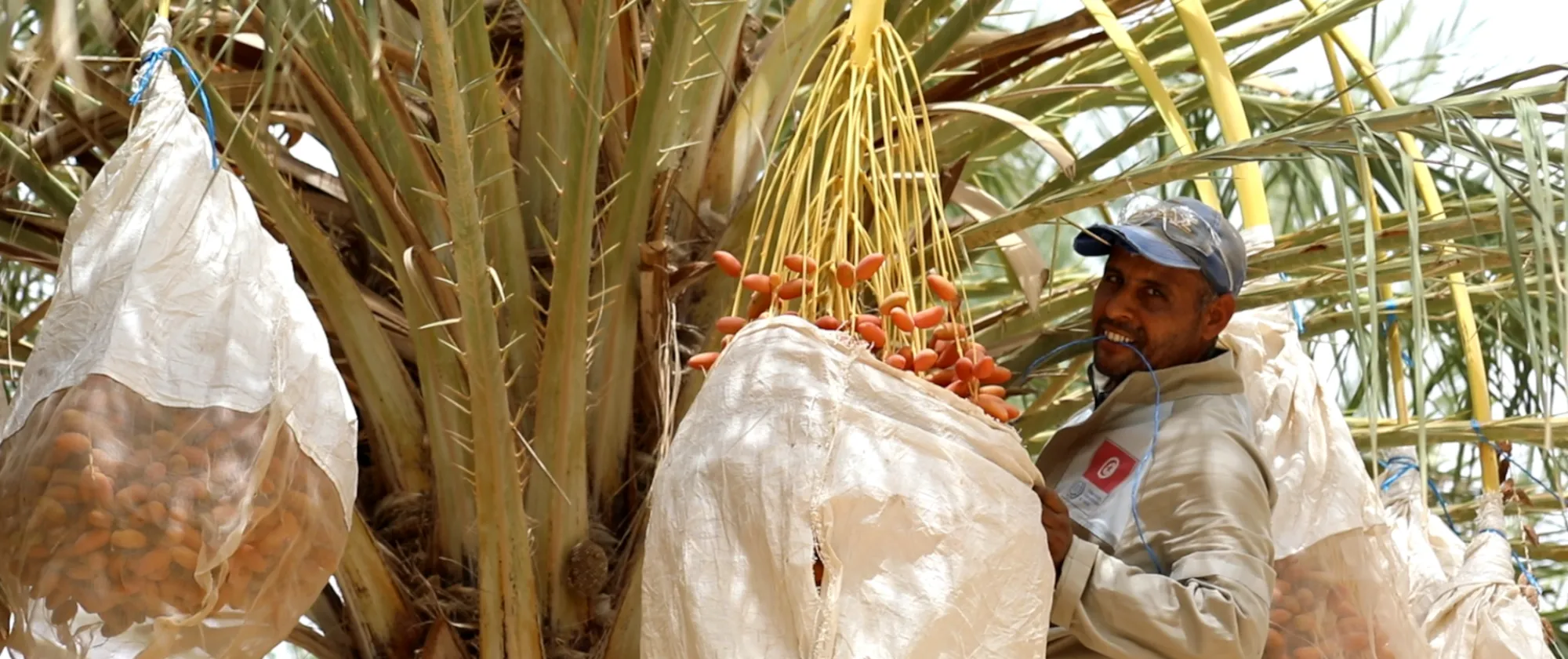
Tunis (ILO News) - In Tunisia’s arid regions, oasis landscapes serve as both a source of livelihood and a fragile ecosystem requiring careful stewardship. However, for decades, challenges such as climate change, economic stagnation, and limited employment opportunities have fueled rural exodus, leaving many young people disillusioned with agriculture.
The International Labour Organization (ILO), through the Pilot Initiative for Integrated Local Development (IPDLI), is demonstrating how targeted investments in infrastructure, skills, and innovation can revitalize local economies and provide decent work in vulnerable communities.
A community-driven model for inclusive development
The Pilot Initiative for Integrated Local Development (IPDLI), funded by the European Union and the Swiss Development and Cooperation Agency, has been at the forefront of this transformation. In El Barghouthiya, a small oasis village known for its deep-rooted agricultural traditions, a community-led approach is showing tangible results. Through support for employment-intensive investments, the ILO is helping farmers, cooperatives, and local communities unlock the full potential of their resources while ensuring social and economic inclusion.
The Agricultural Development Cooperative of El Barghouthiya (Al-Itqàn) has embraced a new model of sustainable, circular agriculture by repurposing organic waste from palm groves into livestock feed and natural fertilizers. This initiative is addressing a pressing challenge: half of the fodder needed by livestock farmers in the Kébili governorate is imported from other regions, making production costs unpredictable and unsustainable. By valorizing local resources, the cooperative is reducing dependency on external markets, improving food security, and creating new income streams for farmers.
Skills development: the foundation of sustainable jobs
The ILO’s intervention goes beyond infrastructure and investment; it prioritizes skills development to equip workers with the expertise needed for modern, climate-resilient agriculture. Training programmes in palm tree management, livestock farming, pollination techniques, and sustainable irrigation have enabled young farmers to adopt new agricultural practices that boost productivity while preserving fragile ecosystems.
One of the most striking aspects of this initiative is the shifting mindset among young people. Initially reluctant to pursue careers in agriculture, many youths viewed migration as their only viable option. Today, equipped with technical skills and access to modern farming tools provided by the ILO, such as automatic plows, mowers, and chainsaws, they are seeing new possibilities in their ancestral lands. The introduction of occupational safety equipment has also significantly improved working conditions, ensuring greater security and dignity in agricultural work.
Women's economic empowerment: a game changer
Historically, women in oasis communities have had limited access to economic opportunities in agriculture. However, through targeted outreach and capacity-building efforts, female participation in agricultural training programmes has significantly increased. Today, women are not only joining the workforce but also playing a crucial role in diversifying agricultural activities, such as beekeeping and dairy production.
Scaling up: a model for regional development
The success of El Barghouthiya’s local development approach could serve as a blueprint for other oasis communities facing similar challenges. Local authorities, public institutions, and international donors must work together to expand these initiatives, ensuring that investments prioritize decent work, climate adaptation, and inclusive economic growth. The ILO remains committed to supporting innovative, locally driven solutions that empower communities, reduce inequalities, and create sustainable employment.
As we look to the future, employment-intensive investments will remain a key pillar of ILO’s strategy in Tunisia and beyond. By harnessing local knowledge, participatory planning, and green technologies, we can turn challenges into opportunities and pave the way for a more resilient and prosperous rural economy.
Related content
Topic portal
Employment-intensive investment

Project IPDLI
Pilot initiative for integrated local development
Relevant projects
Project IPDLI
Pilot initiative for integrated local development