

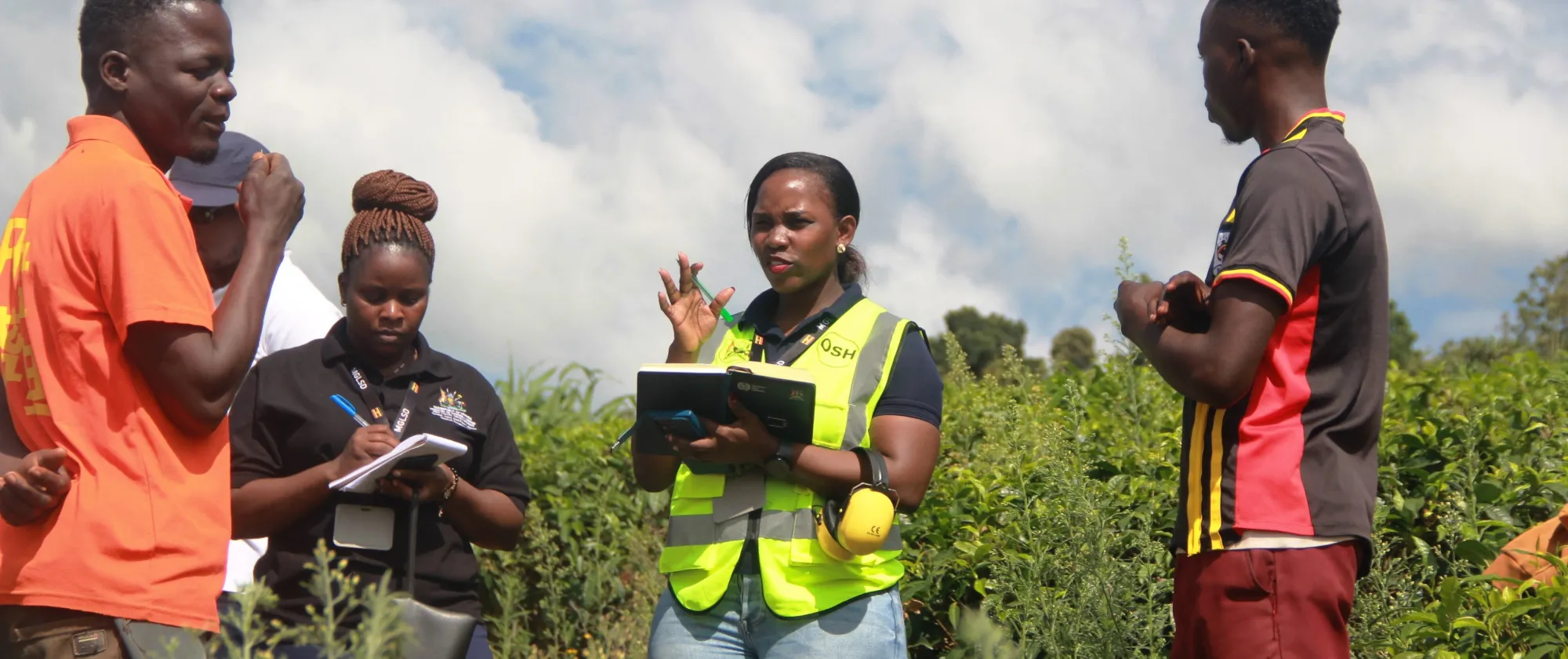
CLEAR Supply Chains project in Uganda
Training of Trainers (TOT) workshop for labour inspectors and OSH officers successfully concludes in Uganda
A two-week ILO training workshop in Jinja, Uganda, brought together 20 labour inspectors and OSH officers to tackle child labour and improve workplace safety in coffee and tea supply chains. Key outcomes included a Strategic Compliance Plan and enhanced inspection skills, combining theoretical knowledge with hands-on field visits.
15 November 2024
JINJA, UGANDA (ILO News) - A two-week intensive training workshop designed to bolster the knowledge and capacity of Uganda's labour inspectors and Occupational Safety and Health (OSH) officers has come to a successful closure in Jinja.
The event was organized as part of two major ILO projects being implemented in Uganda: the ACCEL Africa project and the CLEAR Supply Chains project. Both initiatives aim to eliminate child labour and improve occupational safety and health within two of Uganda's key supply chains: coffee and tea.
Uganda, one of Africa's top coffee producers, faces significant challenges with child labour and unsafe working conditions, particularly in its agricultural sectors. Uganda's economy heavily relies on agriculture, employing approximately 70% of the workforce. However, nearly 68% of these workers operate in informal settings where labour laws are difficult to be enforced. Child labour remains a critical issue, with around 39.5% of children aged 5-17 engaged in child labour, primarily in hazardous conditions in agriculture.
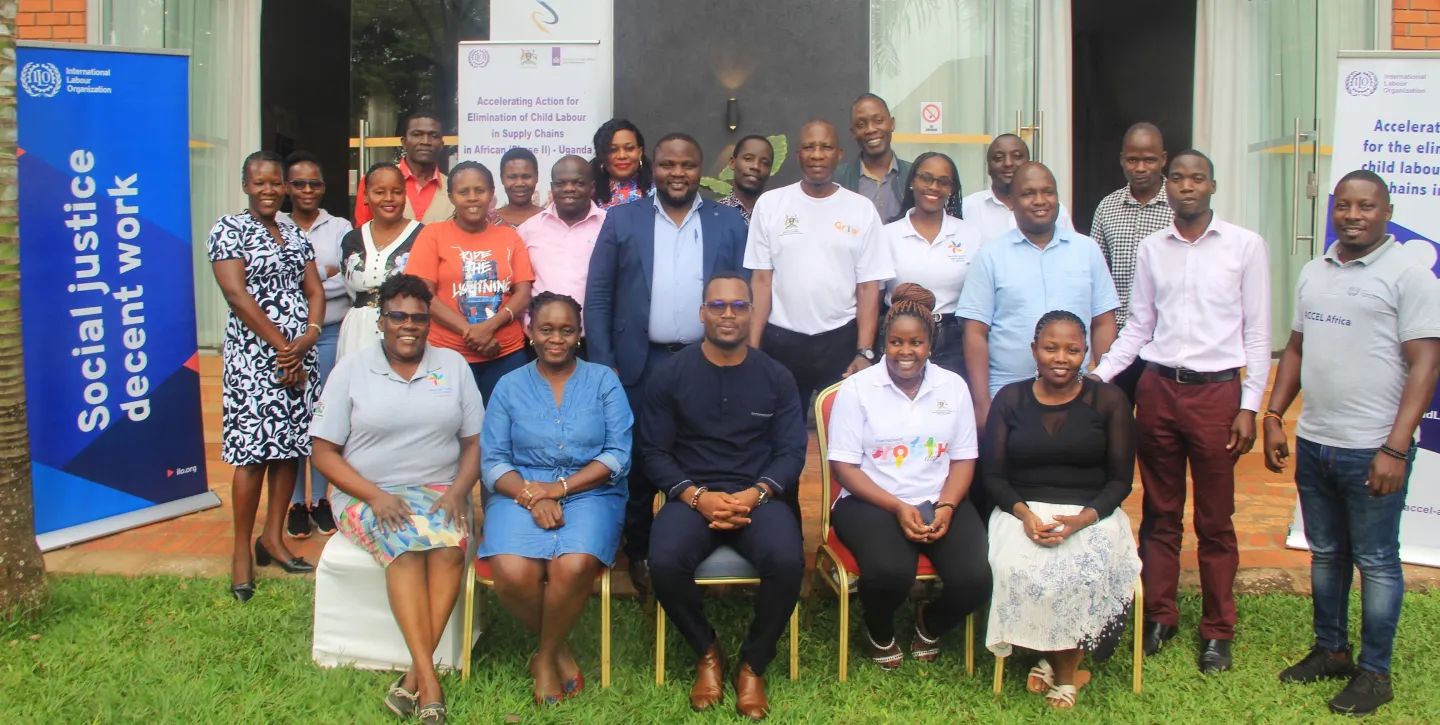
The overall training focused on enhancing participants' knowledge of international labour standards, particularly related to child labour, occupational safety and health, and effective inspection methodologies in rural and informal settings and was composed of two components:
- Capacity building of the 21 members of the Core Group of labour inspection from the MGLSD.
- Design of the SCP on OSH and child labour in tea and coffee.
The first week focused on building participants' foundational knowledge and skills in labour inspection and occupational safety and health (OSH). Sessions included key principles of OSH, risk assessment techniques, and methodologies for addressing child labour in agriculture. Participants also explored the challenges of labour inspection in informal settings and were trained in accident investigation procedures. Practical field visits to agricultural production sites and tea factory allowed participants to apply their learning in real-world settings. Through group discussions and restitution sessions, they reflected on their findings and shared insights for improvement.
The second week concentrated on the design of a strategic compliance planning (SCP) for coffee and tea supply chains. Participants assessed labour inspection frameworks, identified critical economic sectors, and mapped key stakeholders. They developed intervention strategies, consolidated ideas into actionable plans, and explored best practices in implementing compliance strategies. The week concluded with the consolidation of the draft of a strategic compliance plan (including the action plans) specific to the coffee and tea sectors and the operationalization of the Core Group of Labour Inspection.
A major outcome of the workshop was the drafting of a strategic plan for compliance with Uganda’s labour laws, particularly focusing on the coffee and tea supply chains. This plan outlines key strategies for enforcing occupational safety, health standards, and measures to combat child labour in these sectors. The participants worked collaboratively with ILO experts to identify economic sectors, labour law violations, key actors for implementation, and the development of compliance tools.
In addition to theoretical sessions, participants had the opportunity to participate in field visits, which included a tea plantation, a tea factory, and another factory producing various products (such as vegetable cooking oil and fat, soap, and washing detergents) for learning purposes. These visits provided hands-on experience in identifying and addressing safety hazards, investigating workplace accidents, and inspecting child labour practices. The participants were able to apply the methodologies and tools introduced during the workshop, gaining invaluable experience in real-world settings.
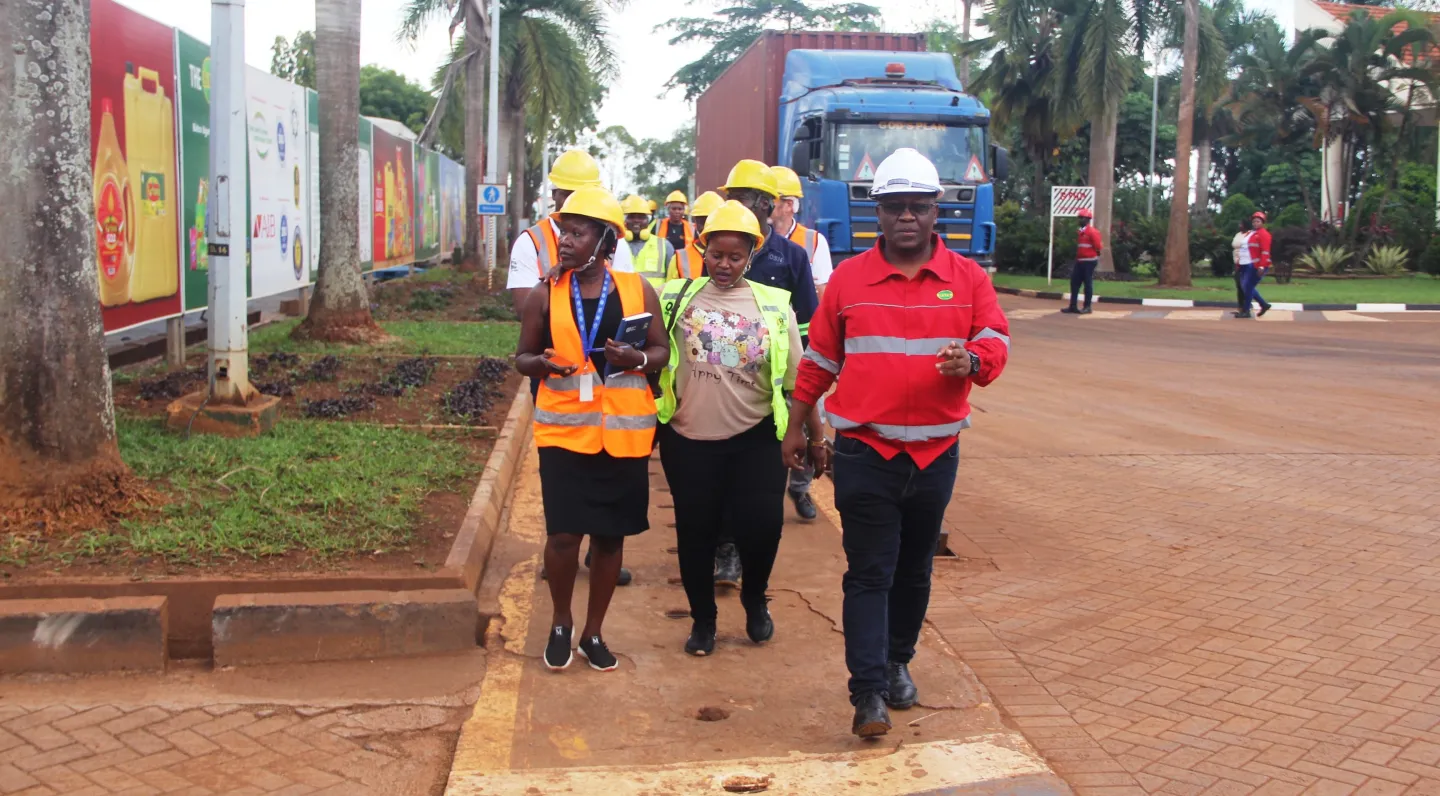
In addition to the theoretical sessions, participants had the opportunity to conduct practical inspection visits to coffee and tea production units in Jinja. These visits provided hands-on experience in identifying and addressing safety hazards, investigating workplace accidents, and inspecting child labour practices. The participants were able to apply the methodologies and tools introduced during the workshop, gaining invaluable experience in real-world settings.
A major outcome of the workshop was the drafting of a strategic plan for compliance with Uganda’s labour laws, particularly focusing on the coffee and tea supply chains. This plan outlines key strategies for enforcing occupational safety, health standards, and measures to combat child labour in these sectors. The participants worked collaboratively with ILO experts to identify economic sectors, labour law violations, key actors for implementation, and the development of compliance tools.
Ms Jackie Banya, Project Manager at ACCEL Africa revealed that the elimination of child labour remains a significant challenge worldwide and according to the International Labour Organization (ILO, 2021), 160 million children are trapped in child labour globally with 23.9% (86.6 million) found in Sub Saharan Africa.
“Labour inspection plays a critical role in advancing decent work, social justice and supporting economic growth thus the effectiveness of labour inspection systems is a key factor in ensuring that labour markets are governed well, which in turn influences a country’s ability to follow a development path that sustainably reduces poverty and inequality,” Ms Jackeline Banya, National Project Coordinator of ACCEL Africa in Uganda.
In her closing remarks at the workshop, Ms Eva Katusabe, Acting Commissioner Occupational Safety and Health appreciated that that the two-week program was purposely designed to be participatory and interactive and participants were equipped with strategies to address the predominant challenges of child labour and OSH in the coffee and tea supply chains in Uganda.
By the end of the workshop, the Core Group of Labour Inspection was operationalized. The strategic plan developed during the workshop is expected to be implemented in 2025, with participants playing a leading role in its execution. The strategic plan for compliance, developed through the workshop, will guide efforts in the coffee and tea supply chains to eliminate child labour and promote safer working conditions.
Relevant projects

Accelerating action for the elimination of child labour in supply chains in Africa (ACCEL Africa)

Child labour
CLEAR Supply Chains: Ending child labour in supply chains