

Towards a future without child labour: Profiling and community mobilization in Grand-Zattry and M’Batto as part of ACCEL Africa 2nd phase
19 March 2024
Grand-Zattry and M'Batto, Ivory Coast from February 19-24 and March 18-22, 2024 - The ACCEL Africa phase 2 project has the role of strengthening compliance with the Durban Call to Action, in focusing on the root causes of child labour, including access to social protection, promoting decent work and improved adult livelihoods, facilitating the transition from school to decent work for young people and the promotion of a safe and healthy working environment.
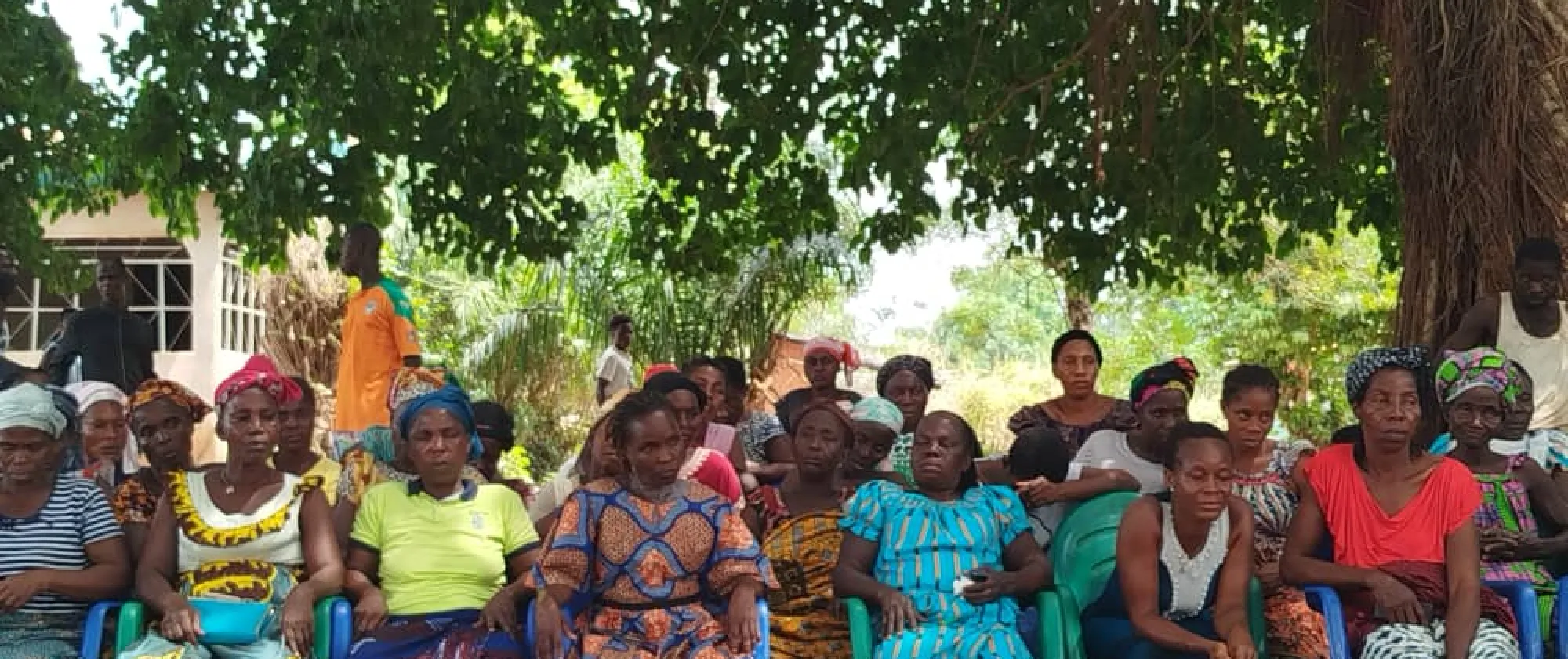
It is within this framework that two joint profiling missions bringing together the partners and the project team took place respectively in the sub-prefectures of Grand-Zattry and M'Batto, from February 19 to 24 and from March 18 to 22. 2024.
During the profiling missions, various actors mobilized for a fruitful collaboration. Under the direction of the project administrator, the partners were divided into four thematic working groups. The first, focused on coordination mechanisms, brought together representatives of the General Directorate of Labour, the Directorate for the Fight against Child Labour and the Coffee and Cocoa Council, who conducted interviews with community leaders. The group dedicated to social protection, made up of coordinators and doctors from the National Health Insurance Fund as well as managers from the National Social Insurance Fund, assessed the healthcare system and the social regime for self-employed workers. Cooperative engagement and financial inclusion were explored by teams including ANADER, APIF, CILTE, CGECI and INS, who looked at cooperatives and Village Saving and Loan Associations.
Finally, questions of apprenticeship and employment of young people and women were integrated into all groups and specifically addressed by representatives of the Directorate of Apprenticeship and Professional Integration and the Directorate of Training Institutions. and Women's Education. The mission aimed to establish a precise database on communities to optimize interventions in favor of decent work and the eradication of child labor. The partners involved managed to gather crucial information on community coordination, combating child labour, cooperative engagement, social protection and youth employment. This approach made it possible to better identify needs and design strategies adapted to local realities, marking an important step towards tangible improvements in these areas.
The methodology adopted for joint profiling was structured around focus groups with selected communities, already benefiting from the ACCEL project. A careful selection of communities was carried out according to specific criteria, including their involvement in cocoa production and the existence of local coordination structures. The interviews, conducted on site, made it possible to collect data via questionnaires, then analyzed to inform the planning of future interventions.
The community inclusion criteria that were proposed concern the involvement of communities in cocoa production, the existence of a coordination framework at the local level and cooperative and associative groups, the start of activities in the framework of phase 1 of the ACCEL project, the existence of health centers, etc.
To conclude, the missions carried out in the Sub-prefectures revealed a marked enthusiasm and significant mobilization of the communities, testifying to their interest and commitment to efforts to combat child labour. These visits not only deepened the understanding of the areas of intervention but also highlighted opportunities for action based on the challenges identified. Thanks to this profiling, valuable knowledge of the needs, practices and knowledge of potential beneficiaries was acquired, allowing partners to refine the planning and monitoring of activities. This approach facilitated the identification of potential constraints and strengthened cohesion between partners, paving the way for fruitful exchanges and the consolidation of collaborative actions. The discussions initiated will continue in Abidjan during a workshop dedicated to the restitution of the results, thus promoting effective capitalization of the achievements of this initiative.
Relevant projects
Accelerating action for the elimination of child labour in supply chains in Africa (ACCEL Africa)