


Our impact, their voices
Timorese women turn coconut waste into business opportunities
From discarded husks to marketable products, women in Timor-Leste are building greener livelihoods and new sources of income.
5 May 2026
DILI, Timor-Leste (ILO News) - Maria Marcelina had been surrounded by coconut trees her entire life. Growing up in Baucau municipality, in the eastern part of Timor-Leste, where coconuts are abundant, she watched them press for oil, their flesh eaten, and their husks discarded or burned. The fibrous husk, found everywhere in her community, was seen as waste. That changed in April 2026.
Between 7 and 16 April, Maria joined 24 other women at the CDC Baucau Training Centre for a course on coconut coir prototyping and production. There, they learned how to transform coconut fibre into bags, hats, rags, as well as fashion and home accessories. What had once been thrown away was suddenly becoming something people wanted to buy.
The training was organized by Associação Empresarial das Mulheres em Timor-Leste (AEMTL) under the Agroforestry Skills Programme, implemented by the ILO and funded by the European Union.
The response from Maria’s community was immediate. After posting photos of the products on Facebook, inquiries quickly poured in. People wanted to know where they could buy the items and how they could participate in similar training.
This is a good initiative for women, especially for us who want to establish a home industry or a small business. It will help our household income and support financially dependent women.
Maria Marcelina, participant
"There were so many people asking where they could buy the products and how they could also attend such training. Even in the local market, these products already attract customers. That motivated me to move forward," she said.
Maria’s journey to the training was shaped by both her academic background in biology and her growing belief that waste can hold untapped value. Two years ago, she left her job as a bank teller to focus on growing and selling plants. When she first heard about using coconut byproducts through a circular economic approach, the idea immediately resonated with her.
"My background in biology made me see waste differently, not as something to throw away, but as something with potential. The idea of a circular economy spoke to me deeply, because it's about caring for the environment while creating value."
Inspired by the experience, Maria has since registered for a business competition organized through the programme. Armed with a clear vision and new skills, she hopes the initiative can inspire more women in her community to start their own small businesses.
"This is a good initiative for women, especially for us who want to establish a home industry or a small business. It will help our household income and support financially dependent women."
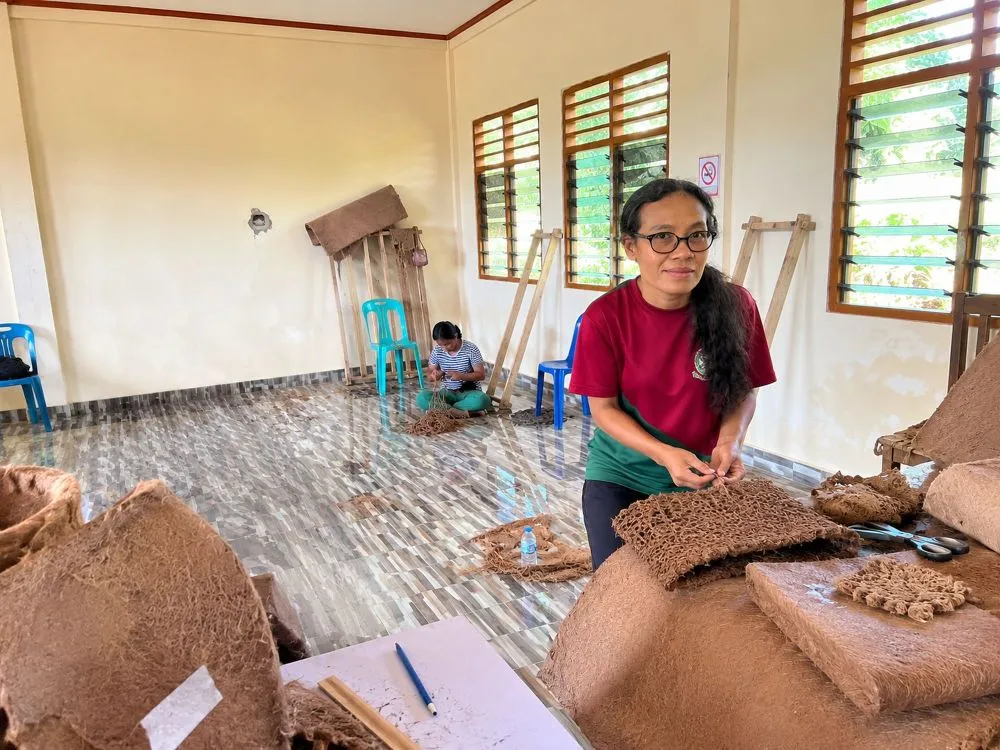
For Terezinha da Silva Guterres, the training offered a different starting point but led to a similar sense of possibility. Young, ambitious, and determined, she had always viewed coconuts simply as a source of food and cooking fuel.
"In the past, we only knew to eat it and use the remains as fuel for cooking. But now I have seen that coconut can produce so many other beneficial and environmentally friendly products that are good for the environment and for increasing family income”.
What changed for Terezinha was not only discovering the range of products that could be made from coconut waste but also gaining the confidence and practical skills to create them herself. She has already entered the programme’s business competition and is eager to turn her ideas into reality.
I already have the practical knowledge and skills for this. I don't want it to go to waste. I have a vision for a business with this product. I'm still young and still have the spirit to continue. I hope more training like this can reach more people in my community.
Terezinha da Silva Guterres, training participant
By the end of the programme, 420 women are planned to complete training, gaining not only technical production skills but also knowledge in product design, marketing, business management, and access to buyers and equipment.
At the centre of the programme’s market strategy is “Brand Timor”, a unified identity being developed to position Timorese coconut products, alongside cocoa and vanilla products, as premium, authentic, and sustainable goods for local consumers, tourists, and the wider ASEAN market.
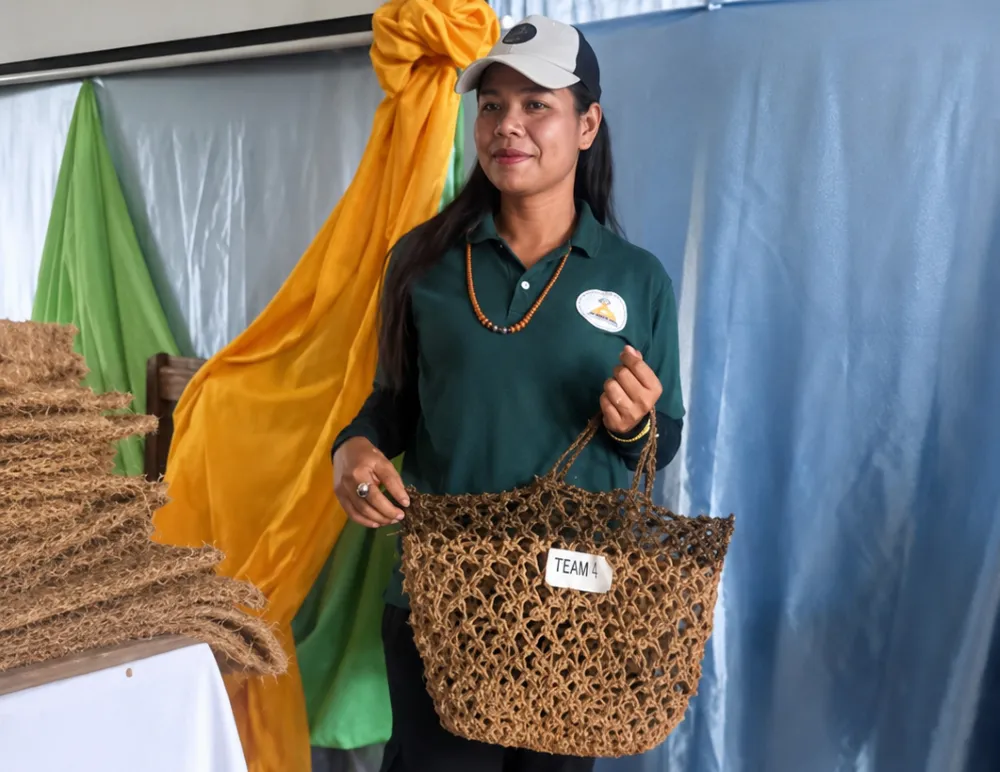
For Herguina Luina Fernandes, President of AEMTL, the opportunity is both timely and significant: "This is a big market that we can tap into, but it requires practical skills and knowledge. This training is essential for these women because these women already have business experience and Timor-Leste has strong potential in coconut production. As Timor Leste moves towards ASEAN accession, we will have access to a wider regional market for these products."
Related content
EU Programme
Agroforestry skills for employment and resilience in Timor-Leste
Relevant projects
EU Programme
Agroforestry skills for employment and resilience in Timor-Leste