


Article
Steps that matter: The ILO’s “Khuta” to youth employment in Lebanon
Arabic for “steps,” Khuta is the Job Search Club initiative guiding young people in their search for work amid crises, conflict, and volatility.
12 November 2025
North Lebanon – Across the country, young people are taking their first move towards employment through “Khuta,” the Job Search Club (JSC) initiative implemented for the first time in Lebanon by ILO PROSPECTS, in partnership with UNHCR and the Directorate General of Technical and Vocational Education (DGTVE).
“Khuta” is being rolled out in 12 Community Development Centres (CDCs) of UNHCR and five public Technical and Vocational Education and Training (TVET ) schools nationwide, supported by Injaz Lebanon. Each club brings together groups of job seekers to learn, share, and grow, building the skills and confidence they need to enter the world of work.
Lebanon’s youth face daunting challenges.
With unemployment at an all-time high and young women disproportionately affected, opportunities are scarce. Many graduates leave school without the basic know-how to navigate the job market: how to search, apply, or present themselves professionally.
“Khuta” fills that gap. It connects education to employment, transforming classrooms into spaces where practical job-hunting skills are taught, from writing a strong CV to preparing for interviews and identifying real openings in the labour market.
Through the initiative, participants, both Lebanese and Syrians, learn what employers truly seek, including soft skills such as teamwork, communication, and adaptability. They practice these skills while learning to use digital tools, create LinkedIn profiles, and even explore remote work opportunities.
Operating across 17 clubs in Lebanon—in the North, Bekaa, and Beirut—“Khuta” aims to reach 1,500 young job seekers aged 18 to 35. The skills gained are transferable, adaptable, and essential and can be applied across sectors or even beyond borders.
By linking education, technology, and employability, Khuta is taking a key step towards supporting Lebanon’s youth in taking charge of their career paths and secure meaningful work and a strong future.
Supported by the Kingdom of the Netherlands, PROSPECTS is a global partnership that aims to improve the access of host communities and forcibly displaced people to education, social protection and decent work.
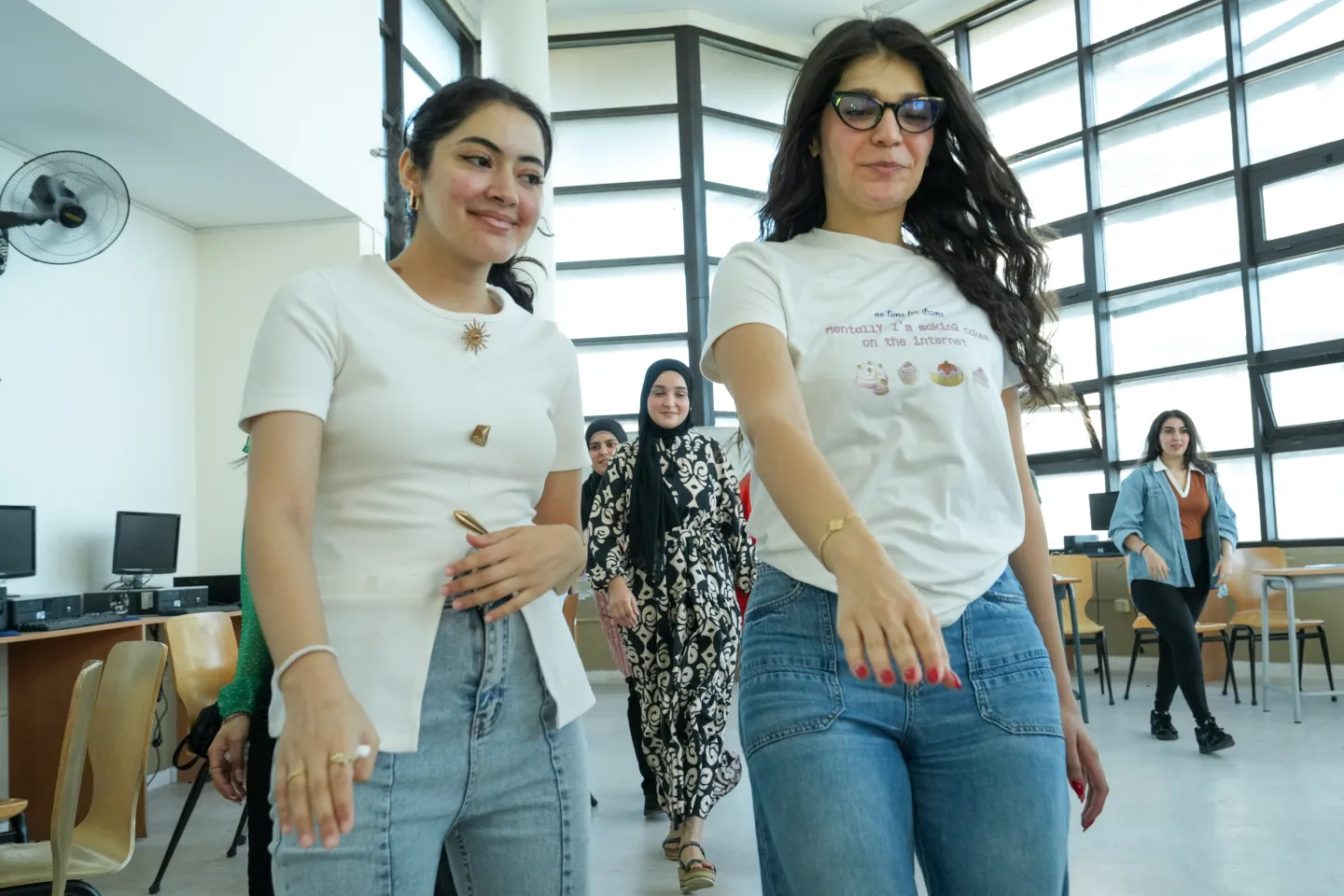
Young club members take part in an exercise during a session in North Lebanon.
“Based on ILO data, Lebanon’s unemployment rate reached around 30 percent, meaning nearly one in three people in the labour force was without work,” said Shatha Eisouh, Skills and Employment Technical Officer, ILO PROSPECTS Regional.
“Female unemployment is about 33 percent while youth unemployment soares to 48 percent, almost double the adult rate.”

Club member Wael Ismail, 27, attends a session in North Lebanon.
Wael was studying architecture before interrupting his studies and starting work as a car mechanic. He makes sure to keep up with the latest vocational training courses in the field to stay updated with market innovations and meet customers’ needs, including scanner use, programming, and tuning.
“I know the Club is for people looking for a job, but I want to increase my level and be ready to explore new opportunities,” Wael said. “Networking among youth here is also very important to build connections and advance in your career.”

In Tripoli, Lebanon, club members take part in a session led by ILO-trained facilitator Khalil Khalil.
“I’m witnessing very positive feedback from the young members. Their motivation is impressive,” Khalil said. “The good thing is that the material we use is tailored to the country’s needs, creating more motivation among the youth, as they see real benefits when working on scenarios they actually face in their job search.”
Khalil said youth needed Job Search Clubs in this area specifically, where unemployment is high and poverty is part of daily life. “We are helping people apply correctly and also realize that they can also work as freelancers, adapting to an ever-changing job market,” he said.

The Club targets young people across the country, though not all share the same technology literacy levels. For those with limited literacy, the programme uses practical, community-based methods, including visiting municipal offices, scanning newspapers, and engaging local networks. Every participant, regardless of background or ability, takes a meaningful step toward employability.
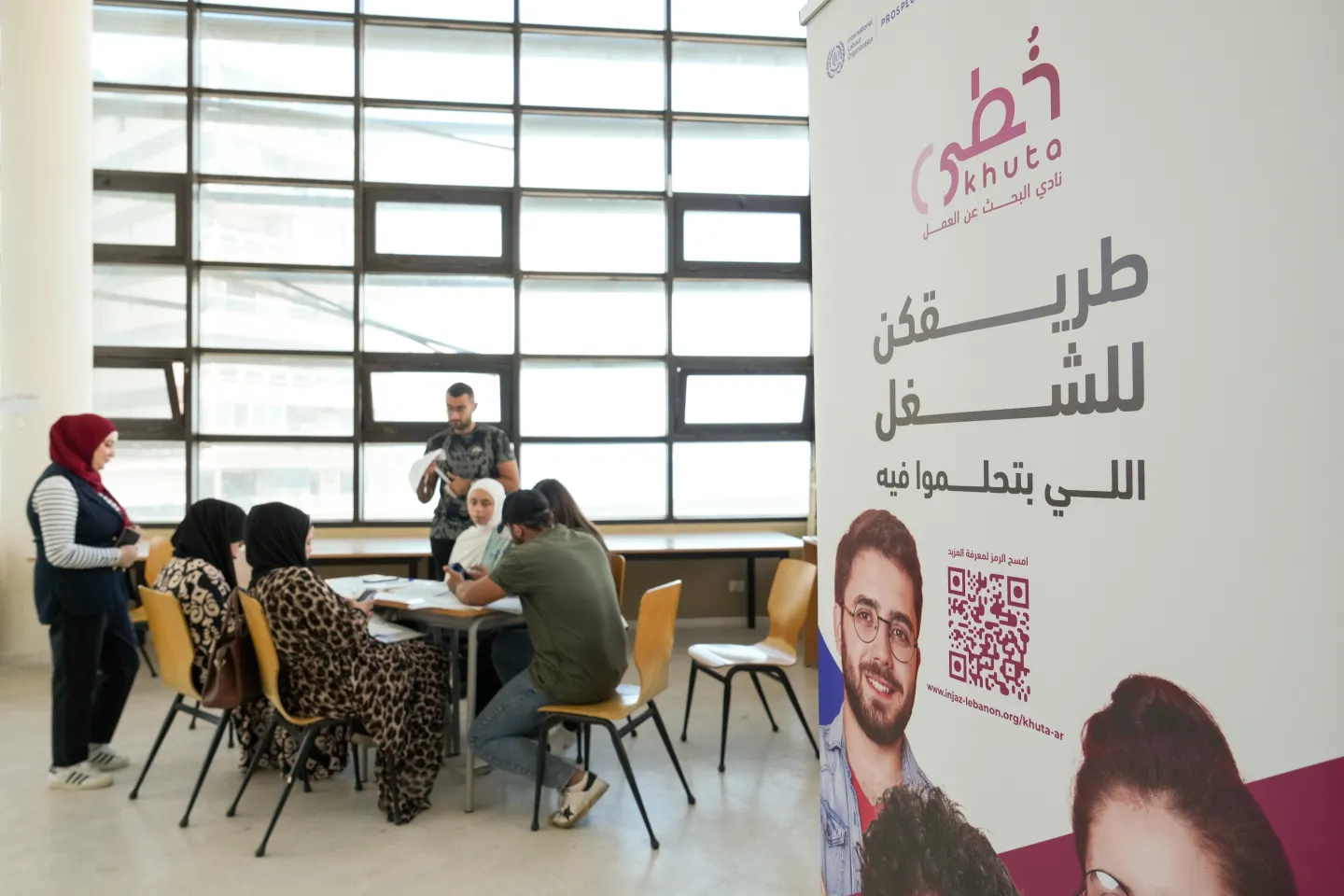
Safa’a Al Mahmoud, 22, from Syria, said she was studying to become a nurse, but she hadn’t worked before. “I joined the Job Search Club to understand what I lack in terms of skills and how to prepare myself for the job market,” she said.
Through the sessions, Safa’a gained new insight into career planning. “The sessions helped me change my views and think more clearly. This will be extremely useful in choosing a suitable occupation for my age and skills.”
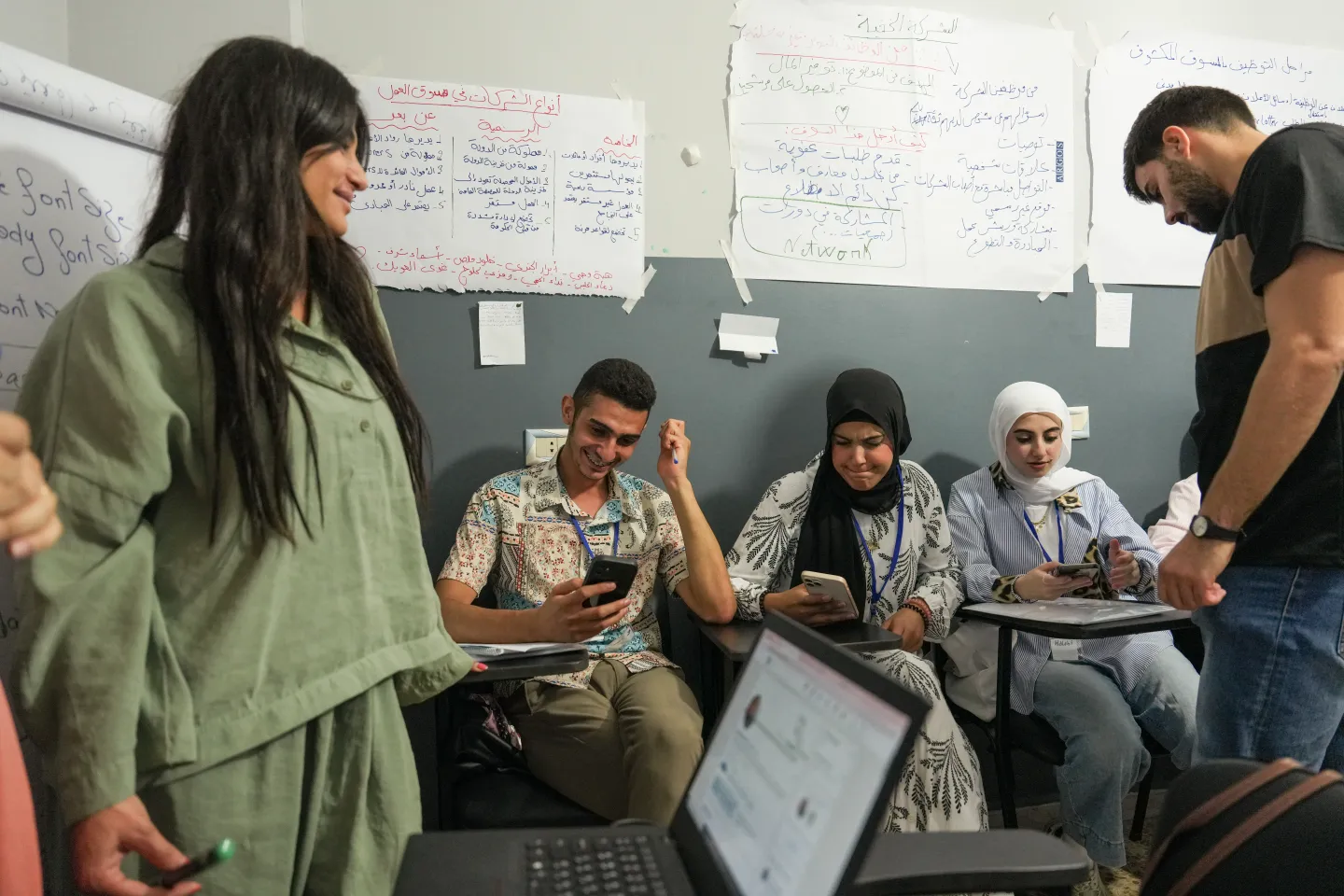
Graduates from schools often don’t know how to write a successful CV or use AI tools to help them create one. In a country like Lebanon, it remains crucial that people acquire these skills. “We will eventually need to adapt the manual to include more advanced technologies in the JSC,” said ILO Shatha Eisouh. “It is an evolving and flexible tool that keeps pace with technological change and adapts to each country’s context.”

Select participants will also have the opportunity to join specific internship following the club’s classes. These will be the top participants of the Club, based on their motivation and proactive behaviour. This will connect employers with job seekers in the areas.
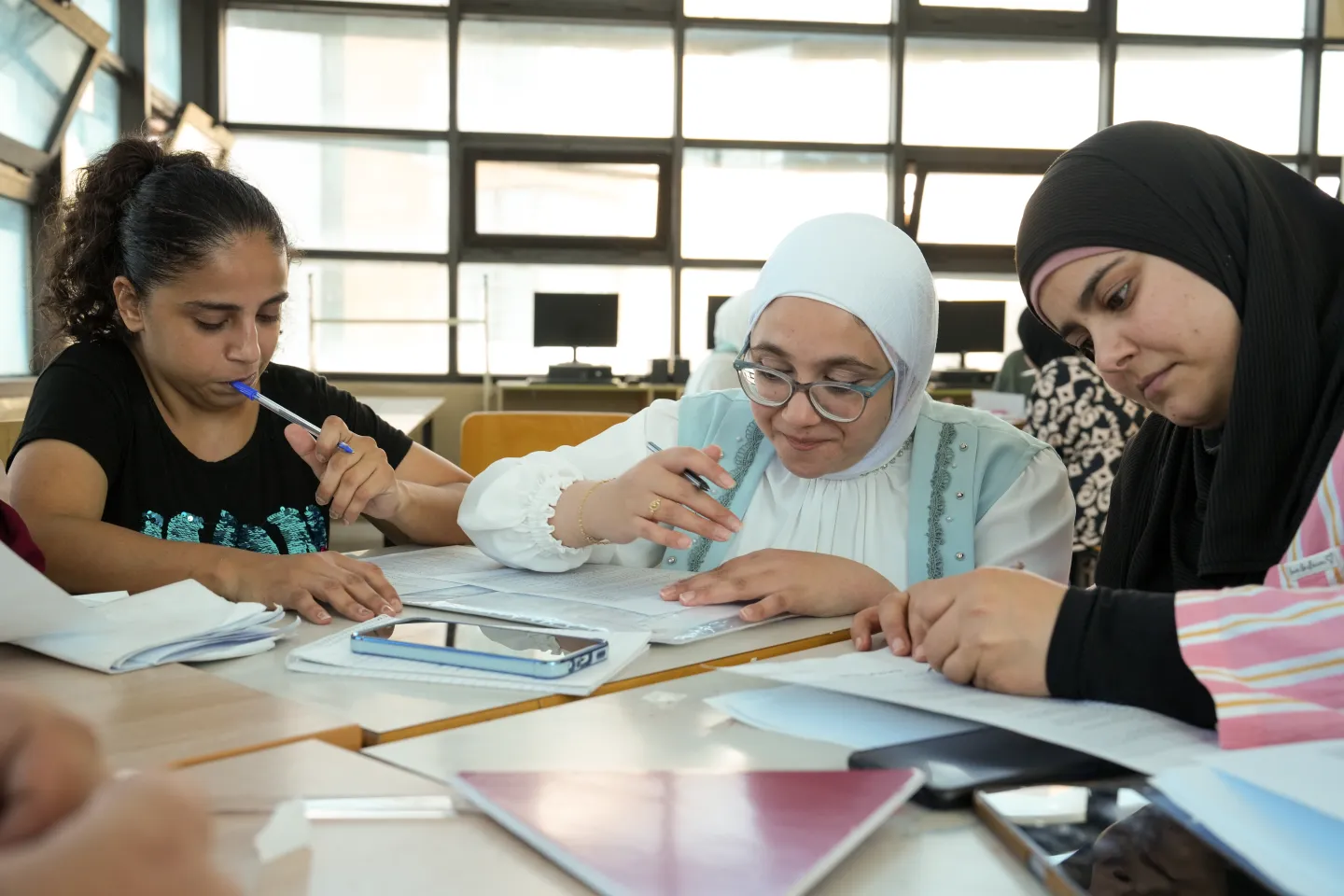
“The project started at the end of September,” said Christelle Hleyel, Job Search Club Project Manager at Injaz. “We began in the most vulnerable areas and are now expanding to other locations nationwide.”
She explained that approaches vary depending on the area and the needs of job seekers.
“As the implementing partner, we handle outreach, coordination and activities, ensuring that each participant attends at least 90 percent of the 10-day programme,” she said.

Nisreen Al Amuddin, 24, is seen attending one of the Khuta classes in North Lebanon.
“I graduated in accounting and finance this year, and it’s difficult to enter the job market for the first time,” Nisreen said. “Expectations are high, and I’d like to work in something relevant to my field of studies.”
After joining the Club, she learned how to convincingly present herself during interviews. “I applied all the things I learned in the sessions: how to talk about myself and explain why I’m the right person for the job,” she said.
Using the networking skills gained in the Club, she secured an interview at a local school. “I got the job and will start teaching maths to children aged six to ten,” she said. “I’m nervous, but confident.”
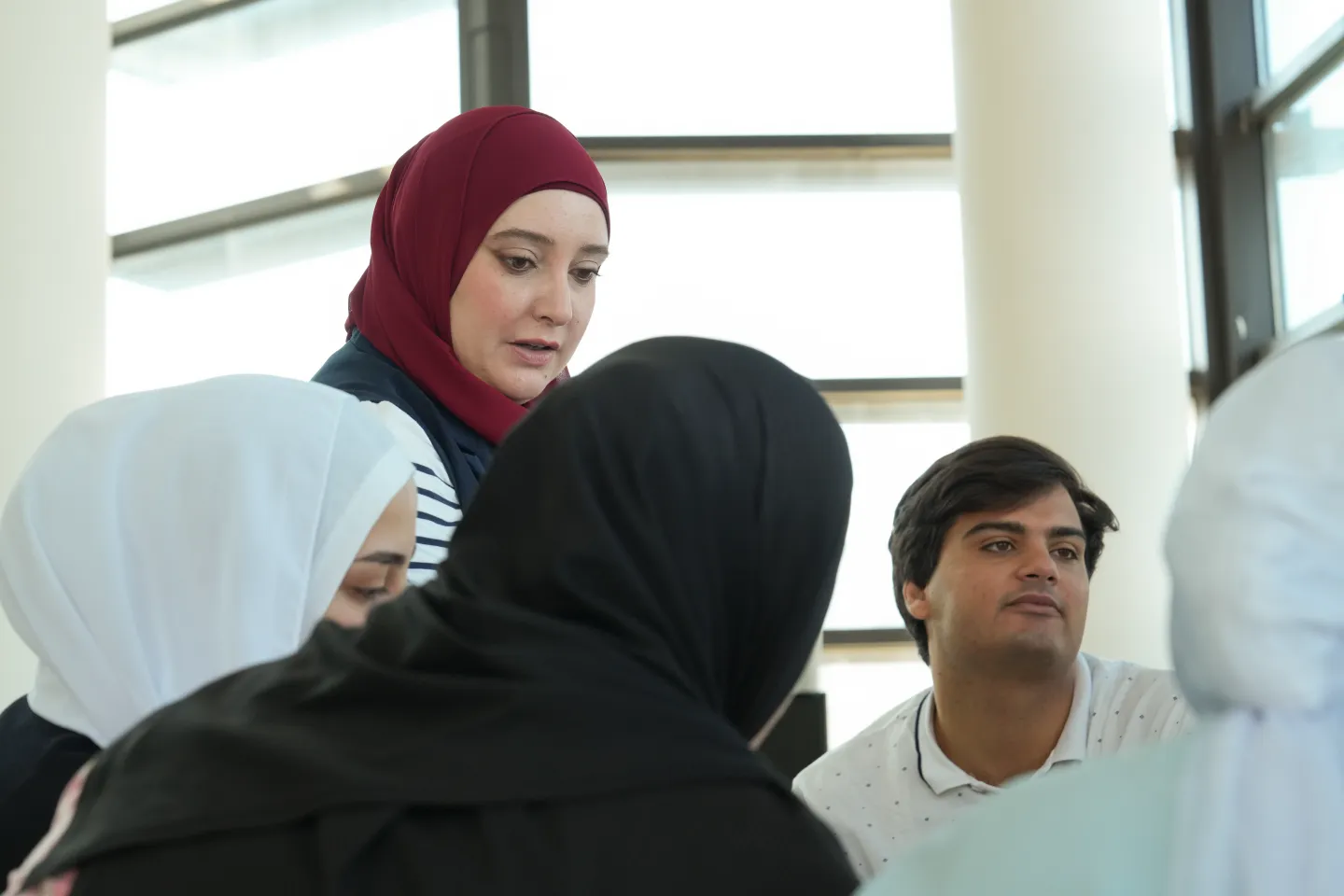
Co-facilitator Yasmine Al Sayed leads an exercise with young Club members in Tripoli.
“This intervention is vital because it bridges the gap between education and labour market needs,” she said. “It offers what the education system in Lebanon often lacks: practical job-search skills that are not taught in schools.”

Job Search Clubs in Lebanon engage both Lebanese and Syrian participants, focusing on building skills that open pathways to employment despite restrictions in the labour market for refugees. The programme emphasizes transferable competencies that participants can apply in open sectors, online work, or even if they choose to return to their home country, ensuring long-term relevance and adaptability.

Alongside classroom sessions, “Khuta” organizes study tours, roundtables, and job fairs to connect job seekers directly with employers. These activities allow participants to visit companies, learn about workplace realities, and exchange contacts, while also encouraging collaboration with small local businesses to expand employment prospects at the community level.
Related content

ILO PROSPECTS Lebanon supports social enterprise initiatives in Lebanon

ILO project provides financial support and education for Lebanon’s agricultural sector

Our impact, Their voices
Brighter light and higher hopes: Solar energy systems keep technical schools running in Lebanon

International Youth Day
Youth highlight importance of skills development for a better future
Relevant projects

ILO-Netherlands Partnership
Partnership for improving prospects for forcibly displaced persons and host communities (PROSPECTS) in Lebanon
Programme
Partnership for improving prospects for forcibly displaced persons and host communities (PROSPECTS)