

Social protection in crises: National systems must lead the way
Wilton Park discussions call for country-led social protection systems as the foundation for stability in fragile and conflict-affected settings.
9 March 2026
GENEVA (ILO News) – National leadership in social protection must be the default, even in the most fragile and conflict-affected contexts. This was the central message emerging from a high-level gathering at Wilton Park in February. The event convened national leaders, international financial institutions, bilateral partners, humanitarian actors, climate funds and other key stakeholders to accelerate action on social protection in crises.
The three-day event, titled “Social protection in fragile and conflict-affected settings”, built on the recommendations of the High-Level Panel on Social Protection in Fragile and Conflict-Affected Settings (FCAS) and focused on the nine recommendations of the Catalytic Agenda, which place national systems, domestic financing and localisation at the heart of crisis response, with people and rights at the centre.
With a spotlight on Somalia and Syria, participants explored how financing solutions and humanitarian–development transitions can strengthen social protection systems in fragile settings, supporting stability, resilience and sustainable development.
Operationalizing the Catalytic Agenda at country level: Syria and Somalia
Syria’s transition following the fall of the Assad regime in December 2024 presents both profound risks and historic opportunities. Participants agreed that social protection can serve as a cornerstone of early recovery and as a foundation for long-term peace and stability.
However, timing and approach are critical. Social protection must be rights-based, grounded in broad national dialogue and supported urgently.
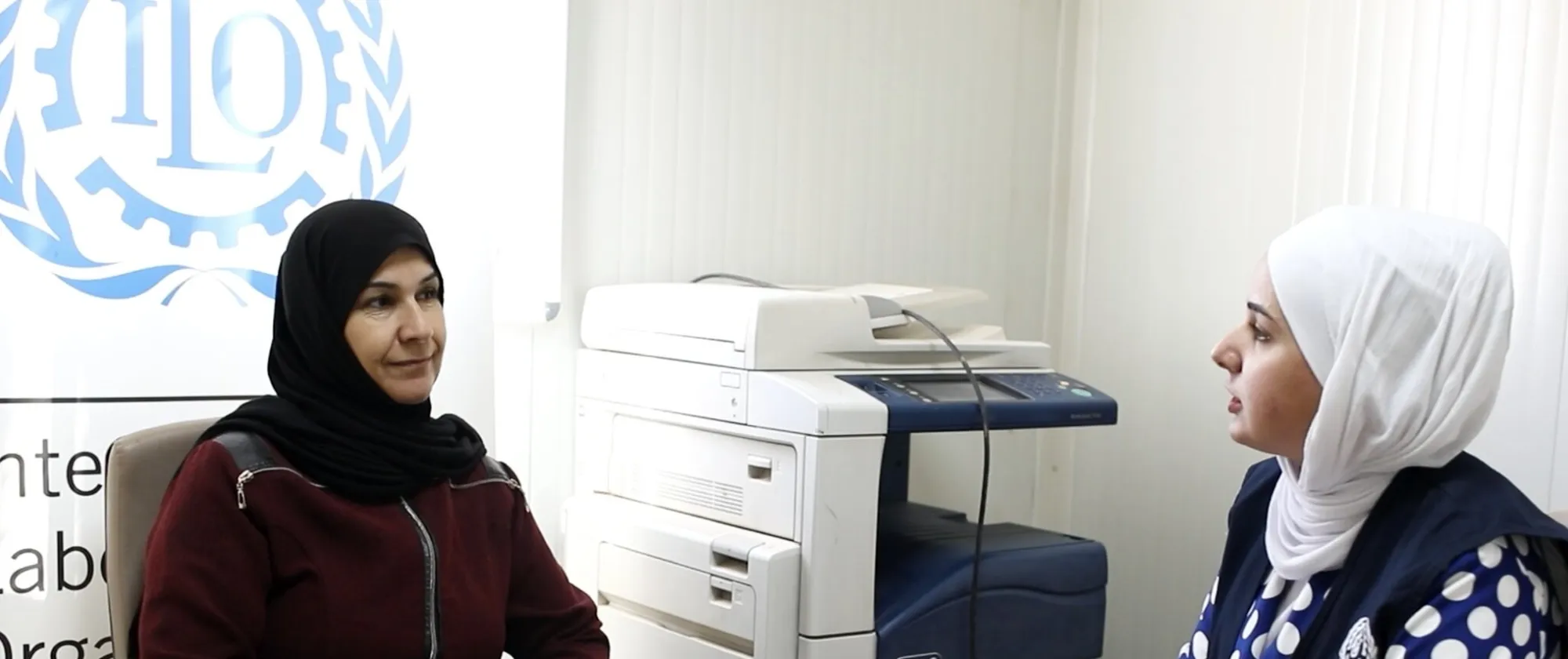
Discussions echoed the ILO’s ongoing work in Syria, where the Organization supports the National Social Security Institute and the Ministry of Social Affairs and Labour in partnership with UNICEF, WFP and the World Bank, among others.
Despite years of conflict and even regime collapse, Syria’s contributory social insurance system has continued functioning. Strengthening it could offer a sustainable form of long-term protection while embedding solidarity and collective responsibility during the country’s transition.
In Somalia, the Deputy Prime Minister chairs social protection committees and working groups, a signal of strong national ownership. Participants highlighted the importance of similar top-level political backing in Syria to ensure reforms succeed.
Bottom-up public debate will be essential for rebuilding trust and shaping responsive programmes. A renewed culture of social protection – understood and owned by citizens – can lay the groundwork for a new social contract in which governments are accountable to their populations.
Coordinated financing and humanitarian cash
While humanitarian cash transfers remain vital, they should act as a ramp toward nationally led systems. Clear transition plans must be established from the outset, with investments in government capacity and leadership made immediately. In fragile contexts, windows for demonstrating responsiveness can close quickly.
Social protection can be a stabilisation mechanism for Syria. It allows governments to rapidly and visibly support their populations. But challenges also lie ahead: limited data, constrained financing and recurrent shocks demand coordinated action and sustained commitment.
Fragmented aid can overwhelm newly formed governments. Development and humanitarian actors were urged to align behind coherent, government-led approaches. Donors were encouraged to consider pooled, multi-year financing mechanisms to provide predictability for governments and citizens alike.
Regional action to shift the system
Beyond country-level action, discussions highlighted the role of regional and global actors in shaping incentives, accountability frameworks and financing structures.
In the Arab States, an interagency initiative has been underway for over a year, culminating in the formation of a regional group dedicated to advancing recommendations from the Catalytic Agenda. The ILO plays a central role as a social protection and development actor and as custodian of international social security standards.
The regional effort focuses on supporting national systems as the default, planning transitions from the outset and demonstrating practical “proofs of concept” to show how nationally led approaches can succeed in crisis contexts. In protracted crises humanitarian needs often converge with long-term poverty and vulnerability. These is a need to communicate clearly to donors about existing national social protection systems and how they can serve as entry points for reform and expansion.
Reaffirming international standards
Many elements of the Catalytic Agenda – state leadership, social protection as a strategy for peace, resilient core systems and local capacity – are deeply rooted in international social security standards, including ILO Convention No. 102 and Recommendation No. 202.
International standards affirm the “primary responsibility of the state” in guaranteeing social protection, which is one of the most powerful instruments to advance social justice. This is not simply an institutional preference, but a recognition that social protection builds solidarity, strengthens the social contract and fosters the trust necessary for countries to move from crisis toward lasting peace and development.
Social insurance and pension schemes frequently continue operating even during shocks or in protracted crises. International actors must resist the temptation to bypass these systems in favour of parallel humanitarian delivery structures and instead, build on what exists: reinforcing national institutions as the foundation for sustainable, shock-responsive systems that are embedded in social contracts and owned by the populations they serve.
Related content

Topic portal
Social protection

Topic portal
Crisis situations and response

Social protection in crises: Why we need a reset