

Regional knowledge sharing event calls for stronger labour compliance and productivity in construction
SADC stakeholders unite to scale decent work and productivity in construction through proven solutions and regional collaboration.
10 March 2026
Johannesburg, South Africa (ILO News) - Governments, employers, workers’ organisations and business development service providers from across the Southern African Development Community (SADC) gathered in Johannesburg for the Decent Work in Construction Regional Knowledge Sharing Event, hosted by the International Labour Organization (ILO) in partnership with the Southern African Development Community (SADC) and regional partners.
This high-level event marked the culmination of three years of implementing the Decent Work in Construction Project in Mozambique, South Africa and Zimbabwe. It provided a platform to showcase tested models, share lessons learned, and identify pathways to scale proven approaches across the region.
Setting the tone from risk to resilience
The opening session featured a dialogue, sharing perspectives from a small enterprise owner and a workers’ organisation representative. The session framed the central challenge facing the sector: where speakers shared their journey in the construction sector, and how the project helped them move from risk to resilience.
As highlighted during the discussions, ''the construction sector is deeply fragile for many workers,” despite being central to economic growth and infrastructure development. High accident rates, informality and weak compliance systems continue to undermine both worker protection and enterprise performance.
In the keynote address, Jens Dyring Christensen, Senior Enterprise Development Specialist at the International Labour Organisation, highlighted the severe challenges facing the construction sector. He emphasized that the sector is “deeply fragile for many workers,” noting that many jobs are temporary, high-risk, low-paid and often highly informal, contributing to poor working conditions and vulnerabilities for workers.
Compliance that works is compliance that improves business performance,” participants heard. “When workers are protected, morale improves, accidents decrease and labour productivity rises.
The Productivity Payoff
A dynamic panel discussion themed “The Productivity Payoff: Why Labour Compliance Makes Business Sense” brought together Business Development Service providers and SMEs that had received project-supported training. The session demonstrated how enterprises improved compliance to labour laws, reduced risks, improved workforce stability and enhanced competitiveness.
Participants emphasised that compliance should be supported through practical advisory services, communication strategies and incentives particularly for small enterprises operating in challenging market conditions.
Ask Me Anything: Peer Learning in Action
The interactive AMA (Ask Me Anything) Studio allowed country implementers to respond directly to questions from participants. This open exchange unpacked what worked in practice from labour inspection support to communication campaigns and enterprise-level advisory services and explored how these lessons could be adapted across the region.
Scaling What Works
A major milestone of the event was the introduction of the Decent Work and Productivity Toolkit, a practical guide to support governments, inspectors and enterprises in promoting labour compliance while strengthening productivity.
The event concluded with a shared regional call to action, encouraging SADC Member States to scale proven models and strengthen collaboration across institutions.
As infrastructure investment accelerates in Southern Africa, participants reaffirmed a central message safer workplaces and stronger labour systems are essential foundations for resilient, competitive construction sectors.
The event spotlighted structural barriers affecting the sector across SADC countries, including limited enforcement capacity, gaps in labour inspection systems, and challenges faced by small and medium enterprises (SMEs) in meeting compliance requirements.
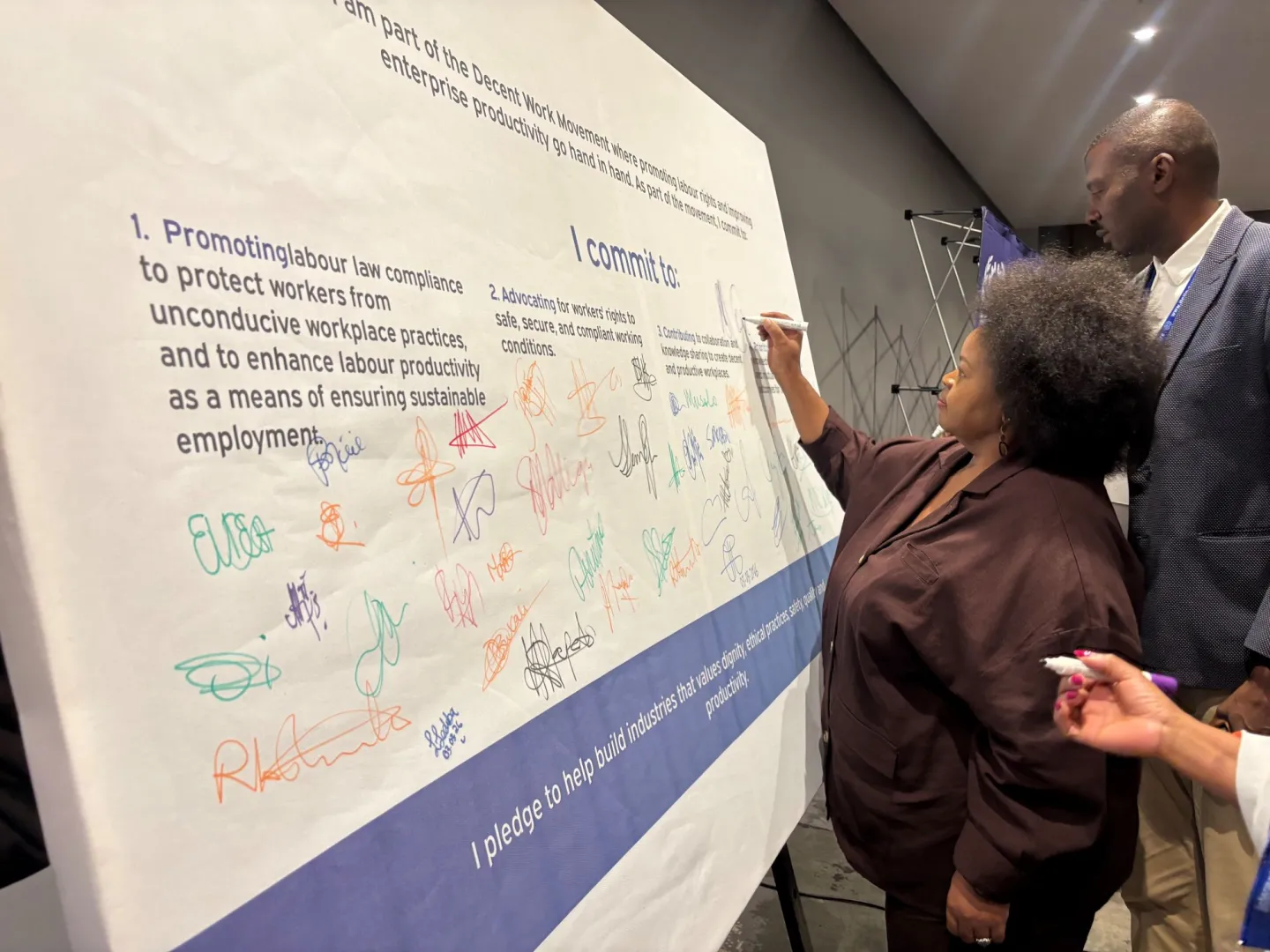
Concluding the event, all 16 SADC Member States represented reaffirmed their commitment to advancing decent work in the construction sector. Each country formally endorsed the initiative by signing the Decent Work in Construction Pledge, signalling strong regional ownership and collective determination to translate dialogue into concrete national action.
Relevant projects

Decent work and labour rights in Southern Africa’s construction sector

A Systemic Approach to Decent Work and Labour Rights in Southern Africas Construction Sector