

Voices of Action - Child labour
In Peru, a mother’s decent job becomes her daughter’s path out of child labour
Guadalupe, a 15-year-old girl from Lima, managed to move away from child labour, a reality that still affects more than 600,000 children in Peru. Her story shows how the ILO’s strategies, from promoting decent work for adults to strengthening community-based solutions, can help break the cycle.
5 February 2026
LIMA (ILO News) – Fifteen-year-old Guadalupe used to wake in the freezing dark around 3:00 a.m. to help her mother prepare stuffed potatoes and sandwiches for sale on Jirón Contumazá in central Lima, the capital of Peru.
Wrapped up against the cold, still half asleep, she grabbed the bags and began peeling potatoes until sleep almost overtook her again. After finishing, she stepped into streets where alcohol abuse and homelessness were common, always fearing that someone might steal their money or take her merchandise.
Her life was made up of selling chicken sandwiches, hamburgers, coffee and hot chocolate in the mornings until 12:30 p.m., after which she would go to school until 7:00 p.m. She then headed home, where she would work on her homework. She had almost no time to rest.
Guadalupe’s story is captured in Guadalupe’s Transition from Street Labour to the Library, a short film commissioned by the International Labour Organization (ILO) as part of its Voices of Action global series. The series features work by ILO-supported journalists producing impactful stories on child labour from around the world and was released ahead of the 6th Global Conference on the Elimination of Child Labour, to be held from 11 to 13 February 2026 in Marrakech, Morocco.
The film, directed by journalist Elizabeth Salazar, explores the factors that can open pathways out of child labour in a city facing complex social challenges.
Library refuge
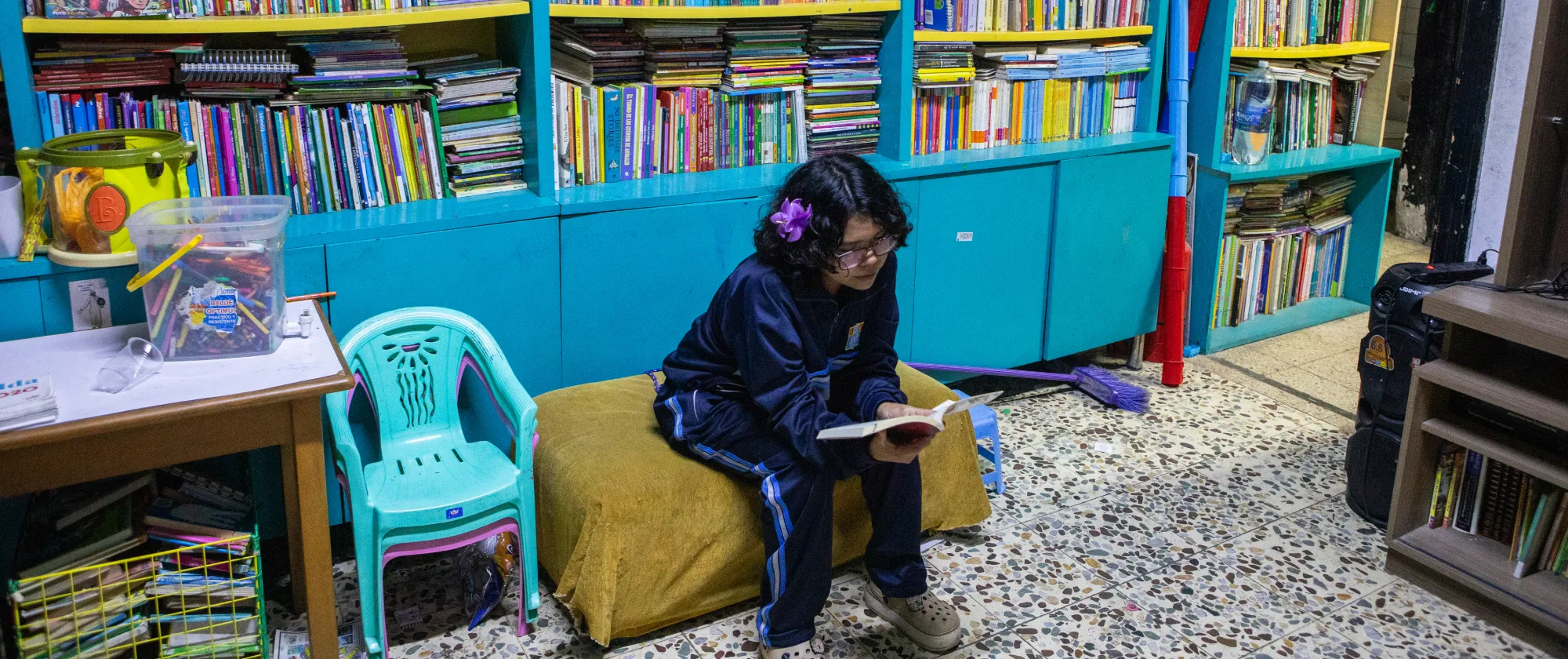
Even during those exhausting days, Guadalupe found brief moments of relief at the neighbourhood library. With little free time between work, school and household responsibilities, she would stop by whenever she could. Soon she was painting, reading, learning, and slowly discovering a space that allowed her to imagine a different life path and where studying could be her priority.
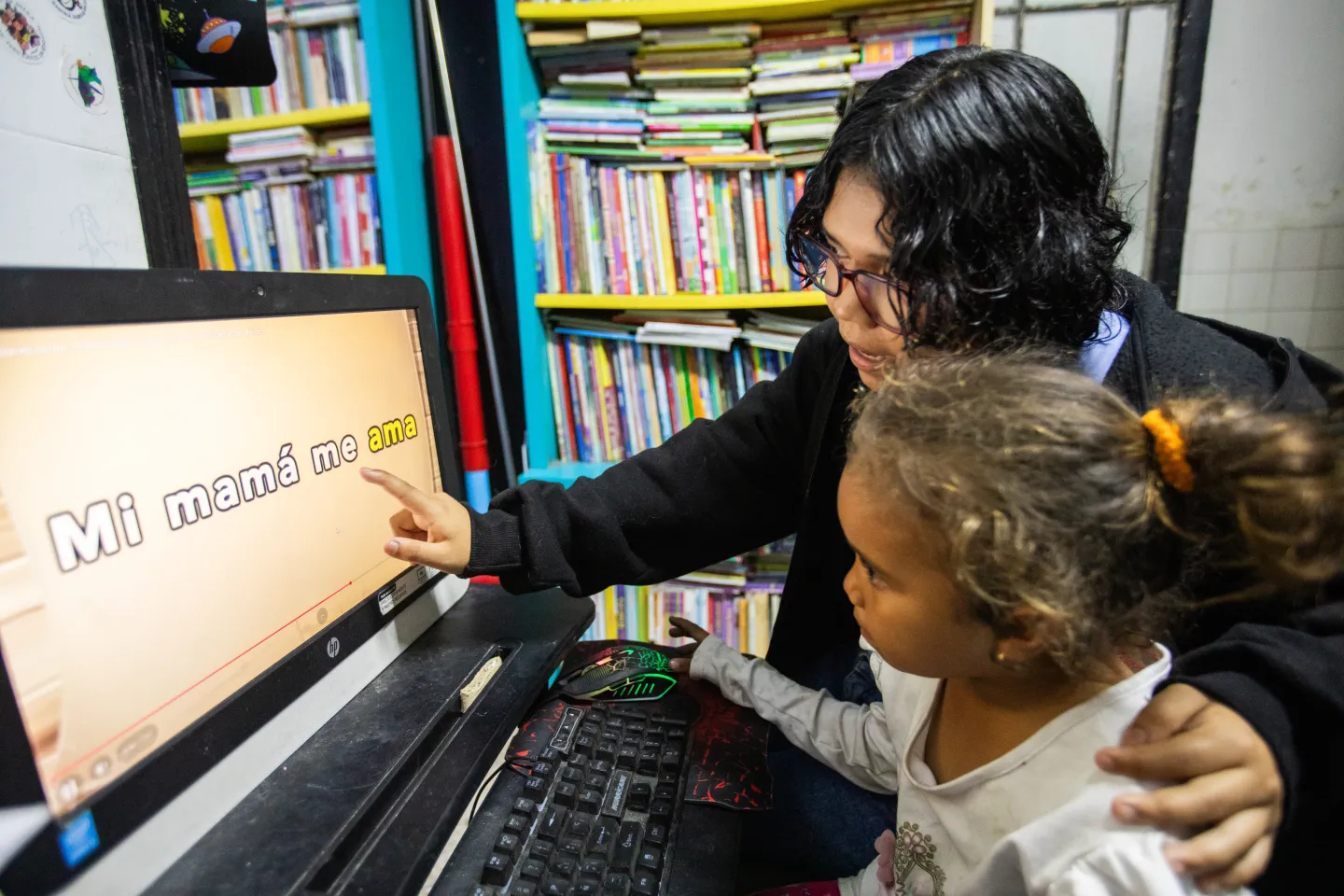
What began as a simple idea to give local children books quickly became a space where they also learned to read and write, a haven in a neighbourhood facing a range of social challenges, including sex work, street drinking, fighting and drug use.
The turning point
The real turning point in Guadalupe’s life came when her mother, Liliana, found a job with a fixed salary and regular hours as a domestic worker. For the first time, the family no longer depended on selling food in the early hours of the morning to make ends meet, and Guadalupe no longer needed to accompany her mother to work before dawn.
The pre-dawn shifts and the constant strain of juggling school, work and rest are finally behind her. She can now attend school on a regular schedule, sleep properly and reclaim time that had never truly been hers.
The library also took on a new meaning in Guadalupe’s life. What had once been a brief escape became a central part of her daily routine. She can now embrace what she discovered she loved most: reading, writing and spending time with others.
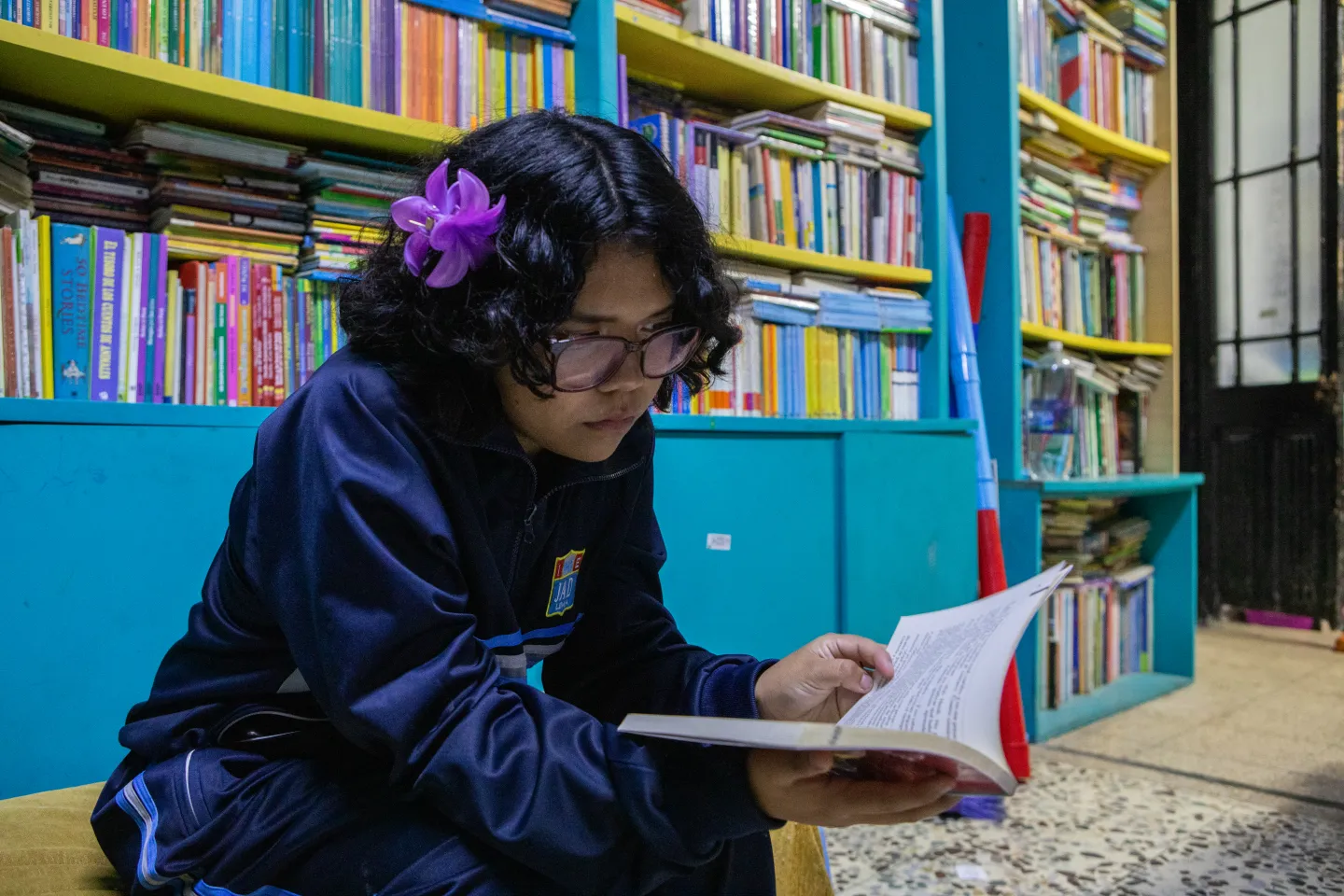
With more time to herself, Guadalupe now comes to the neighbourhood library to read and enjoy learning — something that only became possible once early-morning work was no longer part of her daily routine.
Horizons ahead
Today, sitting among the books that helped shape her aspirations, Guadalupe says the library made her think in a very different way and insists that study must come first. She dreams of becoming a journalist because she loves talking to people and asking them questions, and she feels confident in her writing.

At the neighbourhood library, Guadalupe spends time with other children and the people who run the space, imagining new possibilities now that her mother has stable work and she no longer has to work on the streets.
While Guadalupe was able to get out of child labour, there are today 671,987 girls and boys in Peru who are still in child labour. They make up 8.8 per cent of all children aged 5 to 17 in Peru, with rates reaching 24.5 per cent in rural areas compared with 4.3 per cent in cities, according to data from Peru’s National Household Survey (ENAHO 2024).
But the country continues its efforts to end child labour. Over the past decade, Peru has contributed to regional and global efforts through territorial interventions, interinstitutional coordination, political commitment, private sector engagement and the participation of civil society.
This ongoing reality comes into focus ahead of the Sixth Global Conference on the Elimination of Child Labour, which will highlight how access to decent work for adults is key to addressing child labour, while community spaces such as libraries play a vital role in creating protective environments and expanding opportunities for children.