

Informal economy
New ILO report highlights pervasive informality in the Viet Nam wood industry
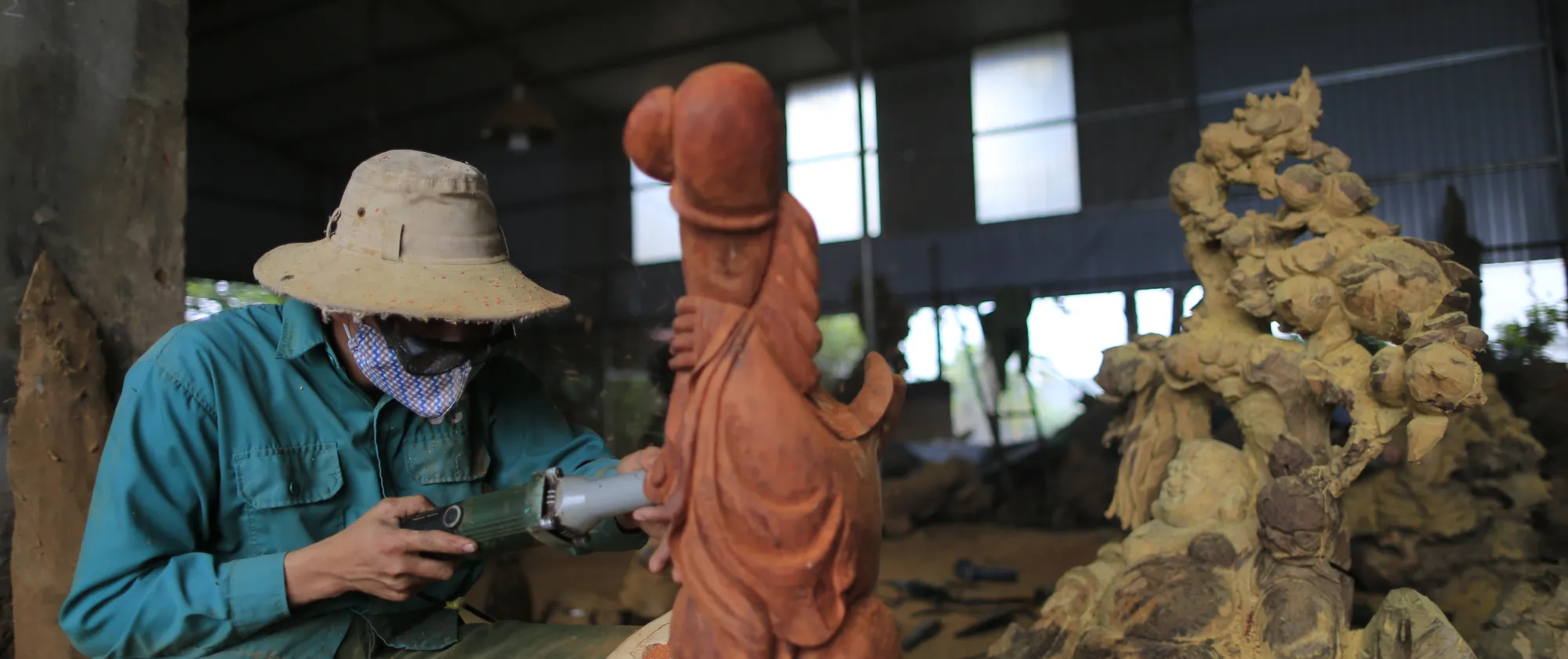
A majority of workers in the wood industry, a major export sector for Viet Nam, are employed informally sometimes within formal enterprises due to inadequate compliance measures and other factors.
17 September 2024
HA NOI (ILO News) - Wood and wood products rank among Viet Nam's top exports, following electronics, footwear, seafood, and textiles. In 2021, despite the COVID-19 pandemic, the wood industry’s exports totalled $15.9 billion, surpassing the export target by 20 percent.
Workers in Viet Nam's wood industry without labour contracts are prevalent across both registered and unregistered (formal and informal) enterprises. Notably, these "freelance" workers make up over half (57 per cent) of the total workforce in the surveyed areas, a new report from the International Labour Organization (ILO), has found.
Notably, widespread informal employment in formal wood industry establishments results, in part, from shortcomings in regulatory enforcement.
Various disadvantages
Workers at production units employed as freelancers are responsible for purchasing, peeling and drying of wood. Most of them reported their main occupation as “farming”. They supplement their farming income by working part-time during the off-season from agricultural harvests.
When employed under informal arrangements, workers face various disadvantages.
Many do not have social insurance or guarantee of full social insurance contributions by the employer. A special field survey conducted in Binh Duong, Dong Nai and Bac Giang for the ILO report showed that 7.7 per cent of workers do not receive social insurance contributions from employers. For those with social insurance premiums paid by their employer, many were not fully paid as prescribed by law.
Also, compliance with regulations on labour contracts is another concern. Many workers in formal enterprises in the wood industry do not sign labour contracts directly with the employer.
Rather, these workers often sign contracts with employment service companies and are sent to temporarily work at different enterprises. Given the triangular nature of the employment relationship and the short-term nature of engagement, this group of workers is not covered by social insurance benefits, neither by the employment service company nor the engaging enterprises.
In addition, employers regularly use short-term labour contracts with workers in the wood industry. The report found that around 6.6 per cent of formal sector workers were employed without a labour contract.
Moreover, the Labour Force Survey conducted by the General Statistics Office showed that in 2021, only 13.9 per cent of formal sector workers had indefinite labour contracts, while the remainder had a short-term labour contract.
In addition, workers face different issues relating to excessive overtime, extended probationary period, existence of home-based work in the export supply chain, sub-contracting practices linked to high informal employment, gaps in occupational safety and health, and lack of collective representation and voice.
Comprehensive solutions need to be implemented
The ILO report suggests that measures that help facilitate the transition to formality in the wood industry need to be fostered.
These include measures to enhance workers' voice such as establishing tripartite mechanism
for formalization. The Government should establish a mechanism of expanded tripartite social dialogue to discuss and coordinate the transition from the informal to formal economy.
In addition, promoting sectoral collective bargaining as a means to expand formal working conditions for informal workers is critical. In this regard, promoting industrial collective bargaining requires the assertive role of trade unions.
Strengthening labour dispute mechanisms is also needed to support informal workers.
Additionally, the Government, employers and trade unions should work towards eliminating exclusions of own-account workers in the law. Actively promoting development of
legislation that includes the right to organize, bargain collectively and participate in the process of making relevant policies and laws for own-account workers and informal workers is key.
In addition, the Government should promote the establishment of cooperatives and enterprise registration. Given that most workers in informal employment, including those within the formal sector, are unaware of their legal rights, it is crucial to address this issue through awareness raising.
Furthermore, the report recommends that the Government should enhance the effectiveness and efficiency of the labor inspection regime to prevent the informalization of employment within the formal sector.
“The transition from the informal to formal economy can help Viet Nam to eliminate inequality of outcomes between the informal and formal economy and the race to the bottom of lowering workers’ standards in the formal sector, in particular, as well as in the formal economy, in general,” the report says.
You may also be interested
Formalization
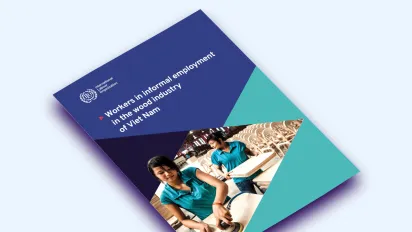
Workers in informal employment in the wood industry of Viet Nam
Country portal
Viet Nam
Relevant projects
Ship to Shore Rights South East Asia - Indonesia

Migrant workers
Ship to Shore Rights South East Asia (SEA)