


International youth day
Measuring what matters: NEET vs youth unemployment
Today, hundreds of millions of young people worldwide are NEET: Not in Employment, Education or Training. Drawing on the latest ILO data, Niall O’Higgins, senior employment research specialist, explains how the NEET rate offers a more accurate indicator of the barriers young people face in entering the labour market.
12 August 2025
-
 Niall O'HigginsILO senior employment research and technical specialist
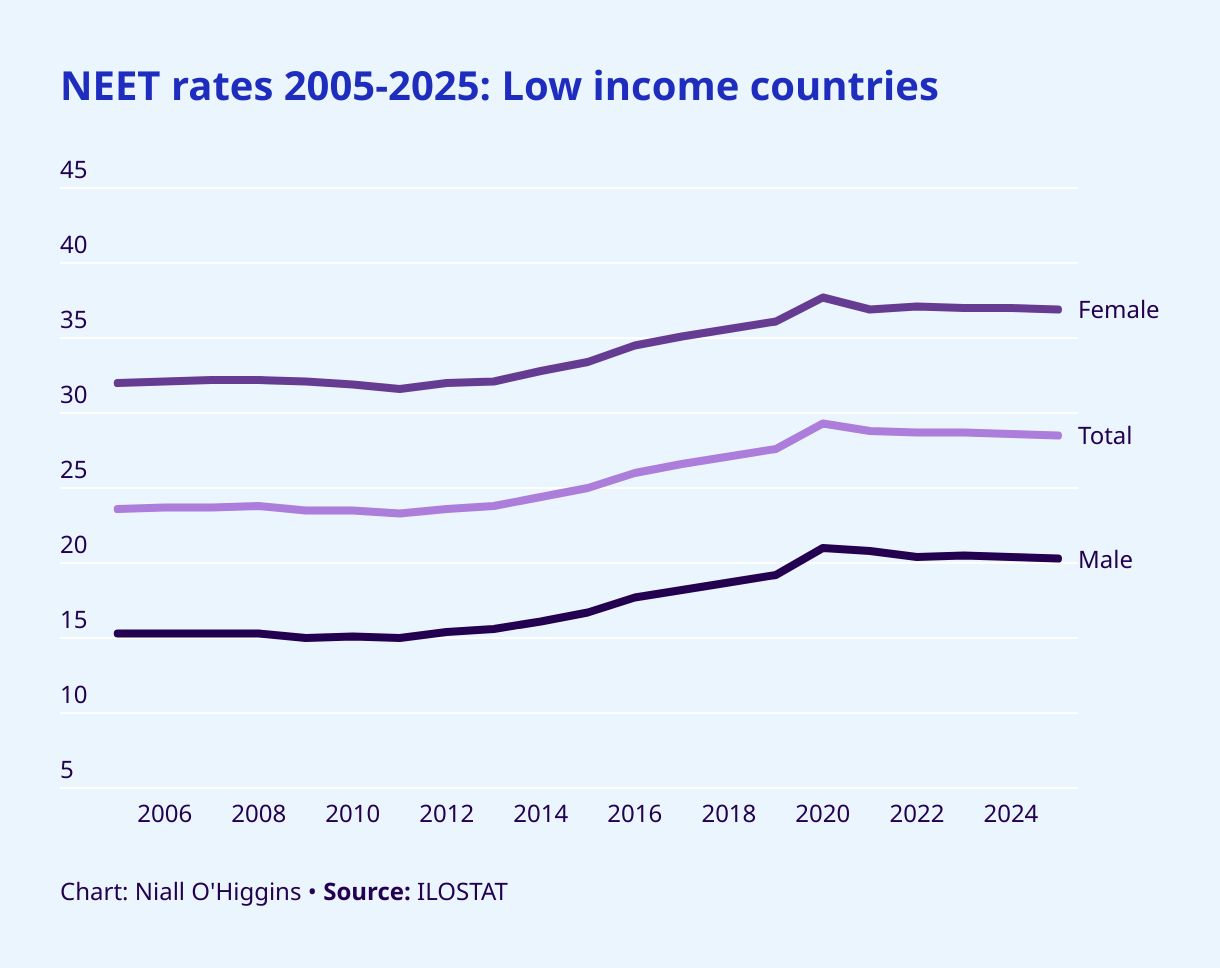
The ILO estimates that in 2025 around 262 million – or one in four - young people aged between 15 and 24 - are neither employed nor studying: they are, in other words, NEET[1] (Not in Employment, Education or Training). So, what, you might be asking? Well for one thing, the UN adopted substantially reducing the NEET rate as SDG target 8.6 in 2015. In other words, the NEET rate is the way in which progress towards achieving the effective integration of young people into the world of work is to be measured internationally. Using this yardstick, however, progress to date has been rather modest. According to the ILO’s latest Global Employment Trends for Youth, 2024 edition, 110 countries – where a little over one half of the world’s youth live - are on track to fulfil the SDG goal.[2] In contrast to rest of the world, low-income countries as a whole have experienced a sustained increase in NEET rates in the years following the COVID-19 pandemic (figure 1).
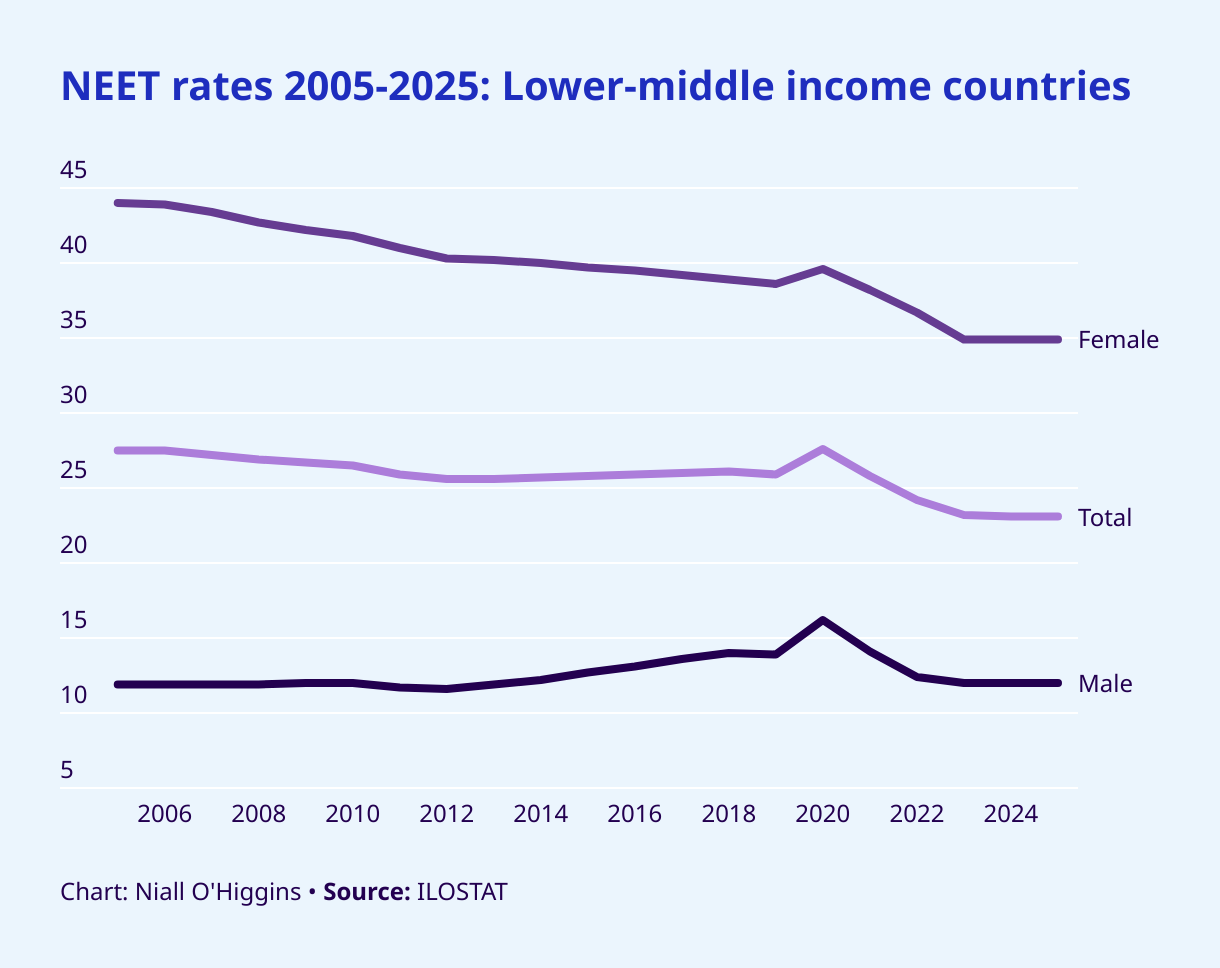
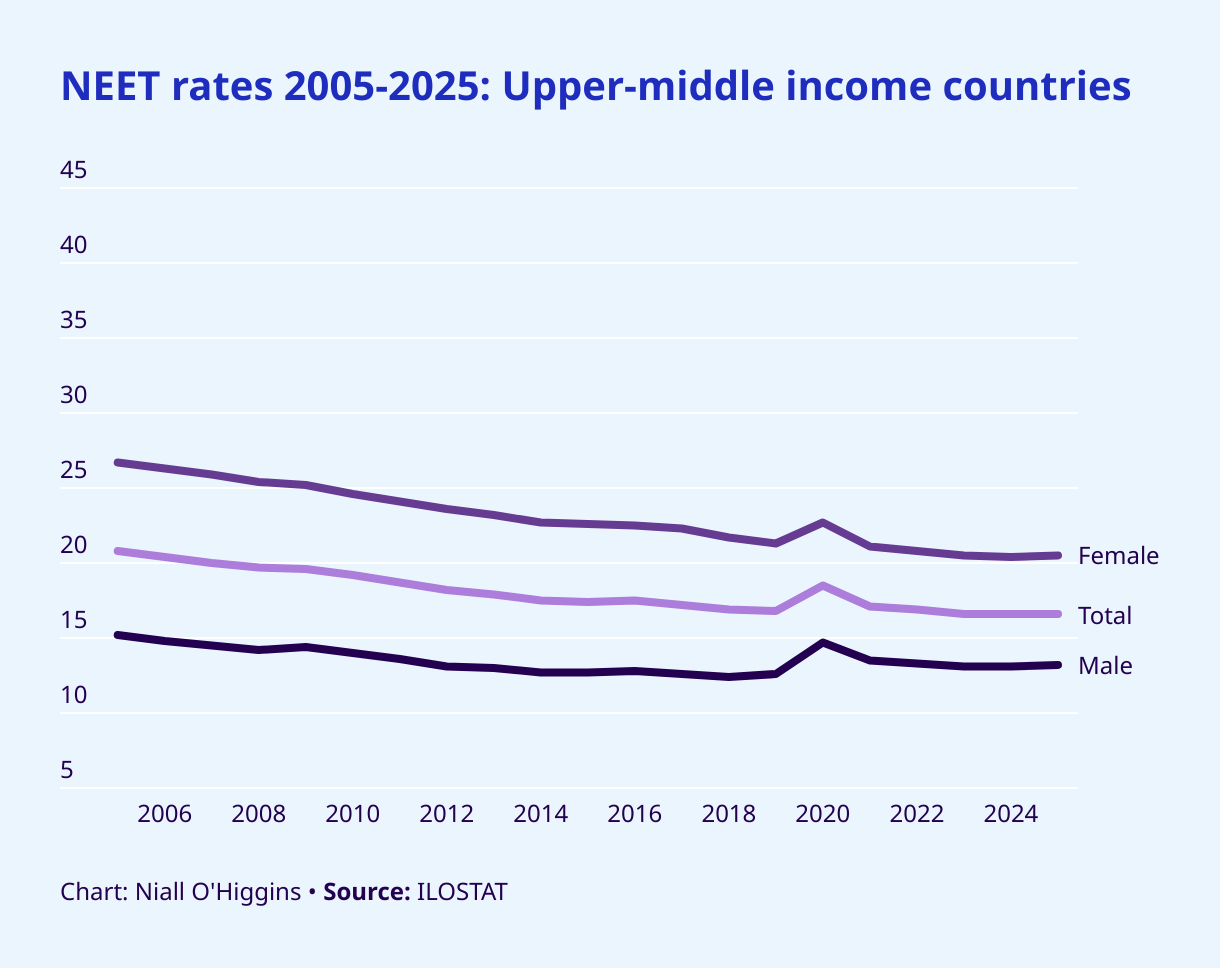
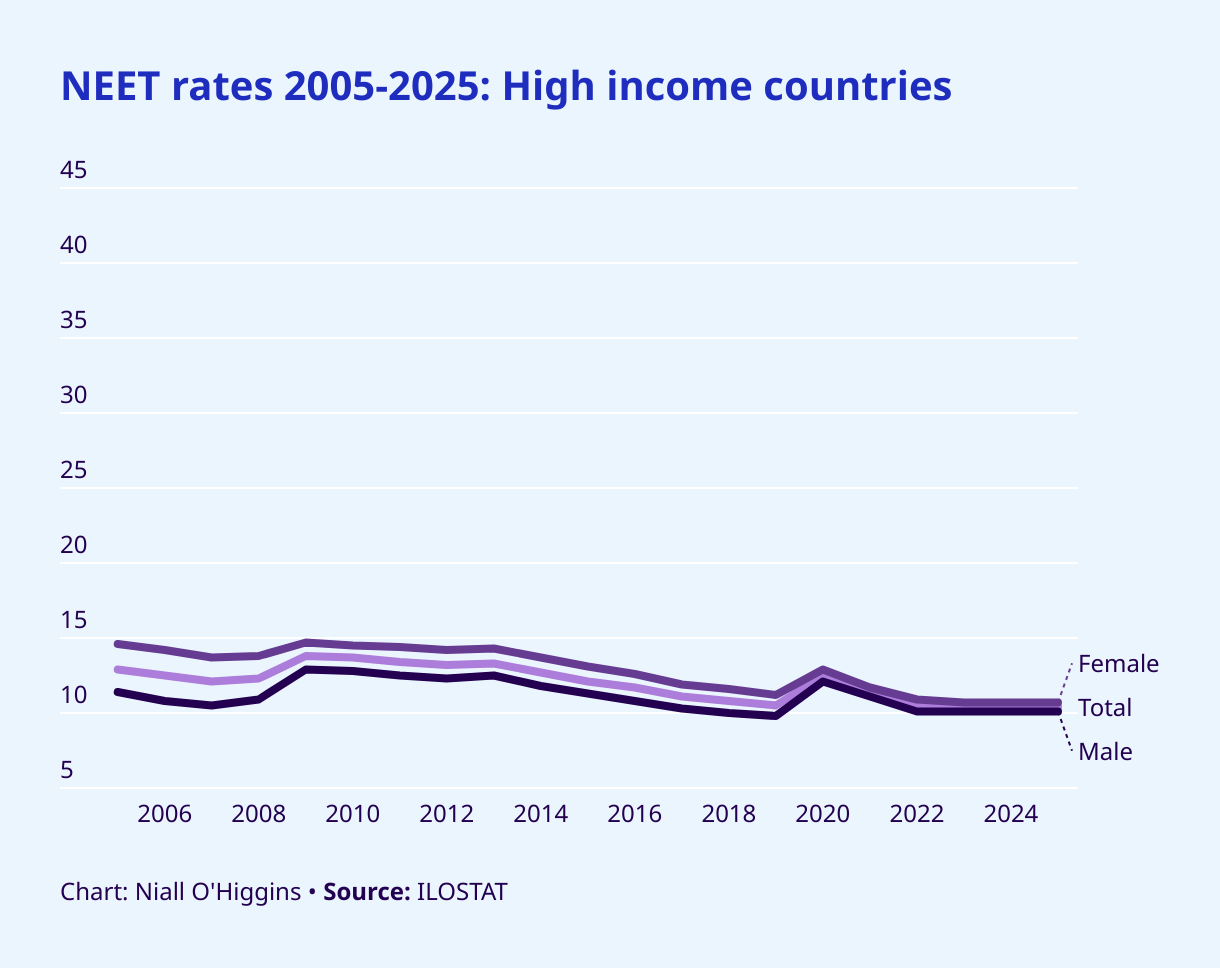
Figure 1: NEET rates by sex by country income group, 2005-2025
|
|
|
|
But who are the NEETs? Young NEETs comprise the unemployed – or rather, all young unemployed people who are not at the same time in education - as well as a much larger group of young people who do not have a job and are not engaged in any formal learning activity but who are also, for one reason or another, not actively looking for work.
What’s so neat about NEET?
Whilst the NEET rate is by no means a perfect indicator of the health of youth labour markets – it is hard to imagine a single indicator which is or could be - it is arguably more fit for purpose than the youth unemployment rate which was previously used (and all too often still is).
To start with, the share of NEETs in the population is a more informative indicator of the scale of the youth employment challenge. Young NEETs far outnumber the young unemployed. There are around three young NEETs who are not unemployed to every one that is. Most of these are young women and most would like to work but are not actively looking for it either because of the lack of availability of jobs (discouraged workers) or because other obstacles, such as care responsibilities, stand in the way of their participation in the labour market.
Moreover, a reduction in the NEET rate can be achieved by increasing employment or educational participation; both essentially positive developments. This is not true of youth unemployment. If educational participation increases the youth unemployment rate can actually increase as a direct result.
Even more importantly, NEET status is a more reliable indicator of vulnerability than unemployment is. In contexts where access to social protection is limited or absent, young people can only afford to be unemployed for any length of time whilst they search for reasonable job opportunities if their families have resources to support them. The poorest and most vulnerable young people will not have the luxury of doing so. Even in high income countries young NEETs outside the labour market are demonstrably more at risk of long-term economic and social exclusion, especially young women with care responsibilities.
NEET status is a more reliable indicator of vulnerability than unemployment is.
The relation between NEET status and vulnerability amongst young people is also related to some of its characteristics which stand in stark contrast to youth unemployment: for example, typically in low- and middle-income countries (and often in high income ones too):
- NEET rates – but not youth unemployment rates - are typically higher in rural areas than in urban ones;
- NEET rates – but not youth unemployment rates – fall with educational attainment, and,
- NEET rates – but not youth unemployment rates – are (often much) higher amongst young women than amongst young men.
Recent developments have served to further strengthen the association of NEET with vulnerability. With the revision of international labour statistics, to be employed one must now be paid. This means that young people who are in engaged in unremunerated work, such as subsistence agriculture, are not defined as being in employment and consequently, if they are not studying will be identified as NEET.

Some implications for Youth Employment Policy
In Europe, the importance of broadening the focus of youth employment policy to target all young NEETs was recognised with the introduction of the Youth Guarantee programme in 2014 and further reaffirmed, reinvigorated and expanded in 2020.
This approach has also increasingly been seen as the way to go also outside EU countries and, often with ILO support, moves to incorporate the Youth Guarantee approach have been developed in non-EU countries, for example in Central and Eastern Europe and in Southern Mediterranean countries.
The shift away from an exclusive focus on unemployed young people and towards a broader approach means, amongst other things, the recognition that the obstacles facing young people in their transition from school-to-work are not purely labour market related. For sure, the basic problem facing young people is the lack of adequate job opportunities available to them; however, it’s also important to address the specific challenges young people face in negotiating this transition – for example, barriers to young women’s entry into the labour market; the additional barriers faced by young people with disabilities and so on.
Today's young people navigate a difficult job market; lack of availability of jobs and lack of job security continue to be key challenges. Recognition of young NEETs as the appropriate target group for youth employment policy represents one small – but crucial - step in the right direction.
* The views and opinions expressed in this article are those of the author and do not necessarily reflect the official policy or position of ILO.
About the author
-
Niall O'HigginsILO senior employment research and technical specialist
Niall O'Higgins is Senior Economist in the ILO's Employment Analysis Unit. His main research interests cover various aspects of labour and experimental economics. Previously, Senior Researcher in the ILO's Youth Employment Programme, he is one of the main authors of the ILO's biennial Global Employment Trends for Youth.
Related content

Portal
Employment Policy Action Facility

Employment in Focus blog series
Blogs on employment and labour market

Decent work, brighter futures
Global Employment Trends for Youth 2024

Topic portal
Youth employment