


Spotlight Interviews with Co-operators
Measuring the social and solidarity economy: Insights from Costa Rica’s experience
Mario Durán Fernández, National Director of Social and Solidarity Economy at the Ministry of Labour and Social Security, shares insights on challenges and key aspects in advancing reliable and comparable statistics on the social and solidarity economy, drawing on the experience of the Costa Rica Social and Solidarity Economy Observatory.
14 April 2026
-
 Mario Durán FernándezNational Director of Social Solidarity Economy at the Ministry of Labour and Social Security of Costa Rica
Could you briefly introduce the Costa Rica Social and Solidarity Economy Observatory?
In Costa Rica, there were previously no consolidated instruments to provide comprehensive information on the different organizations that make up the Social and Solidarity Economy (SSE). This gap limited the visibility of the SSE, as its contributions remained subsumed under other economic classifications, despite its significant social and economic impact.
In response, the Observatory of the Social and Solidarity Economy of Costa Rica was created, with the aim of generating, systematizing, and disseminating strategic information to strengthen public policy, decision-making, and the recognition of the sector.
With the enactment of Law No. 10859 on Socio-productive Organizations of the Social and Solidarity Economy, a more robust legal and institutional framework has been established, formally recognizing the diversity of SSE organizations and mandating mechanisms for their identification, registration, and monitoring. Within this context, the Observatory plays a key role as a national instrument for the integration and analysis of data on SSE entities.
The Observatory compiles and systematizes information on organizations recognized under Law No. 10859 and its regulatory framework, building on administrative records from the Department of Social Organizations of the MTSS, the National Registry, and other relevant institutional sources. This contributes to improving the visibility, measurement, and understanding of the sector’s economic and social impact in Costa Rica.
What are some of the key insights and takeaways from the Costa Rica Social and Solidarity Economy Observatory?
The data generated by the Observatory is fundamental for the operation and decision-making of organizations within the SSE, as well as for civil society. It enables a better understanding of the impact of initiatives, supports more efficient resource management, facilitates the evaluation of results and promotes their continuous improvement. In addition, it helps to strengthen and position the SSE at both national and international levels.
The Observatory contains data on the total number of SSE entities in the country, the number of people affiliated with these entities, their location and their type, among other elements.
In Costa Rica, in line with the Decree No. 39835, the SSE comprises a diverse range of legally recognized entities, including cooperatives, solidarist associations, producer and worker associations, community-based organizations, community water management associations (ASADAS), worker-owned companies (sociedades anónimas laborales), foundations engaged in economic activities, and Centros Agrícolas Cantonales, as well as other entities established under specific legislation that operate in line with SSE principles.
According to the Observatory’s current data, as of March 2026, Costa Rica counts 27,453 SSE entities, with a total membership of 1,606,158. Therefore, in a country of just over five million inhabitants, it can be estimated that more than 30 per cent of the total population is affiliated with SSE entities.
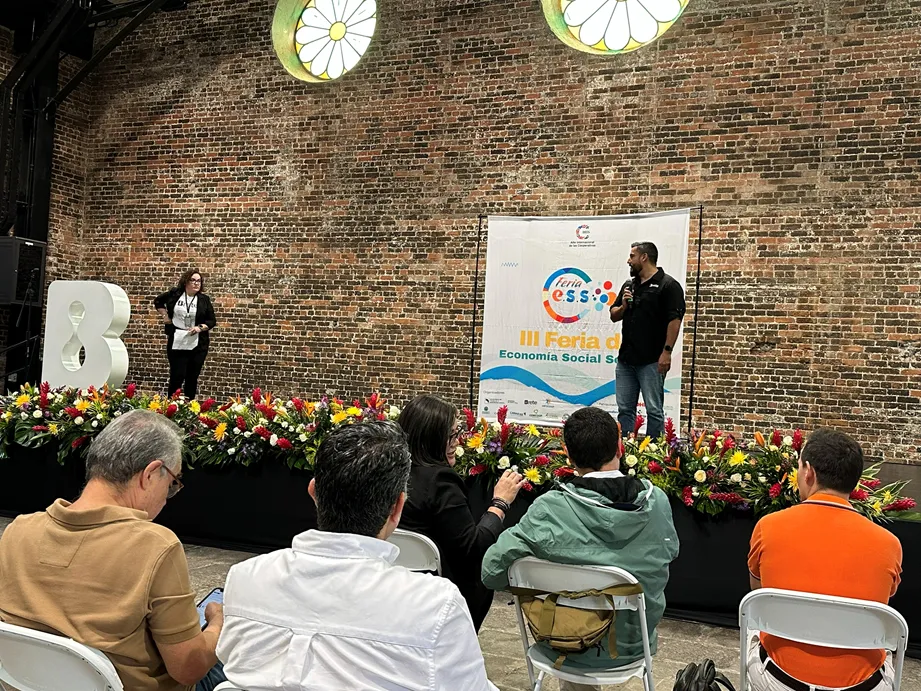
Based on the experience of the Observatory, what do you see as the major challenges in producing reliable and comparable statistics on the SSE?
One of the major challenges is developing impact indicators that combine both qualitative and quantitative metrics, allowing for the assessment of long-term structural, social, economic, and environmental changes.
Measuring the broader impact of the SSE goes beyond counting the number of organizations; it requires tools capable of capturing its transformative effects over time. In this sense, a key challenge moving forward is to adequately reflect the sector’s contribution to employment generation. This includes not only quantifying the number of jobs created, but also capturing their quality, sustainability, and inclusiveness.
Strengthening the measurement of employment impact will be essential to better understand the role of the SSE in promoting decent work, supporting livelihoods, and contributing to more inclusive and resilient labour markets. Developing such indicators will enhance the visibility of the sector and provide stronger evidence of its contribution to economic and social development.
The ILO Guidelines concerning Statistics of Cooperatives have been piloted in Costa Rica and have generated important insights and recommendations. What are some of the key takeaways and/or still unsolved issues?
One of the main issues is that the Cooperative Census in Costa Rica is not yet fully up to date, but efforts are underway to update the information. It is essential that the next round of data collection incorporates the variables and categories proposed in the ILO Guidelines, ensuring that key elements such as membership, employment, economic performance and cooperative typology are captured. This would allow for a more accurate measurement of the economic and social impact of the SSE and improve international comparability.
Another important takeaway is the need to strengthen institutional coordination. Close collaboration with institutions such as the National Institute of Statistics and Census (INEC) and the Central Bank is crucial. In this respect, the Social Solidarity Economy Directorate, established under the Law No. 10859, plays a critical role.
What would be your key recommendations for the development of Guidelines concerning Statistics of the SSE?
Key recommendations would include:
- First, the establishment of harmonized and operational statistical definition of the SSE, aligned with international statistical standards, to ensure data comparability across countries.
- Second, the Guidelines should promote a multidimensional measurement approach that goes beyond economic output, incorporating indicators related to social impact, employment generation, membership base, governance structures and asset formation of SSE organizations.
- Finally, it is essential to address technical and institutional gaps in national statistical systems by strengthening capacities, fostering inter-institutional coordination, and promoting international cooperation to overcome methodological and data-collection barriers.
The views expressed in this interview are those of the interviewee and do not necessarily reflect the official position or policies of the International Labour Organization.
About Mario Durán Fernández
Mario Durán Fernández is a political scientist with a Diploma in Management of Cooperative Enterprises and Social and Solidarity Economy Organizations. He holds master’s degrees in Microfinance and Social Development and in International Cooperation and Project Management. He currently serves as National Director of Social and Solidarity Economy at the Ministry of Labour and Social Security (MTSS) and is a member of the Board of Directors of the National Institute for Cooperative Development (INFOCOOP).
About the interview
“Spotlight Interviews with Co-operators” is a series of interviews with co-operators and social and solidarity economy (SSE) actors from around the world with whom ILO officials have crossed paths during the course of their work on the cooperative, social and solidarity economy portfolio

More Spotlight Interviews with Co-operators
Inspiring stories, insights and thought-provoking reflections from cooperative and social and solidarity economy (SSE) actors from across regions and sectors
Stay tuned
To keep updated on the latest Spotlight Interviews with Co-operators, you can also:
- Visit ILO topical portals on cooperatives ilo.org/coop & the SSE ilo.org/sse
- Sign up for ILO COOP/SSE monthly newsletter
- Follow @ILOCOOPSSE on LinkedIn, X, Facebook and Instagram
You may also be interested in

Topic portal
Cooperatives

Topic portal
Social and Solidarity Economy
Strategic results
How did the ILO advance the social and solidarity economy in 2024–25?

About the ILO's Cooperative, Social and Solidarity Economy Unit