

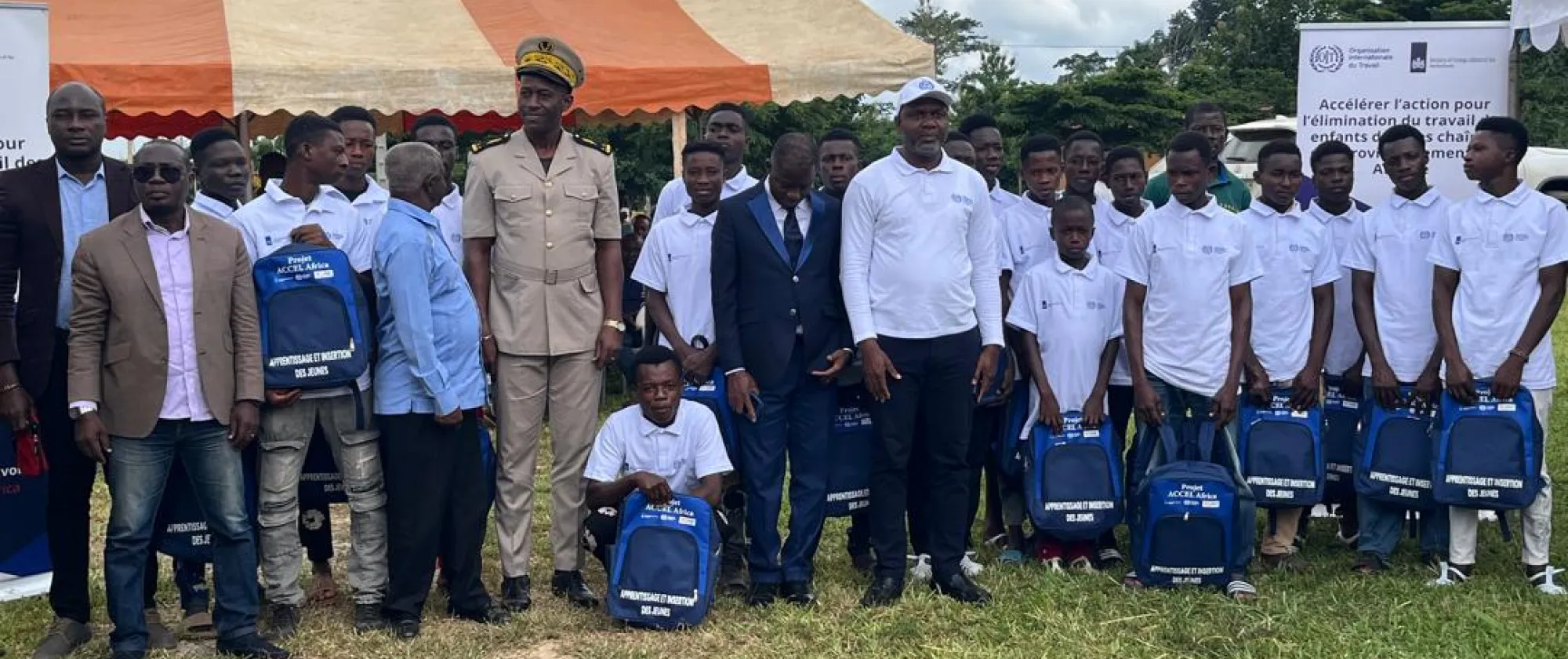
M’Batto: ACCEL Africa strengthens youth employability by promoting decent work
In M’Batto, Côte d’Ivoire, the ACCEL Africa project is strengthening youth employability through poultry training that combines technical skills with the principles of decent work. By addressing the root causes of child labour, the initiative supports sustainable pathways to employment and self-employment, while mobilizing local actors to improve the quality and safety of training.
28 January 2026
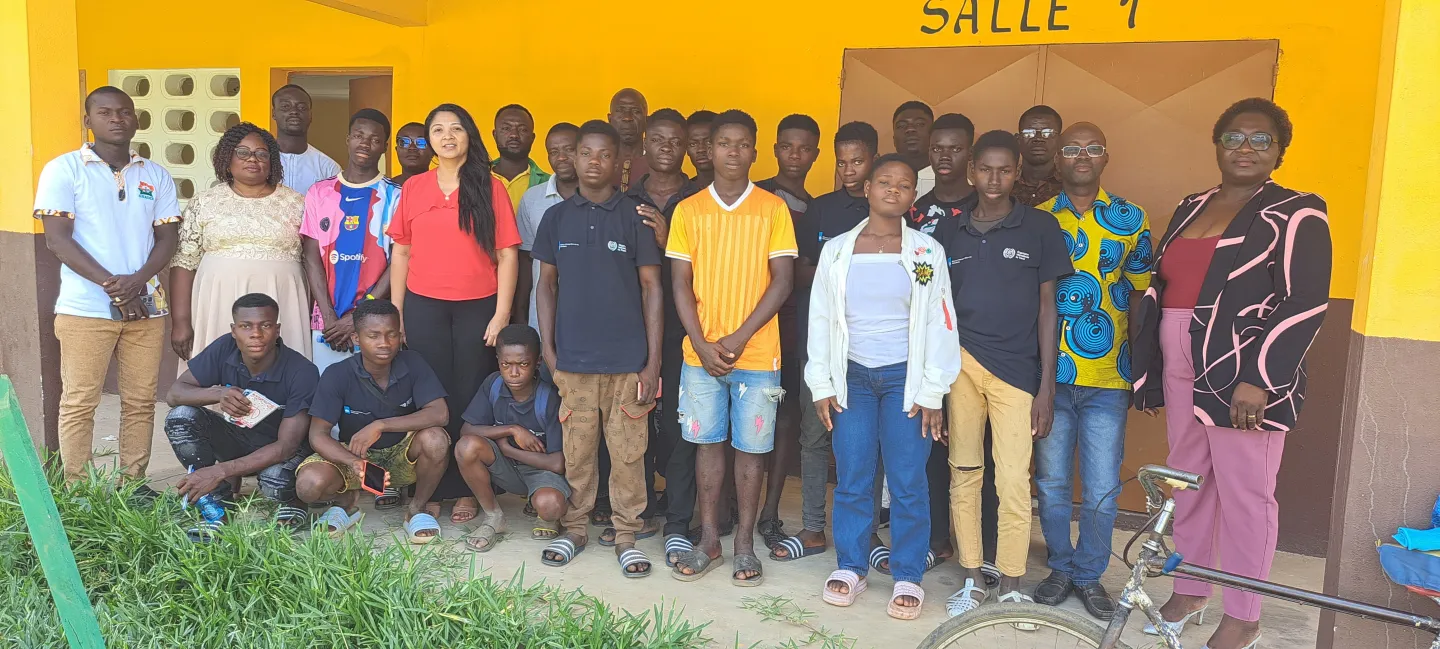
M’BATTO (ILO News) – From 26 to 29 January 2026, the town of M’Batto hosted a monitoring and capacity-building mission for young people undergoing poultry training, carried out under the ACCEL Africa project. This initiative is part of the project’s broader strategy to accelerate the elimination of child labour in Africa by addressing its root causes, notably poverty and the lack of economic opportunities for young people and their families.
Implemented through a systemic and innovative approach, the ACCEL Africa project aims to sustainably strengthen the policy, institutional, and economic frameworks essential to tackling child labour within targeted supply chains. Its Phase II is built on a theory of change structured around three strategic pillars: improving and enforcing policy and legal frameworks, institutionalizing innovative, evidence-based solutions, and scaling up effective practices through knowledge sharing, partnerships, and resource mobilization.
Within this framework, a youth employment component has been integrated into the project, recognizing the close link between child labour, economic vulnerability, and the lack of professional opportunities for young people. In 2025, ACCEL Africa, in partnership with the NANDOH Training Centre, launched a technical training programme in poultry farming, mobilizing a wide range of local stakeholders, including DAIP, the social centre, and regional directorates of Labour, Technical Education, and Vocational Training. Twenty-nine (29) young people were enrolled in programmes combining theoretical and practical learning, with the objective of supporting their sustainable integration into the poultry sector through wage employment or self-employment.
To ensure the quality of these pathways and their alignment with decent work principles, a dedicated monitoring and training mission was conducted in M’Batto over three days, from 26 to 29 January 2026. This mission provided close technical and social support to the young beneficiaries by assessing their progress, identifying challenges, and offering tailored guidance for their professional development.
At the same time, training and awareness sessions were organized on the fundamental principles of decent work, including labour rights, occupational safety and health, and the specific requirements of poultry farming depending on the chosen pathways. Stakeholder meetings brought together all relevant actors—the NANDOH Training Institute, social centre, ANADER, parents, local poultry farmers, and community facilitators, enabling a collective analysis of challenges, opportunities, and collaboration avenues to support better youth integration.
Following the mission, young beneficiaries now benefit from strengthened support, enabling them to more confidently pursue employment or self-employment under decent working conditions. Technical and professional partners have also enhanced their understanding of labour standards, safety requirements, and good practices within the poultry sector.
The mission also identified key risks related to training conditions, particularly in terms of safety, quality, and dropout, while highlighting existing good practices. Based on these findings, recommendations were developed to improve training quality, strengthen youth safety, and ensure the sustainability of their professional integration pathways.
The M’Batto mission thus represents a key milestone in the implementation of ACCEL Africa’s strategy on youth employment and child labour elimination. By strengthening both technical skills and understanding of decent work principles, the project contributes to building viable and sustainable economic alternatives for young people, their families, and local communities.
Relevant projects
Accelerating action for the elimination of child labour in supply chains in Africa (ACCEL Africa)